Tupi's Wooden Bird Lamp Hides Its Light Inside a Curved Beak
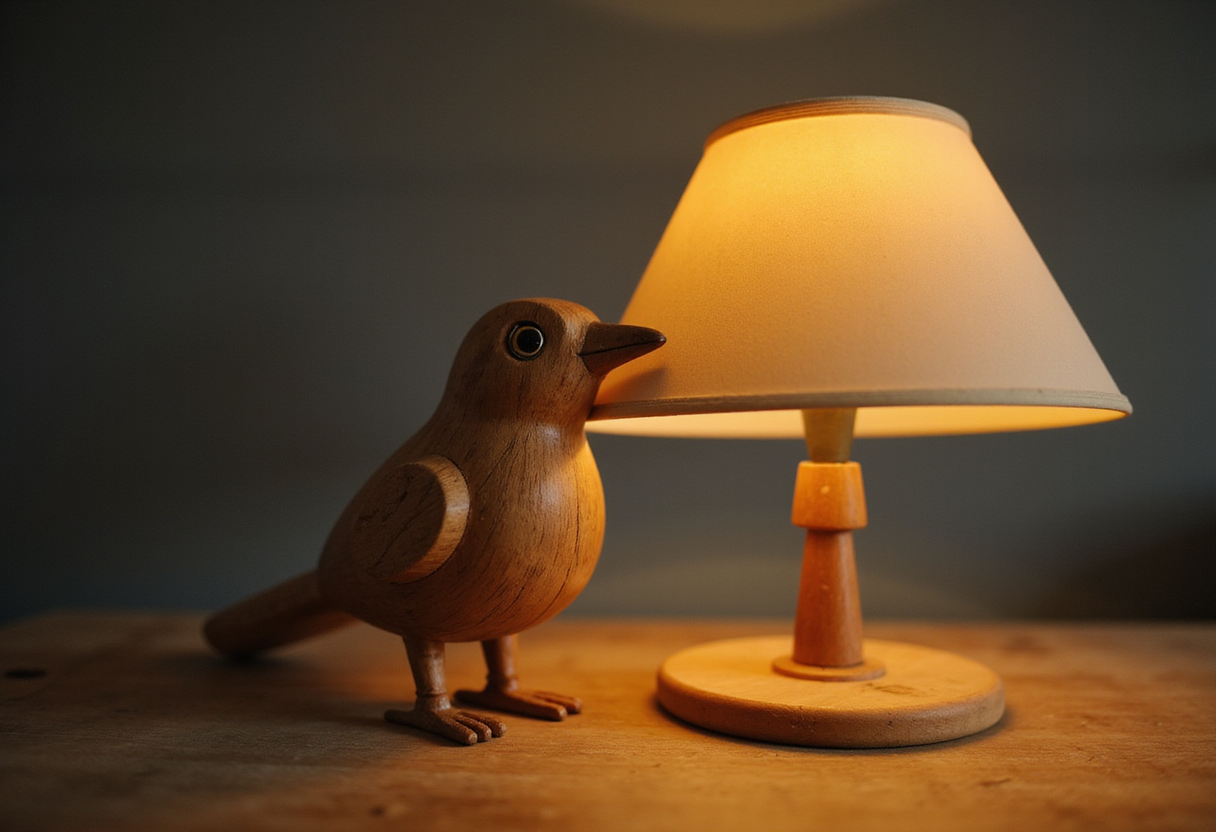
Medellín studio Estudio Gris has built a 2.2-pound wooden bird lamp called Tupi. Its oversized oak beak hides the bulb and sends warm light down the body, doubling as a built-in shade for the nightstand.
- Section
- Interiors
- Author
- By Elena Vasquez
- Filed
- Length
- 2 min read
Key takeaways
- Tupi weighs about 2.2 pounds and measures roughly 10 by 6 by 6 inches
- Designed by Gustavo Rodríguez and Estefanía Agudelo of Medellín's Estudio Gris
- The oversized wooden beak conceals the bulb and directs light down the oak body
- Each lamp is made to order, hand-turned and assembled in a local Medellín workshop
- Studio describes its approach as 'introverted design,' meaning objects that reveal themselves gradually
- Originally published October 14, 2026
By Elena Vasquez
Estudio Gris has turned a 2.2-pound wooden bird into a bedside lamp. Tupi, the Medellín studio's made-to-order table design, hides its bulb inside an oversized oak beak. That beak points light downward rather than at your eyes.
What does the beak actually do?
It doubles as the shade. The lamp stands roughly 10 by 6 by 6 inches, about the footprint of a paperback stack. Its solid oak body, turned and assembled by hand in a local workshop, sends warm light down the wood grain. A darker contrasting wood forms both the beak and a small eye.
Designers Gustavo Rodríguez and Estefanía Agudelo built the piece around one idea: the shade is the face. The studio describes its approach as "introverted design," meaning objects that don't compete for attention and reveal themselves gradually. The beak isn't a decoration stuck onto a lamp; it's the shade doing its actual job.
That single decision shapes everything else. A flush switch near the base keeps the silhouette clean. A beige fabric-covered cord continues the natural palette. Pale oak against a reddish-brown beak provides enough contrast to read the bird without painted markings. A curved groove across the beak adds another small detail without making the surface busy.
The proportions give Tupi a specific expression. The broad beak and slightly protruding eye read as watchful rather than cartoonishly cheerful. The upright body keeps most visual mass close to its base, while the beak gives the lamp direction. It looks content to sit still — fitting for a nightstand object.
How does the rest of the design hold up?
Each lamp is made to order. Natural differences in grain and tone mean the wood won't look identical from piece to piece. With so few components competing for attention, the grain has room to matter. The light makes that grain more pronounced once the lamp is on, pooling softly on the surface below.
Three practical specs are missing from the published details: bulb brightness, whether the light source can be replaced, and plug or voltage options. Those gaps matter for a bedside lamp, where dimmable warm light and easy bulb swaps are standard expectations. Tupi reads better as an atmospheric companion than a replacement for a dedicated reading or work lamp.
Even so, the piece makes a persuasive case for form following function. Its bird shape actually helps manage the light, giving the charm a reason to exist. With production tied to a single Medellín workshop, each order carries the studio's signature restraint: useful objects that reveal themselves slowly rather than shout for attention.
Source: Yanko Design
More from Elena Vasquez
Show full bio
Senior reporter covering money, funding and market shifts around construction industry, architecture, interior design at Built Current.
126 articles