ETEL's Open Sesame Desk Unfolds From a 100-Centimeter Closed Face
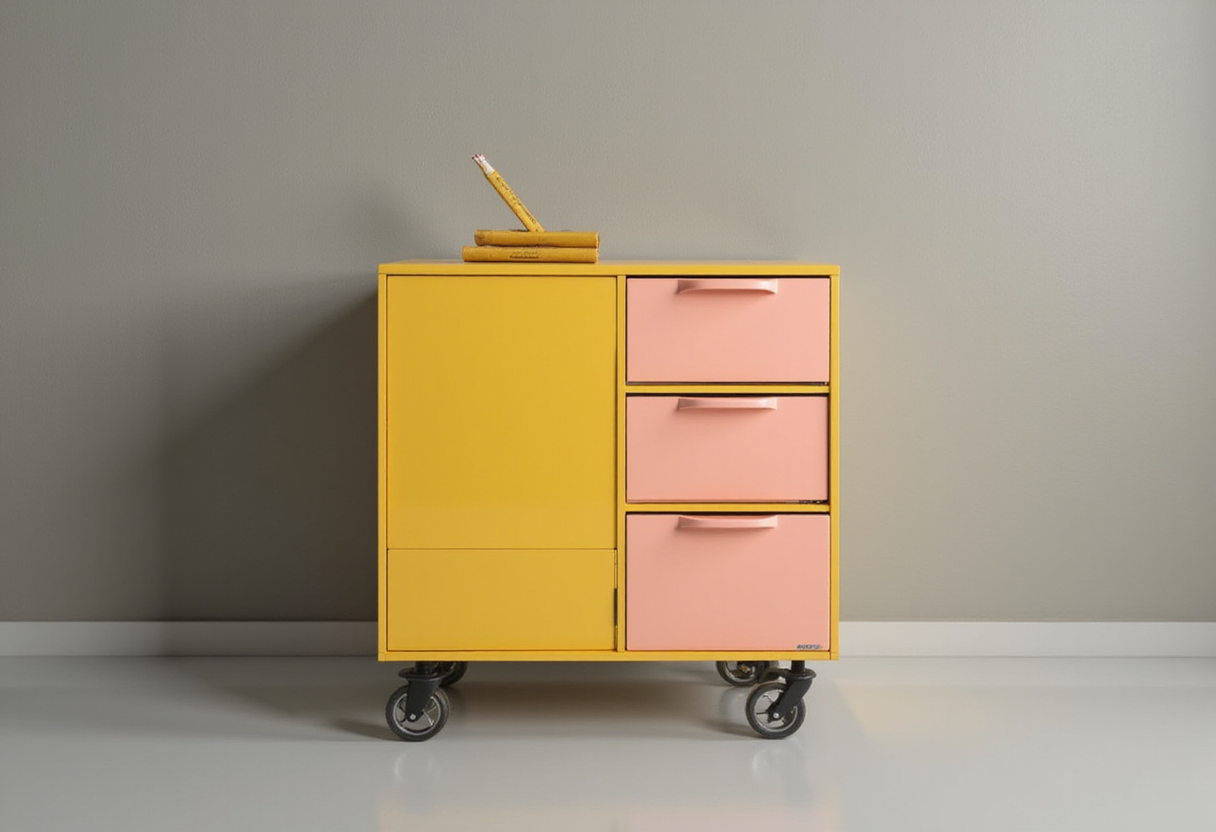
Lia Siqueira designed Open Sesame in 2025 for Brazilian furniture brand ETEL — a 100-by-50-by-76-centimeter wooden desk that hides every drawer, surface, and compartment behind a single closed face.
- Section
- Interiors
- Author
- By Amara Osei
- Filed
- Length
- 3 min read
Key takeaways
- Designed in 2025 by Brazilian architect Lia Siqueira for Brazilian furniture brand ETEL
- Dimensions: 100 by 50 by 76 centimeters (39.4 x 19.7 x 29.9 inches)
- Takes its name from the cave-unlocking phrase in Ali Baba and the Forty Thieves
- Three opening gestures reveal hidden drawers, compartments, and lateral work surfaces while the closed footprint stays fixed
- First appeared in design press on October 14, 2026
Siqueira designed Open Sesame in 2025 for Brazilian furniture brand ETEL, a desk that hides every drawer, surface, and compartment behind a single 100-by-50-by-76-centimeter closed face. Three openings change the math.
The piece borrows its name from the cave-unlocking phrase in Ali Baba and the Forty Thieves. Siqueira replaces the bandits' rocky den with a wooden cabinet that yields each working area to a deliberate pull, swapping magic words for human hands. The reference is playful. The construction is not.
What does the desk do when it opens?
When the outer doors swing out, lateral surfaces extend sideways. Internal drawers slide forward on the user's own grip. Each opening creates fresh usable area where none existed a moment earlier, turning one fixed plane into a sequence of smaller ones that deploy on demand. The footprint, conveniently, doesn't budge.
The dimensions carry weight here. At roughly 39.4 inches wide, 19.7 deep, and 29.9 tall, the closed desk occupies about the same floor tile as any solid office table. Its extra capacity arrives through movement, not mass.
Who is Lia Siqueira?
Siqueira is a Brazilian architect and designer whose practice, per the original coverage, treats furniture as a study in transformation rather than a static object. Her approach on this commission treats storage as an architectural element, with concealed compartments built into the overall composition rather than bolted on as external organizers.
Why the Ali Baba reference?
The name is a deliberate gesture. The story it draws from concerns a hidden space that yields its contents only to a spoken command. Siqueira translates that idea of concealed access, with the user's hands replacing the incantation.
From the outside, the desk reads as restrained. From the inside, it offers an intricate arrangement of surfaces, drawers, and personal storage that the user alone governs.
Conventional desks leave their contents visible all day, dependent on trays, boxes, and a small forest of side furniture for organization. Open Sesame folds that organization into the object itself. Papers, tools, and daily essentials sit behind closed panels, sharing the main surface only when the owner allows it. A quieter working surface, on demand.
Siqueira gives the act of opening a meaningful role. The experience becomes routine, repeated, and slightly theatrical each time the user pulls a new panel forward. The transformation is intended to feel deliberate rather than incidental, per the original coverage. Each opening reveals another layer of utility, allowing a single piece of furniture to handle activities that might otherwise require several separate storage solutions. The user decides when the desk should reveal its contents, and when it should return to its quieter, closed state.
How small is it, really?
- 100 cm wide (39.4 in)
- 50 cm deep (19.7 in)
- 76 cm tall (29.9 in)
- Compact footprint, expandable interior
The expansion lives inside the furniture rather than tacked on. Its proportions hold. Its capacity doesn't.
ETEL carries the desk as part of its 2025 catalog, and the piece surfaced in 2026 design press — proof that Brazilian manufacturers keep building work furniture that does more than one job without advertising the fact.
Original: instagram.com
More from Amara Osei
Show full bio
Market editor covering companies, deals and strategy in construction industry, architecture, interior design at Built Current.
126 articles