Twelve Contemporary Chandeliers Light Up St Mark's Square in Venice
Twelve chandeliers by Norman Foster, Bethan Laura Wood and other creatives, forged by Murano's maestri, light the Procuratie Vecchie in St Mark's Square until November 1.
- Section
- Architecture
- Author
- By Priya Raman
- Filed
- Length
- 3 min read
Key takeaways
- The Venice Glass Week's tenth edition hosted more than 200 events; the flagship exhibition Murano Illumina il Mondo runs until November 1 at the Procuratie Vecchie in St Mark's Square.
- Norman Foster's The Hydra Chandelier, made by Salviati, has 20 arms that throw light upwards using the Rigadin technique in frosted glass.
- According to a Banca Ifis report, 160 glass manufacturers operate on Murano, employing more than 900 people and generating revenues close to €180 million.
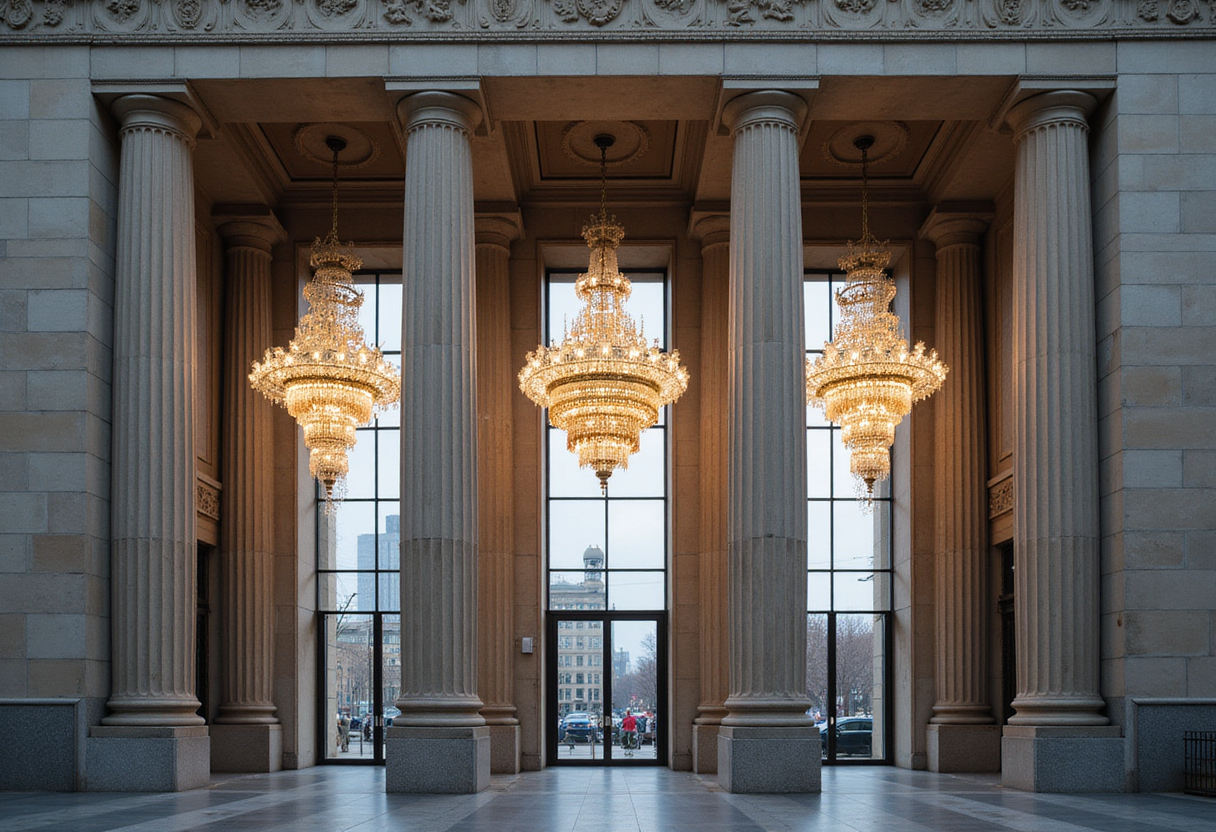
Twelve chandeliers designed by contemporary creatives and forged by Murano's master glassmakers are illuminating the Procuratie Vecchie of St Mark's Square until November 1. The installation, Murano Illumina il Mondo (Murano Lights Up the World), served as the flagship event of the tenth edition of The Venice Glass Week, a festival that hosted more than 200 events from Italian and international participants earlier this month.
Norman Foster's contribution, The Hydra Chandelier, was made with Salviati, the glasshouse recognised for reviving the Murano glass industry since the late 1850s. The piece turns traditional Venetian chandelier design on its head: its 20 arms throw light upwards, eschewing the usual construction's chiaroscuro and bathing the ancient portico in a red glow.
It was Foster's first time working with the Murano maestri. He chose a frosted glass to showcase the fine lines of the Rigadin technique, a Salviati signature, giving the chandelier a sense of lightness and flow. There is no ornate layering of arms, nor botanical motifs.
"It's everything about tradition, and yet it's a reinterpretation in today's terms," says Lord Foster. "Instead of the mass being the central spine, the visual elements are arms reaching out, which then gives a very interesting challenge technically in how you support that."
Salviati worked with the Norman Foster Foundation team on significant research and development. "All those accumulated years of experience to produce a material which is inherently fragile, then assumes an extraordinary degree of strength. I mean, to see that process and to share it is inspirational and educational," adds Foster.
Multidisciplinary designer Bethan Laura Wood worked with maestro Matteo Tagliapietra of Gambaro & Tagliapietra on Taiko. Inspired by the traditional Japanese drum, its barrel forms employ Murano's filigree techniques, in which thin canne glass rods are embedded inside a crystal-clear glass body to form patterns. Wood draws on a repertoire ranging from the mosaic-like murrina to the lace-like reticello, and she is fascinated by how glass behaves under pressure.
"I wouldn't say I understand it completely because I think glass is quite a magical mystery, but it was really exciting to start to try and get a better understanding of how you start to predict what might happen with the behaviour of the glass, and you start to understand the way that different paints can be built or pulled to change the way that they behave when they're worked," says Wood. "I also love this mix between solidity and fluidity, especially when you're looking at the murrine and the bubbles that we've produced together."
Many of the architects, designers and artists involved in Murano Illumina il Mondo are now continuing to work with the glassmakers they were paired with to create commercial versions of their chandeliers, pursuing what Foster calls a "perfection of the imperfection".
The industry behind the exhibition remains substantial. Murano measures around one square kilometre, yet 160 glass manufacturers operate there, according to a report by Banca Ifis, sponsor of The Venice Glass Week. Many are still family-owned. Together they employ more than 900 people and generate revenues close to €180 million. Despite a volatile energy market, the furnaces keep burning, and the centuries-old craft finds new forms through the suggestion of modern creatives and the gesture of the master glassmakers.
"Glass continues to be a living part of its present and future, melding together art and work, culture and enterprise, tradition and innovation," says the Mayor of Venice, Simone Venturini. "Glass perhaps tells the story of Venice better than any other material. It is born from fire, from an incandescent temperature, from a moment when everything is still possible."
With several of these collaborations now moving toward commercial production, the chandeliers on show until November 1 may mark the beginning of longer partnerships between contemporary design and Murano's furnaces.
Original: google.com
More from Priya Raman
Show full bio
News editor covering industry trends and analytics at Built Current.
63 articles