Thessaloniki Masterplan Unifies Seventy Monuments in One Network
First-prize Armosi masterplan by Apostolopoulos Tasoulis links over seventy Thessaloniki monuments along Egnatia Street with green corridors tied to the metro.
- Section
- Urbanism & Planning
- Author
- By Priya Raman
- Filed
- Length
- 2 min read
Key takeaways
- The Armosi masterplan unifies over seventy monuments and archaeological sites in Thessaloniki, Greece.
- Apostolopoulos Tasoulis won 1st prize in a public competition organized by Anaplasi consulting engineers SA.
- The plan runs along the historic Egnatia Street axis and its intersection with Aristotelous Street.
- Green corridors connect the pedestrian network to the city's metro and public transport system.
- The framework follows UNESCO's Historic Urban Landscape approach across five historical layers.
By Priya Raman
A single expandable urban network will connect more than seventy monuments and archaeological sites across Thessaloniki, Greece. That is the core of the Armosi (Άρμοση) masterplan by firm Apostolopoulos Tasoulis, which won first prize in a public competition organized by Anaplasi consulting engineers SA with the Ministry of Culture and the Municipality of Thessaloniki as partnering organizations.
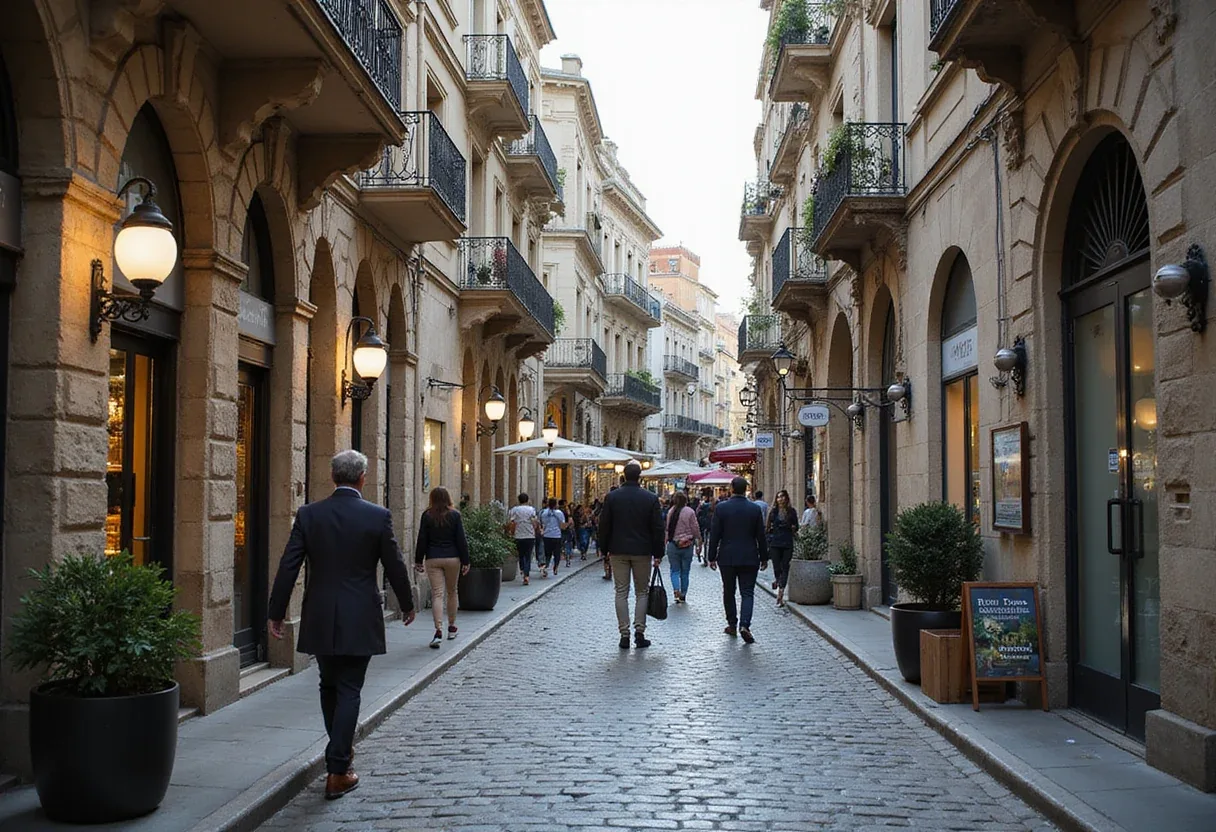
The plan is structured along the historic Egnatia Street axis and its intersection with Aristotelous Street. It integrates Roman, Byzantine, Ottoman, Jewish, and modern historical layers into one cohesive public landscape, following UNESCO's Historic Urban Landscape approach (a framework that treats the whole city, not isolated landmarks, as heritage).
What does the design actually change on the ground?
Legibility comes from restraint. The architects apply a unified toolkit rather than decorative gestures:
- A continuous, light-colored paved surface acts as a neutral backdrop.
- Standardized lighting, signage, and discreet street furniture keep visual noise down.
- Subterranean facilities, new public access points, and light enclosures reconfigure site boundaries.
- Targeted interventions restore the historic imperial axis at the Rotunda and the Galerian Complex.
- A new axial entry at Dikastirion Square opens the Roman Forum to the contemporary city.
The premise is simple: one neutral ground plane lets two millennia of stratification read clearly, from the Arch of Galerius and Rotunda to the Ottoman Alatza Imaret, which gains a renewed public setting.
How does the plan handle movement and climate?
Pedestrian movement and climate resilience dictate the ground plane. Existing vegetation expands into continuous green corridors tied to the city's metro network and public transport system, establishing traffic-calmed routes that let Thessaloniki's historical stratification function as part of daily mobility rather than as fenced-off ruins. Egnatia, the historic east-west artery, becomes a continuous public landscape combining archaeological remains, greenery, and movement, while the Rotunda gains a new public square formed around the monument itself.
Who is behind it?
Apostolopoulos Tasoulis leads as architect with a core documentation team of Dimitra Koutroumba, Giorgos Mertzanidis, and Lefteris Stergiou. The wider team spans urban planning (Bethlehem Hastaoglou-Martinidis, Katerina Christoforaki, Polina Prentou), landscape architecture (Studio Soma, Alana Espacio), traffic planning (VM Consulting), structures (PPA Structure), mechanical engineering (Melcon Engineering), climate and environmental design (Transsolar – Christian Frenzel, Dimitris Tremos), and archaeology and cultural heritage (Dimitra Sikalidou, Eleftheria Kyriakopoulou).
The project's official name, Unification of Archaeological Sites and Monuments, Thessaloniki, signals its real test ahead: whether an expandable, standardized network can hold together more than seventy sites across five historical eras without flattening what makes each one distinct.
Original: google.com
More from Priya Raman
Show full bio
News editor covering people, launches and day-to-day practice in construction industry, architecture, interior design at Built Current.
130 articles