Michael Jantzen's Robotic Pavilion Rearranges Only When Empty
Designer Michael Jantzen's unbuilt Self-Assembling Robotic Environments concept proposes C-shaped pavilion sections that drive themselves to new positions between visits and freeze when visitors arrive.
- Section
- Architecture
- Author
- By Amara Osei
- Filed
- Length
- 3 min read
Key takeaways
- Two module sizes stand roughly 10 and 14 feet tall, both four feet wide, in C-shaped profiles combining floor, wall, and roof.
- Each floor carries its own computer, sensors, motors, wheels, and battery; the wall and roof move with the floor.
- Designer Michael Jantzen proposes the modules use artificial intelligence to pick positions through majority agreement.
- A circular black perimeter marks robot territory; sensors pause every module while visitors are inside.
- Concept is unbuilt; the October 2026 drawings set no braking distances, structural performance targets, or accessible-entry details.
Designer Michael Jantzen has proposed a public pavilion whose C-shaped sections drive themselves to new positions between visits, then freeze the moment anyone walks in. Dated October 2026, the unbuilt concept titled Self-Assembling Robotic Environments treats its modules as architecture rather than construction equipment. They would stay on site, moving on wheels and answering to their own logic.
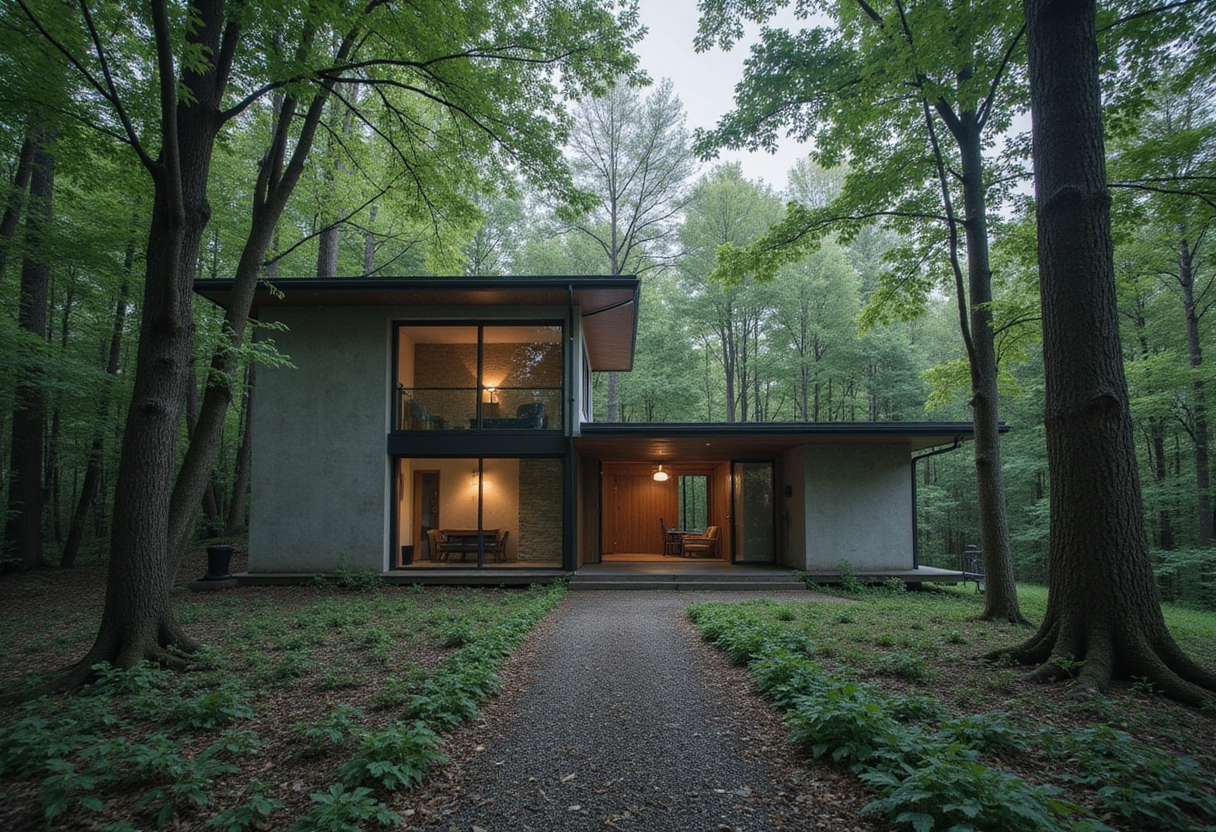
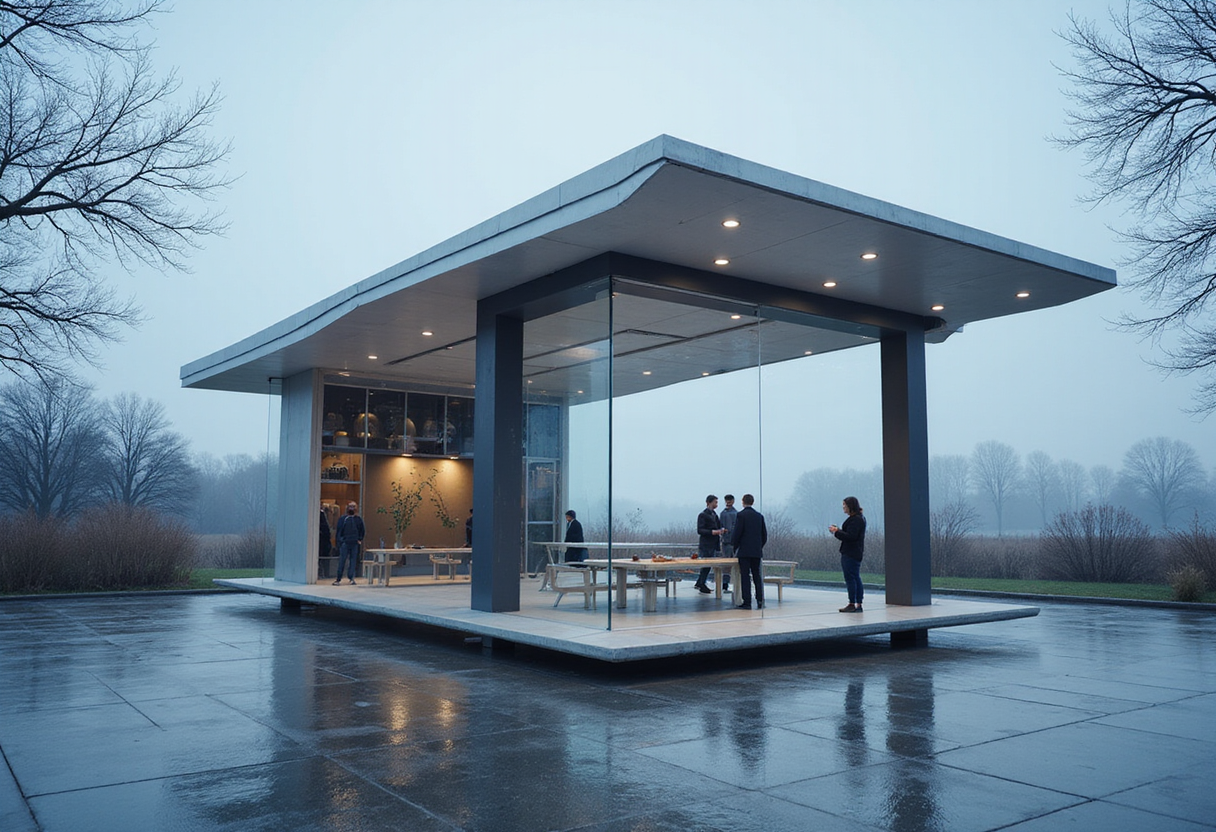
Each unit combines a floor, wall, and roof in a single large C-shaped profile, like a small shelter with the sides left open. Two sizes stand roughly 10 and 14 feet tall, both four feet wide. Cluster a few together and the shapes form passages or covered pockets. Pull them apart and the same pieces give visitors somewhere else to wander.
What would the modules do, in plain terms?
Every floor carries its own computer, sensors, motors, wheels, and battery. The wall and roof travel with it. The unit can roll forward, backward, or sideways, which means rearranging the pavilion means no crew, no crane, no one's Tuesday afternoon lost to cartography.
Solar cells on the roof feed the battery in the floor below. Keeping power generation inside each moving section is sensible on paper. The proposal, however, doesn't say how much energy a repositioning cycle would actually burn. Moving large pieces around a paved arena is not the same as mounting solar panels overhead.
How would the pieces agree on a layout?
Designer Michael Jantzen proposes that the modules use artificial intelligence to pick their positions through majority agreement. The drawings don't explain how the modules evaluate one arrangement against another.
A gap between two units could become a passage. Several units facing inward could mark a meeting place. The same pieces could serve different purposes on different days.
It's a crowd-sourced floor plan, decided by the floors. None of this is operational yet.
What happens when a visitor steps inside?
A black perimeter marks the robots' territory, containing movement within a circular arena. Sensors watch for people or objects inside that space and pause every module until the area clears. The intended sequence is plain: rearrange when empty, hold position when occupied.
For visitors, the pause turns staying put into part of the interaction. Sit inside a sheltered corner long enough and that particular arrangement holds until everyone leaves. A later group might find a different route. Someone lingering over coffee would, in effect, be holding an architectural arrangement in place. That's a small civic power usually reserved for zoning boards.
What's missing from the drawings?
Detection is not braking. The proposal sets no braking distances, no structural performance targets, no accessible entry for the raised floor sections.
It also doesn't establish how often the modules would shuffle, who maintains them, or what a battery failure looks like mid-park.
These are questions for a working installation, not a reason to dismiss the idea. The renders don't settle them on their own.
The robotics, in other words, are still a slogan. The architecture is still a sketch.
If Jantzen can pull a working prototype into a real plaza, the project would test whether crowds tolerate buildings that move without them. Whether the engineering answers hold up determines whether this C-shaped sketch ends up parked outside a library someday.
Original: michaeljantzen.com
More from Amara Osei
Show full bio
Market editor covering companies, deals and strategy in construction industry, architecture, interior design at Built Current.
126 articles