Ice Erases Everything: The 200-Year Architectural History of Antarctica
Ice and katabatic winds erase 200 years of building on Antarctica. A Buenos Aires Biennial exhibition recovers that hidden architectural history, from sealskin huts to Archigram realized.
- Section
- Architecture
- Author
- By Elena Vasquez
- Filed
- Length
- 4 min read
Key takeaways
- An exhibition at the Buenos Aires International Architecture Biennial documents 200 years of Antarctic architecture, with materials from 70 institutions.
- Antarctica's lowest recorded temperature is −89.2°C (−128.6°F), set in 1983; the continent covers about 14 million square kilometers.
- The 1959 Antarctic Treaty, signed by twelve nations, reserved the continent for peace and science.
- The UK's Halley VI station realizes Archigram's Walking City concepts; India's Bharati station reinterprets Le Corbusier's Villa Savoye.
- Under the Environmental Protocol, obsolete structures must be removed, erasing traces of prior human occupation.
Antarctica's ice expands and contracts each year, doubling the continent's surface area and burying the traces of more than 200 years of human construction. That built history — from sealskin shelters to hydraulic research stations — is the subject of Inhabiting the Extreme: An Architectural Biography of Antarctica, presented by the 6044 SUR collective at the Buenos Aires International Architecture Biennial, with materials contributed by 70 institutions.
"Antarctica is known through narratives," said Victoria Nuviala Antelo, co-director of the collective, during the lecture. The exhibition argues that those narratives have consistently excluded ways of building and living on the continent, where katabatic winds erase evidence of human presence and ice conceals entire settlements.
What does the continent itself look like?
Antarctica is the world's fifth-largest continent, covering roughly 14 million square kilometers according to Encyclopaedia Britannica. It holds the record for the lowest temperature ever recorded: −89.2°C (−128.6°F), measured in 1983. Summers are milder but still severe — around 0°C (32°F) on average along the coast and between −20°C and −35°C in the interior, with the Antarctic Peninsula reaching up to 15°C (59°F).
The continent hosts more than 16,500 marine species, plus roughly 1,890 recorded species in its ice-free terrestrial areas — including about 200 lichens, more than 50 bryophytes, over 700 algae species, and just two vascular plants. Its waters carry approximately 500,000 minke whales and more than 2,000 Antarctic blue whales, alongside millions of penguins.
The scholar Leane captured the problem of describing such a place in Antarctica in Fiction (2012): "Antarctica is, traditionally, impossible to write. This idea is sustained by the powerful metaphor of the continent as a canvas, the 'vast white page.'"
How did building begin? (1800–1930)
The first temporary inhabitants were sealers and whalers chasing marine mammals. They built small stone shelters near animal colonies, covered them with sealskins, and furnished them with materials derived from the animals themselves — including whale vertebrae. Occupation followed hunting seasons and nothing lasted.
Scientific expeditions took a different approach. Working with limited knowledge of Antarctic conditions, they prefabricated structures in advance, often based on Arctic experience. Compact layouts organized around shared spaces minimized exterior surfaces and consolidated survival functions. Expeditions combined prefabricated huts, pyramidal tents, and vessels to move inland and along the coast.
"Despite their differences, these various ways of inhabiting the continent shared a common condition: inhabiting without remaining," said Ximena Senatore Connolly, a member of 6044 SUR.
What changed after the war? (1940–1980)
Following World War II, Argentina, Australia, Chile, and the United Kingdom developed strategies for long-term occupation — some through small stations at strategic points, others through gradually expanding complexes. By 1957–1958, the built landscape ranged from timber and metal structures to concrete buildings and constructions made from plastic materials.
The 1959 Antarctic Treaty, signed by twelve nations, reserved the continent for peace and science. The treaty system later expanded to include dozens of countries — among them Brazil, China, India, Russia, South Africa, and the United States — creating a framework for international territorial governance.
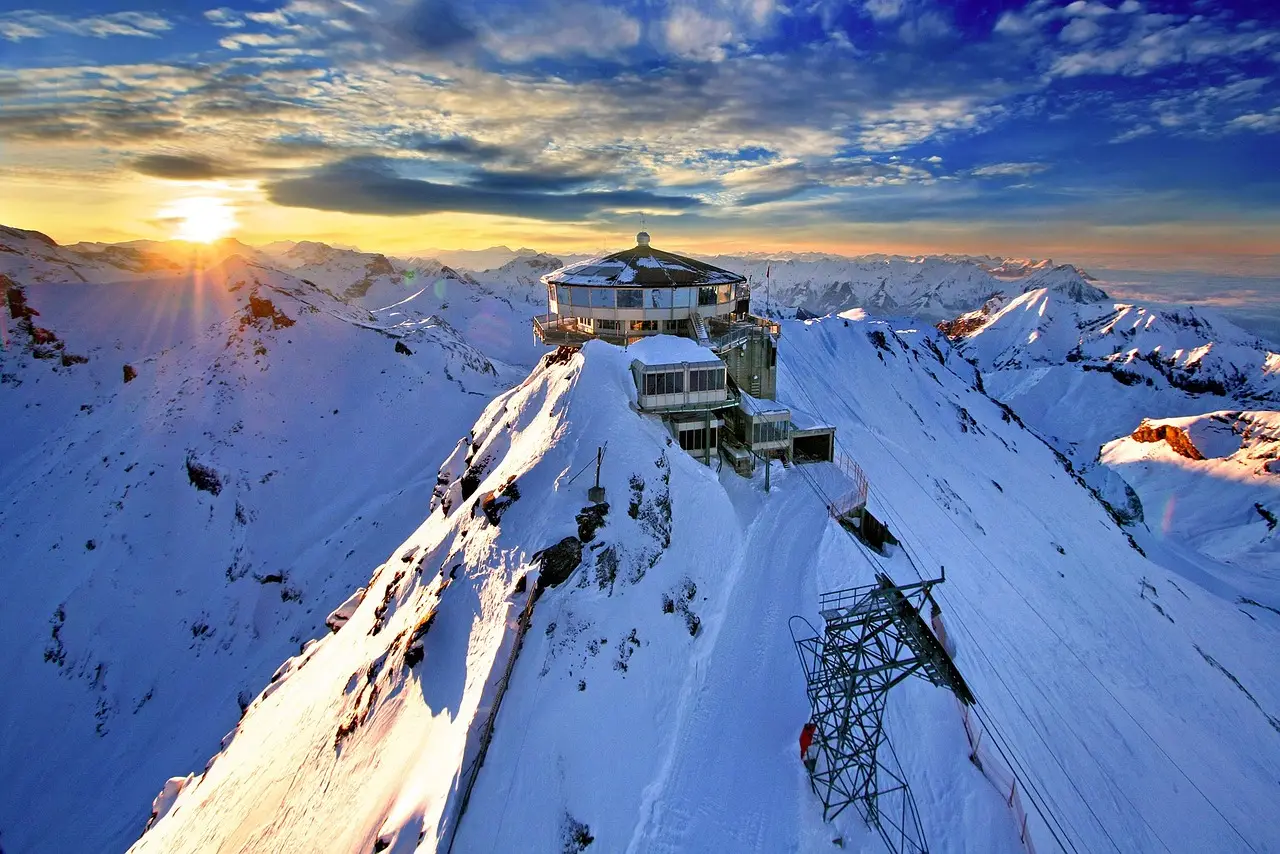
"Between polar Brutalism, minimal demountable structures, large elevated installations, geodesic domes, and underground stations, the Antarctic continent becomes a unique landscape of architectural modernity and postmodernity," said Victoria Nuviala Antelo, who directs SUR, the Virtual Archive of Architecture and Habitat in Antarctica, together with the collective.
Why is Antarctica a design laboratory? (1990–2026)
The exhibition draws direct lines to canonical modernism. India's Bharati Research Station reinterprets Le Corbusier's Villa Savoye. Buckminster Fuller's geodesic ideas take physical form in the South Pole Dome. The UK's Halley VI Research Station realizes Archigram's Walking City concepts.
By the 1990s, the Environmental Protocol opened a new phase. Countries upgraded stations to reduce their environmental footprint, and design competitions multiplied. Architecture became, in the exhibition's framing, an environmental apparatus — elevated volumes, elongated horizontal profiles, sophisticated energy systems.
There's a catch built into the protocol: as new stations arrive, obsolete structures and materials must be removed, erasing traces of previous occupation. Antarctica has no unified building codes or urban planning regulations, yet the protection of its nonhuman species remains a fundamental priority.
"The history of Antarctic architecture is not separate from the history of global architecture," said Violeta Nuviala Antelo, director of SUR. The collective — 13 researchers including Victoria and Violeta Nuviala Antelo, Senatore Connolly, Lucia Roitman, Lucila Salvo, Guadalupe Tagliabue, Paz Fodde, Melina Lotarynski, Sol Lavintman, Emilia Oszlak, Mariana Gigliotti, Nerina Estelrich, and Bautista Marull — frames the continent as a testing ground for how we might inhabit extreme and uncertain environments elsewhere. As Earth's climate pushes more territory toward the extreme, that test case looks less peripheral every year.
Original: britannica.com
More from Elena Vasquez
Show full bio
Senior reporter covering money, funding and market shifts around construction industry, architecture, interior design at Built Current.
174 articles