Belém Declares 'Raio-que-o-parta' Façades Intangible Heritage
Belém's November 2025 law protects the mosaic façades architects once dismissed. From Mexico's self-built houses to Bolivia's cholets, borrowed styles became local languages.
- Section
- Architecture
- Author
- By Priya Raman
- Filed
- Length
- 4 min read
Key takeaways
- Belém declared Raio-que-o-parta intangible cultural heritage in November 2025; about 100 of roughly 300 documented houses keep their mosaics.
- Art historian Donato Mello Júnior coined the term in 1966, meaning roughly "to hell with it."
- Freddy Mamani has developed cholets in El Alto since the early 2000s, combining Tiwanaku iconography with rooftop chalets.
- Mamani built a replica of one event hall at the Fondation Cartier in Paris in 2018.
- Mexican self-built houses in Adam Wiseman's Arquitectura Libre are often financed by remittances from the United States.
A municipal law in Belém, Brazil, declared the tile-shard façades known as Raio-que-o-parta intangible cultural heritage in November 2025. Of roughly 300 documented houses, about 100 still keep their mosaics. Façades that architects once ridiculed are now preservation objects.
The Belém law marks the turning point in a wider story: across Latin America, architectural styles borrowed from distant traditions have become local languages. Classical columns appear on self-built Mexican houses. Modernist ceramic panels spread across working-class façades in Pará. European chalets crown mixed-use towers in Bolivia. Each retains something recognizable from its precedent, but the application reflects a different set of architectural decisions.
How did homeowners rebuild modernism in Belém?
During the 1950s and 1960s, homeowners in Belém began incorporating geometric compositions and ceramic panels drawn from Brazilian modernism. Modernist artists such as Athos Bulcão and Cândido Portinari had established prominent decorative ceramic work; local builders developed their own variations using mosaics assembled from broken tiles.
According to accounts documented by the Rede Raio que o Parta, tiles damaged during transportation along the Belém-Brasília highway were resold at reduced prices, making the material accessible to more families. Local mestres de obras, or master builders, worked with homeowners to determine each decorative treatment.
Homeowners concentrated the ornament on the platibanda, the parapet concealing the pitched roof from the street. Modifying that single element let families introduce modernist references without altering the structure of their houses. Fragments were arranged into lightning bolts, arrows, curves, and figurative patterns, with colors varying between houses.
The name came from dismissal, not pride. In 1966, art historian Donato Mello Júnior criticized the façades in a speech to the first graduating architecture class at the Federal University of Pará, coining Raio-que-o-parta, roughly equivalent to "to hell with it." Architects Cybelle Salvador Miranda and Ronaldo Nonato Marques de Carvalho adopted the name in their research beginning in 2009, documenting the compositions' architectural significance. The expression had first appeared on wealthier families' houses before spreading to other neighborhoods.
What does Mexico's self-built architecture mix?
Across parts of Mexico, self-built houses combine classical columns, turrets, arches, domes, and elaborate rooflines, mixing European historical architecture with American suburban housing. Arquitectura Libre, photographer Adam Wiseman's documentation of self-built houses, records many homes financed through remittances from the United States.
Familiar forms are reproduced in locally available concrete and masonry, with elements from different traditions combined within a single façade. The arrangement follows homeowner preferences rather than the conventions of any historical style. For families with relatives working abroad, migration and construction experience supply the architectural references later incorporated into their own homes.
Why do Bolivian cholets wear Andean textiles?
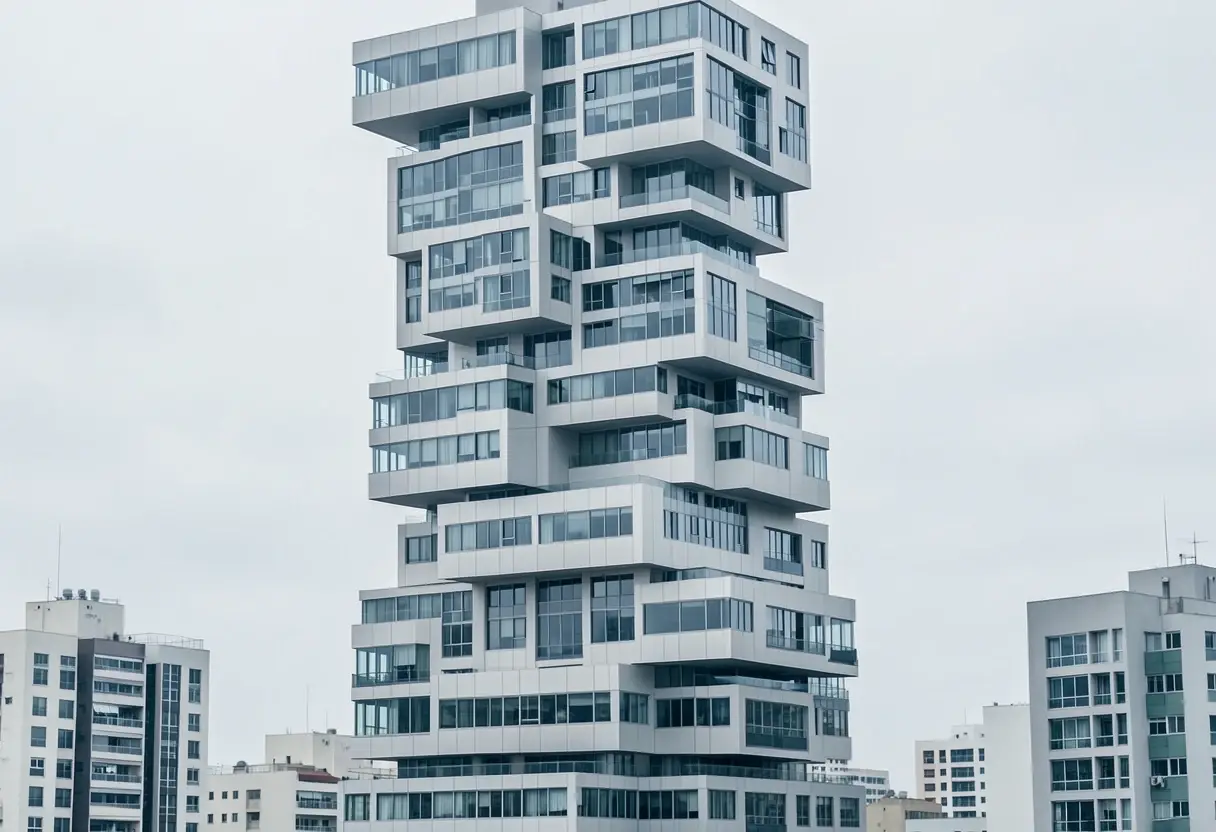
In El Alto, Bolivia, buildings known as cholets combine Andean cultural references with European residential forms. Developed prominently by Freddy Mamani since the early 2000s, these multistory buildings stack commercial premises, rental apartments, event halls, and a private residence on the rooftop, often in the form of a chalet.
Mamani draws on Tiwanaku iconography and Aymara textile traditions, translating them into angular façades, decorative window compositions, and saturated colors across large surfaces. The salones de eventos, used for weddings and community celebrations, extend the language through reflective finishes and decorative lighting. The rooftop chalet gives the owner's residence a prominent position above the commercial program, combining domestic and commercial life on one property.
The buildings are commissioned by Aymara merchants and entrepreneurs, and other designers have since adopted variations of Mamani's geometric compositions, extending the language beyond his individual projects.
What does recognition change for these buildings?
Recognition has largely arrived from abroad. Copias del abandono was shown in the Mexican Pavilion at the 2021 Venice Biennale, and in 2018 Mamani built a replica of one of his event halls at the Fondation Cartier in Paris. Both moved buildings made for everyday life in Tlaxcala and El Alto into galleries, where visitors see the architecture without the uses that shaped it.
Preservation now collides with the practice that produced these façades. Owners once modified them freely; a protected façade may now be expected to stay intact. The alterations preservation tries to limit are the same kind of decisions that created Raio-que-o-parta in the first place, and protecting these houses means deciding whether their history includes the changes still being made to them.
Original: revistapesquisa.fapesp.br
More from Priya Raman
Show full bio
News editor covering people, launches and day-to-day practice in construction industry, architecture, interior design at Built Current.
385 articles