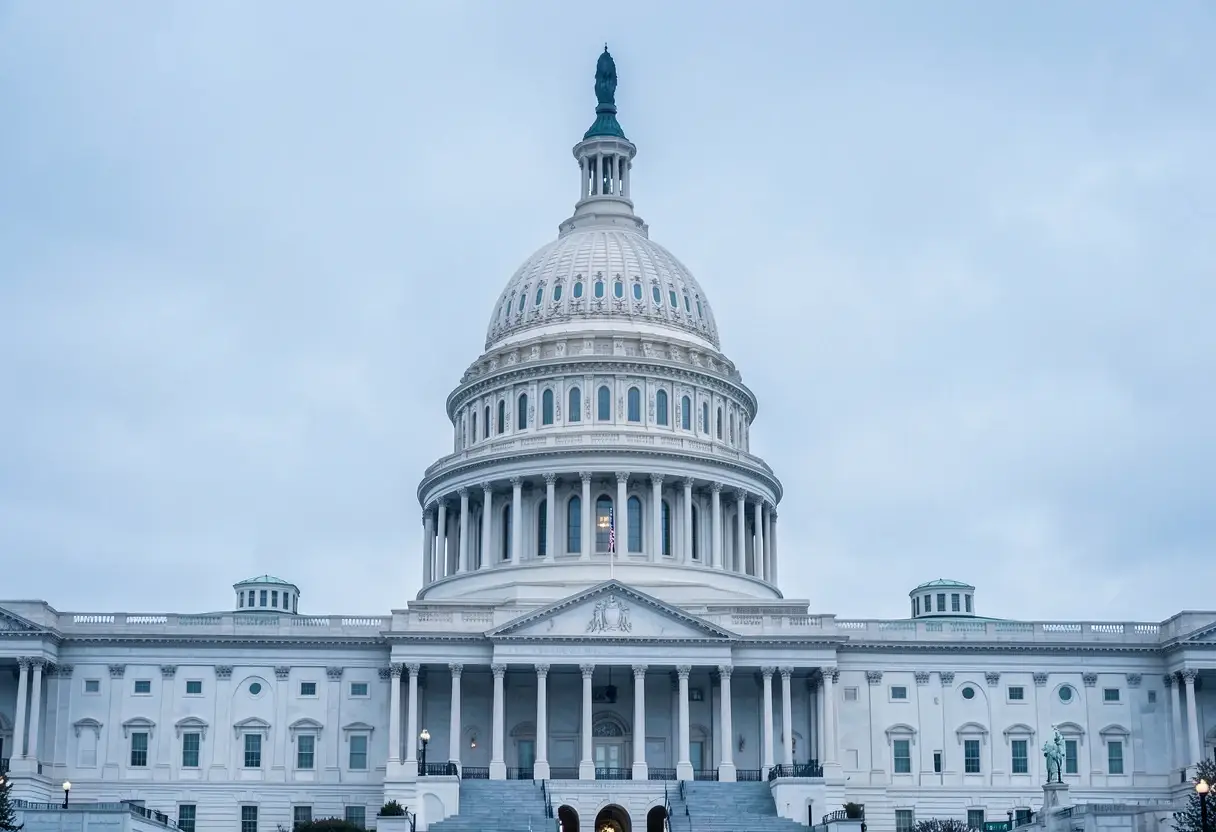
Three bills put Trump's broad tariff powers on the Capitol clock
Three bills would narrow Donald Trump’s tariff powers, while trade lawyers advise companies to map tariff exposure, document costs and prepare for possible changes.
- Author
- By Amara Osei
- Filed
- Length
- 4 min read
Key takeaways
- Three bills—S. 5390, S. 1272 and H.R. 7557—would significantly restrict presidential tariff power.
- Section 232 supports 50% steel and aluminum levies on Canada and Mexico; Section 301 duties of 10% or 12.5% cover 60 trading partners.
- S. 5390, introduced Sept. 14 by Sen. Chuck Schumer, would repeal Section 338 and require CBP refunds with interest within 30 days.
- S. 1272, introduced April 3, 2025 with six co-sponsors, would require 48-hour notice and a 60-day tariff expiry unless Congress authorizes them.
- H.R. 7557, introduced Feb. 12 by Reps. Linda Sánchez and Mike Turner, would require both houses to approve specified new restrictions on NATO allies.
By Amara Osei
Section 232 tariffs on steel and aluminum from Canada and Mexico stand at 50%, and three bills in Congress would significantly narrow President Donald Trump’s tariff power, according to Supply Chain Dive.
Under the existing legal framework, Trump can set tariff rates with considerable discretion under Sections 232, 301 and 338, Supply Chain Dive reported. He invoked Section 301 to institute tariffs of 10% or 12.5% on imports from 60 trading partners, and Section 338 to impose 50% on a wide range of Canadian goods.
Supply Chain Dive reported that Congress has failed to push back markedly to date, while a Democratic takeover next year might open the door to a larger congressional role in controlling duties.
What are the three bills trying to do?
The proposals work like three separate padlocks on presidential trade authority: repeal, oversight and advance approval. Supply Chain Dive identified S. 5390 and S. 1272 in the Senate and H.R. 7557 in the House. All three would significantly restrict presidential tariff power, and two carry bipartisan backing. Trade lawyers told the publication that businesses should watch their progress.
Mark Ludwikowski, chair of Clark Hill’s International Trade Practice, said: “That could be additional leverage to force the administration to be more flexible.”
Jonathan Todd, co-lead of the transportation and logistics practice at Benesch, said enough businesses in Republican districts have complained about tariff-fueled prices to push lawmakers toward bipartisanship.
“I think there’s a lot more behind tariff and trade policy that is bipartisan than many people would believe,” Todd said.
“On the other hand, I think that many sectors and the public are clearly unhappy with the current state and trajectory of trade policy, so there’s certainly the potential for change as this Congress winds down and a new Congress comes to power,” he added.
S. 5390, the End Trump’s Tariff Tax Act, would repeal Section 338 and terminate Canadian duties imposed under that authority. Those levies followed Trump administration findings that Canada discriminated against U.S. commerce through its treatment of U.S. alcoholic beverages, dairy products and motor vehicles.
Introduced Sept. 14 by Sen. Chuck Schumer, D-N.Y., S. 5390 would also require U.S. Customs and Border Protection to refund covered duties, with interest, within 30 days of enactment.
The bipartisan Trade Review Act of 2025, S. 1272, would strengthen congressional oversight of presidential tariffs. It would require the president to notify Congress within 48 hours of imposing or increasing a tariff, explain the rationale and appraise potential effects on U.S. businesses and consumers.
Those tariffs would expire after 60 days unless Congress passed legislation authorizing them and the president signed it into law. Sen. Maria Cantwell, D-Wash., introduced the bill April 3, 2025, with six co-sponsors, including Chuck Grassley, R-Iowa.
The bipartisan Respect NATO Allies Act, H.R. 7557, would require both houses of Congress to approve specified new trade restrictions on imports from NATO allies before the president could implement them. It would generally cover new or increased tariffs and reductions in import quotas or tariff-rate quotas, while excluding antidumping and countervailing duties.
Reps. Linda Sánchez, D-Calif., and Mike Turner, R-Ohio, introduced the bill Feb. 12.
Could a Democrat-led Congress overcome a veto?
The bills’ form in Congress remains unknown, as does whether they could muster the two-thirds majority needed to override a presidential veto if legislators passed them first, Supply Chain Dive reported. A simple majority is not a veto-proof supermajority.
Even without changing tariff laws, a Democrat-controlled Congress could take a more active part in overseeing tariff negotiations through hearings, said Blake Harden, a managing director at EY’s Washington Council practice. Lawmakers could also use the appropriations process to push the administration to provide more detail or act differently.
“They can use the power of the purse to try to influence what’s going on in the administration,” Harden said.
What can businesses prepare now?
Mark Ludwikowski and Jonathan Todd said businesses can take a wait-and-see posture on congressional action while preparing for changes, and that many clients already take those steps.
Ludwikowski recommends tracking tariff-affected products, verifying classifications and possible exclusions with brokers, and documenting tariff-related costs and sales effects.
Todd recommends tracking tariffs within landed costs, staying vigilant about compliance requirements, and considering tariff-free U.S. finishing or light manufacturing. He also recommends mapping supply chains to understand the origins and inputs that carry tariffs.
The next tests are congressional passage and a possible presidential veto. Businesses that map tariff-bearing inputs and document their costs now will be ready if a new Congress narrows the rules.
Source: Construction Dive
More from Amara Osei
Show full bio
Market editor covering companies, deals and strategy in construction industry, architecture, interior design at Built Current.
361 articles