Taliesin West Closes After Falling Roof Debris Kills Visitor
Roofing debris dislodged by high winds killed Rogério Renato Mateucci, 55, during a tour of Frank Lloyd Wright's Taliesin West on October 16, 2026. The site is closed indefinitely.
- Section
- Architecture
- Author
- By Amara Osei
- Filed
- Length
- 2 min read
Key takeaways
- Rogério Renato Mateucci, 55, died on October 16, 2026 after wind dislodged roofing debris during a tour.
- Taliesin West, built in 1937, is closed to the public with no reopening date announced.
- The roof that failed is a 1990s system of fixed acrylic and canvas panels, not Wright's original operable canvas.
- The Foundation has spent over a decade researching a return to the operable fabric roof; it outlined preservation work in March 2026.
- The site is part of an eight-building UNESCO World Heritage listing of Wright's architecture.
By Amara Osei
A visitor died at Frank Lloyd Wright's Taliesin West on October 16, 2026, after strong winds tore roofing debris loose during a walking tour and struck him. The victim was Rogério Renato Mateucci, 55, rector of the Pontifical Catholic University of Paraná in Brazil. The Scottsdale Fire Department reported the incident. The property in Scottsdale, Arizona, is now closed to the public until further notice.
Authorities are investigating the death as weather-related. Wind warnings covered parts of the Southwest that same day, which puts the accident in grim context. The desert did what deserts do.
The Frank Lloyd Wright Foundation, which manages the site, confirmed the closure. It declined to share further details while officials finish their investigation. No reopening date has been announced.
Why the roof was there in the first place
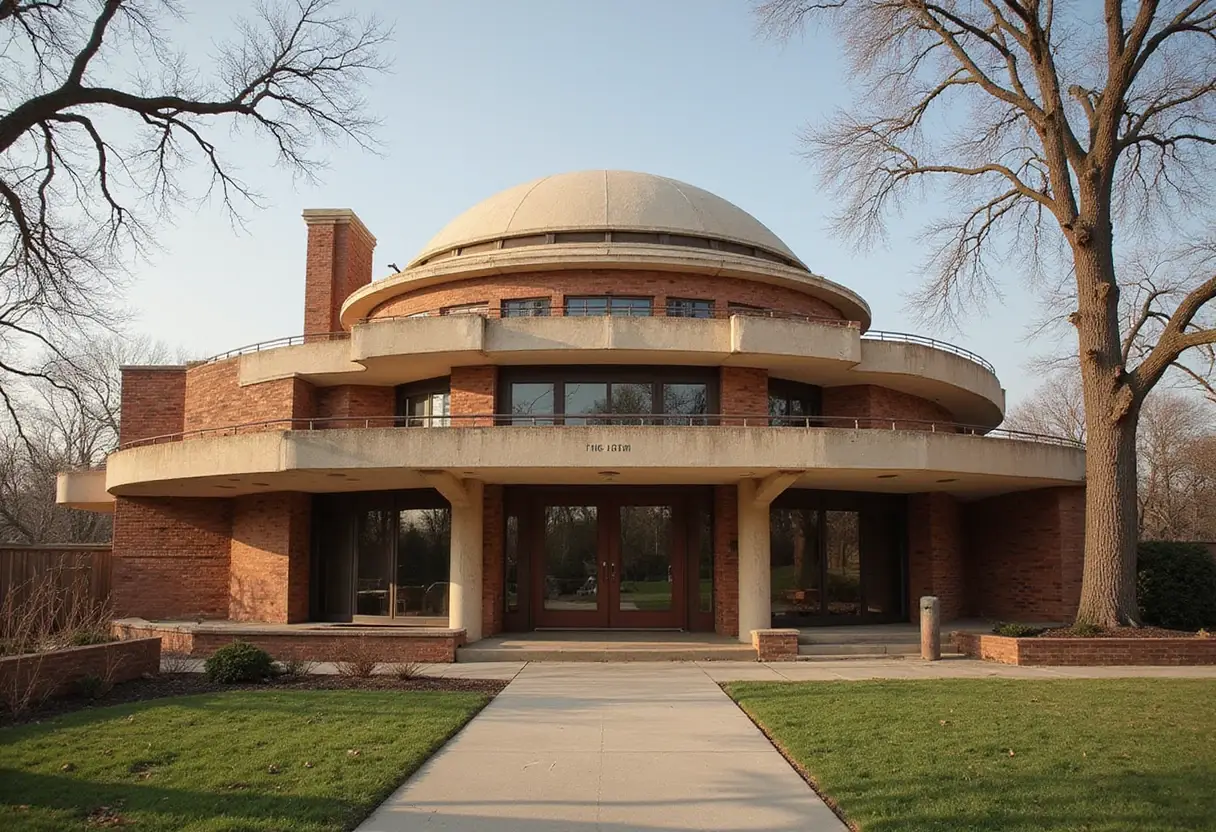
Wright established Taliesin West in 1937 in the foothills of the McDowell Mountains as his winter home and studio. The complex answered the Sonoran Desert with local stone, desert masonry, and lightweight canvas roofing hung from wooden beams. The original roof panels opened and closed to regulate sunlight and airflow — a tent for architects, essentially, that Wright and his apprentices inhabited each winter before returning to Taliesin in Wisconsin.
That operable fabric system did not survive the property's shift toward year-round use. The alterations came in waves:
- A fire in the mid-1960s destroyed the Music Pavilion; it was rebuilt with steel beams and translucent fiberglass roofing.
- In the 1990s, the roofing system was modified again, adding fixed acrylic exterior panels with canvas interior panels.
So the roof that failed was not Wright's canvas. It was a late-20th-century hybrid, roughly the architectural equivalent of replacing a sail with a garage door.
What had the Foundation planned?
For more than a decade, the Frank Lloyd Wright Foundation has been researching a return to Wright's original operable fabric roof system using contemporary materials. In March 2026, it outlined long-term preservation work that included environmental monitoring, energy modeling, and prototype testing. The stated goal: bring back Wright's approach to natural ventilation and light while improving thermal performance in the desert.
Seven months later, roofing debris killed a visitor. The timing is brutal, and the irony is not lost on anyone who has followed the restoration files.
What status does the site hold?
Taliesin West sits within the UNESCO World Heritage listing "The 20th-Century Architecture of Frank Lloyd Wright," which spans eight of the architect's works across the United States. It is also a National Historic Landmark and has continued to welcome visitors for tours and educational programs focused on Wright's architecture and its relationship to the desert environment.
What happens now?
The site stays closed, the investigation runs its course, and the Foundation stays quiet. The outcome will likely shape how, and how fast, the planned return to operable fabric roofing proceeds — a project that just acquired a deadline nobody wanted.
Original: azfamily.com
More from Amara Osei
Show full bio
Market editor covering companies, deals and strategy in construction industry, architecture, interior design at Built Current.
175 articles