Frank Lloyd Wright's Only Planetarium Reopens After 20 Years Dark
After more than twenty years without regular star shows, Frank Lloyd Wright's only built planetarium reopened at Florida Southern College on September 26th, 2026, following a major restoration.
- Section
- Renovation & Retrofit
- Author
- By Elena Vasquez
- Filed
- Length
- 3 min read
Key takeaways
- The Miller Planetarium, Frank Lloyd Wright's only built planetarium, reopened September 26th, 2026 after more than two decades without regular star shows.
- Restoration began in 2021 and replaced more than 280 hand-cast textile blocks, with molds developed using 3D printing.
- The building was constructed between 1954 and 1958 and hosted its first show in April 1960, a year after Wright's death.
- A new COSM digital projection system and Bowen sound system replace equipment that failed in 2004.
- The campus's thirteen Wright-designed structures form the largest single-site collection of his architecture in the world.
Frank Lloyd Wright's only built planetarium reopened to the public on September 26th, 2026, ending more than two decades without regular star shows at Florida Southern College in Lakeland, Florida. A team led by Jeff Baker of MCWB Architects restored the 1950s building, returning Wright's curved plywood seating to its original circular arrangement and installing a new digital projection system to bring the night sky back overhead.
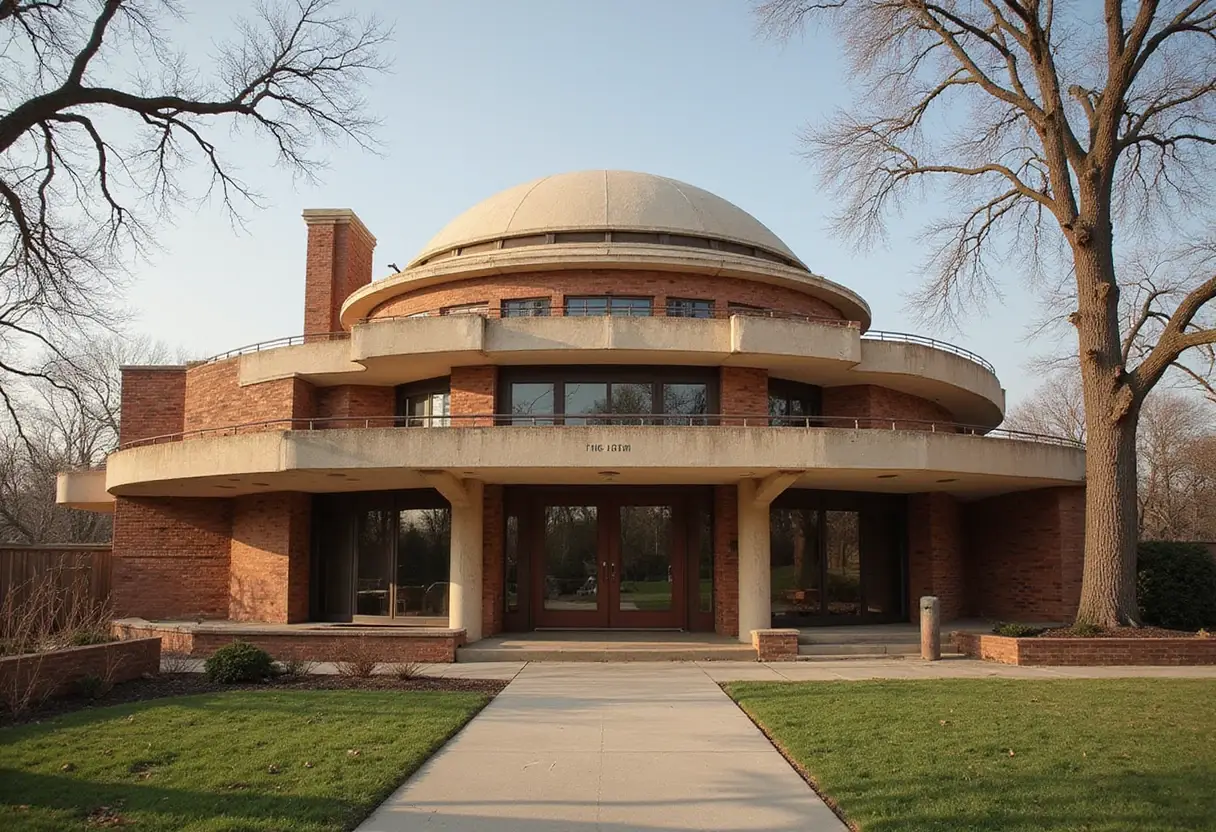
The Miller Planetarium occupies the southern end of the Polk Science Building, part of the college's collection of thirteen Wright-designed structures — the largest single-site collection of Frank Lloyd Wright architecture in the world. Wright had explored the idea of designing a planetarium for decades before folding one into his plans for the campus, which college president Ludd Spivey commissioned in 1938. The building went up between 1954 and 1958. Its pale concrete walls carry geometric textile blocks, and a white dome rises above the surrounding low-slung buildings. Wright never saw a show: the first one took place in April 1960, a year after his death.
What did the restoration involve?
Work began on the exterior in 2021, targeting years of water damage and deterioration in the concrete surfaces. The MCWB team replaced sections of roofing and repaired failing stucco. More than 280 hand-cast textile blocks around the planetarium's perimeter had to be replaced — decorative concrete units that form part of the architectural language Wright developed across the Florida Southern campus. To reproduce their geometric patterns, the restoration team turned to contemporary fabrication, using 3D printing to develop molds for new blocks designed to match the originals.
The work also exposed surprises behind the facade. Baker's team discovered areas of steel framing and open cavities behind the upper walls, where they had expected a more typical arrangement of Wright's concrete blocks. The discovery made it possible to add insulation into portions of the building that had sat exposed to Florida's heat. Elsewhere, the architecture posed a different problem: Wright's concrete surfaces often serve several structural functions at once, leaving little concealed space for the mechanical systems a contemporary building needs.
How did the interior change?
Inside, the goal was recovering the original spatial arrangement, which decades of repairs and technological additions had altered. A computer closet installed during the 1980s had interrupted the circular seating plan. Its removal let the architects return Wright's original plywood benches to their intended positions — two concentric rings around the central projection equipment. Local craftspeople repaired the surviving seating, keeping its curved forms and colored vinyl upholstery.
The finishes went back to their earlier appearance too. Deep-blue wall paint gave way to a lighter scheme based on the original design, and damaged plaster was repaired. Underfoot, the floor was refinished in Wright's signature Cherokee Red, its glossy surface reflecting the curved benches above.
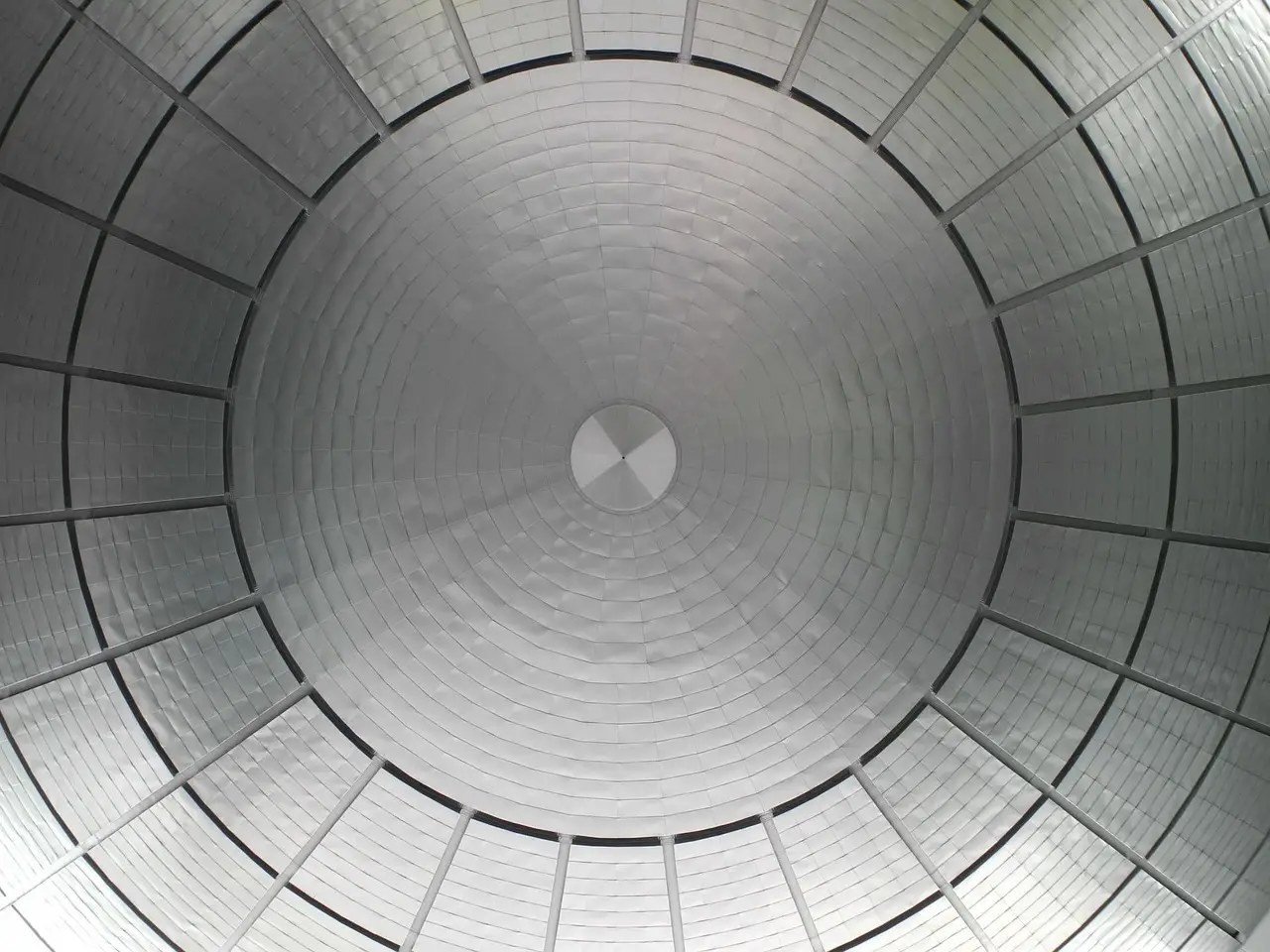
The layout itself is unusual for a planetarium. Visitors sit in the round beneath a complete dome, gathered around the center of the room. Most newer facilities use forward-facing theater seating instead.
What technology came in?
The final phase introduced a COSM digital projection system and a Bowen sound system, replacing equipment that had prevented the planetarium from operating since 2004. The old projector stopped functioning that year; the building saw occasional use afterward, but regular astronomical presentations were suspended. With the new technology installed, the restored room can again host presentations about the solar system and distant planets, along with programs for students and visiting school groups.
The reopening continues a longer preservation effort across Wright's Florida Southern campus. Past projects include the Waterdome fountain, the Annie Pfeiffer Chapel, and the campus's network of concrete esplanades. At the Miller Planetarium, the latest work returns the building to the educational purpose Wright envisioned: visitors can now take their seats in the original circular auditorium, beneath a restored red interior and a sky projected across the dome.
Original: google.com
More from Elena Vasquez
Show full bio
Senior reporter covering money, funding and market shifts around construction industry, architecture, interior design at Built Current.
179 articles