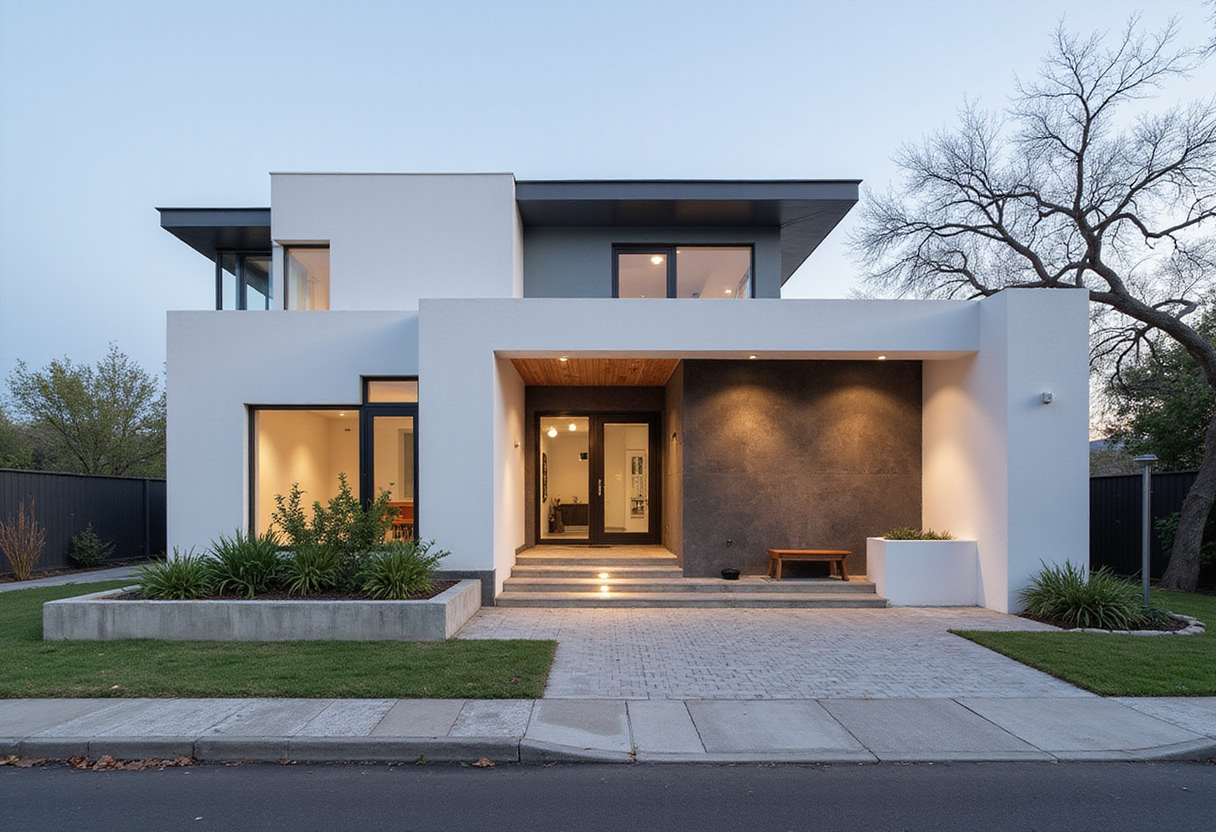
"Resilience Starts at Home": UNDRR Puts Housing at the Center of 2026 Disaster Day
UNDRR's 2026 International Day for Disaster Risk Reduction theme, "Resilience Starts at Home," puts housing design, building codes and land-use planning at the center of global resilience.
- Section
- Green Building
- Author
- By Priya Raman
- Filed
- Length
- 3 min read
Key takeaways
- UNDRR selected "Resilience Starts at Home" as the theme for the 2026 International Day for Disaster Risk Reduction, observed annually on October 13.
- The IDDRR was established by the United Nations in 1989.
- Four significant earthquakes struck Japan, Northern California and Venezuela within a 36-hour period in June.
- A magnitude 7.4 earthquake hit Colombia in August, damaging housing, healthcare and educational facilities and historic architecture.
- A Himalayan glacier collapse in August triggered flash floods that destroyed villages along the Nepal-Tibet border.
By Priya Raman
The United Nations Office for Disaster Risk Reduction (UNDRR) has chosen "Resilience Starts at Home" as the theme for the 2026 International Day for Disaster Risk Reduction (IDDRR), placing housing at the center of the global campaign. The day, observed every October 13, was established by the United Nations in 1989.
The choice is not abstract. This year alone, disasters struck homes and settlements across three continents. In June, two major earthquakes hit northern Venezuela within seconds of one another. Four significant earthquakes occurred across Japan, Northern California and Venezuela within a 36-hour period. In August, a magnitude 7.4 earthquake in Colombia damaged housing, healthcare and educational facilities, infrastructure, and historic architecture. That same month, a glacier collapse in the Himalayas triggered flash floods that destroyed villages along the Nepal-Tibet border.
What does the theme actually change?
UNDRR frames the home as both the primary site where disaster impacts land and the starting point for resilience. The campaign calls for:
- Risk-informed land-use planning
- Resilient building codes
- Accessible early-warning systems
- Inclusive design
- Greater investment in safe and affordable housing
The theme's premise is blunt: the location, design, construction, financing and maintenance of housing can either reduce risk or create it. Inadequate building standards and development in hazard-prone areas amplify the consequences of earthquakes, floods, extreme heat and other events. The campaign also names the actors beyond governments — local communities, developers, construction companies, financiers and households.
The 2026 focus shifts the question from hazard intensity to built-environment performance. As the campaign material puts it, the consequences of natural hazards are shaped not only by their intensity, but by "the resilience of the built environment and the preparedness of the communities living within it."
Designing homes for recurrent hazards
At the scale of the individual house, resilience increasingly means designing for environmental conditions that are recurrent rather than exceptional. Elevated and amphibious structures respond to seasonal flooding. Robust envelopes, passive cooling, fire-resistant materials, protected openings and adaptable energy systems help homes withstand extreme heat, storms, wildfires and power outages.
The shift is conceptual: from repairing or replacing damaged buildings toward anticipating hazards through decisions about site, structure, materials and everyday domestic spaces.
Post-disaster reconstruction and emergency architecture
Emergency architecture spans rapidly deployable shelters and longer-term reconstruction strategies. Modular and prefabricated systems accelerate construction where time, labor and resources are limited. Vernacular techniques and locally available materials make rebuilding more responsive to climate, culture and existing construction knowledge.
Lightweight and recyclable materials are also being tested as alternatives for temporary structures. These raise harder questions around dignity, adaptability, cost, transportation, and the transition from emergency accommodation to permanent housing.
Materials, infrastructure and the inequality problem
Beyond individual buildings, resilience depends on the materials, landscapes, infrastructure and public spaces that connect homes to their wider environments. Fire-resistant and self-repairing materials, permeable surfaces, green roofs, water-retention systems and passive cooling strategies — together, green and blue infrastructure (vegetated and water-based urban systems) — help cities manage heat, flooding and fire.
But the distribution of these measures is uneven. UNDRR's framing raises questions of access and inequality: who is protected, where investment goes, and how urban systems adapt over time. Resilience, in this reading, is not only a technical challenge but a distributional one.
What does this change for architects and developers? The 2026 campaign effectively makes housing design, codes and land-use decisions the test case for global disaster-risk policy — and puts the industry's choices about where and how to build at the center of the debate.
Original: iddrr.undrr.org
More from Priya Raman
Show full bio
News editor covering people, launches and day-to-day practice in construction industry, architecture, interior design at Built Current.
123 articles