Philippines extends school meals to 200 days despite kitchen gaps
The Department of Education says 4.63 million students are covered for 200 feeding days in 2026–2027, while central kitchens, canteens and healthier food policies remain uneven.
- Author
- By Grace Kim
- Filed
- Length
- 2 min read
Key takeaways
- SBFP coverage reached 4.63 million learners in School Year 2026–2027, up from 3.39 million in 2025.
- The feeding schedule increased from 120 to 200 days for School Year 2026–2027.
- More than 74 central kitchens were operating nationwide as of December 2025.
- DepEd aims to secure funding for 219 central and mobile kitchen units this year.
- The proposed 2027 budget allocates P11.4 billion to the SBFP.
By Grace Kim
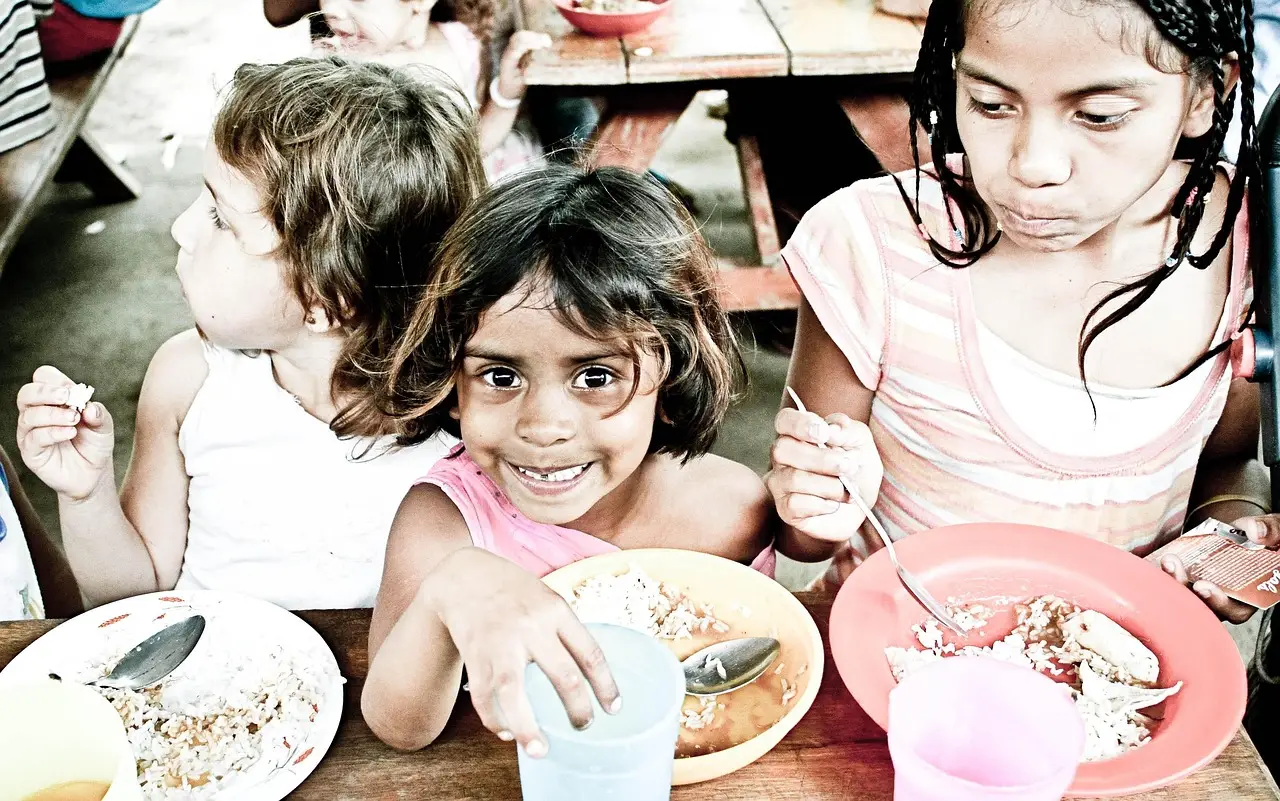
About 4.63 million students are part of the Philippines’ School-Based Feeding Program (SBFP) for School Year 2026–2027, according to the Department of Education. DepEd said the program extends to 200 feeding days, up from 120 a year earlier, even as some schools lack central kitchens and canteens.
Education Secretary Juan Edgardo “Sonny” M. Angara told reporters: “We also need to strengthen the program because we’re seeing that not all schools have hot meals; not all schools have access to central kitchens and canteens.” He said hot meals and access to central kitchens and canteens remained uneven.
Angara compared the Philippines with other countries that had operated feeding programs longer. “Other countries have been doing this for a long time, whereas here, we’ve only passed the feeding law,” he added. “So we still have growing pains in the feeding program.”
Republic Act (RA) No. 11037, the Masustansyang Pagkain para sa Batang Pilipino Act, requires a National Feeding Program for public school students to address undernutrition among Filipino children. The law mandates that DepEd implement the “Central Kitchen Model,” in coordination with local government units (LGUs) and partner stakeholders, as one possible modality for the program’s implementation.
Under the Central Kitchen Model, a central kitchen is a school- or LGU-supervised facility. It centralizes food procurement, preparation and cooking for one school or a group of schools.
DepEd reported in December 2025 that more than 74 central kitchens were operating nationwide. The department aims to expand central kitchen operations after securing funding for 219 central kitchen and mobile kitchen units this year.
Angara said the program also needs more canteens to support healthier living and nutrition. DepEd is strengthening school-canteen policies because they are not standardized, he said. The agency is moving toward healthier meals and no longer allows sugar or junk food, although both were permitted before, Angara said.
What does the expanded program change for students?
The schedule gives participating students 200 feeding days rather than 120. DepEd reported that national coverage has risen from 3.39 million learners in 2025 to 4.63 million. Its target groups are:
- All Kindergarten and Grade 1 students
- Learners who are undernourished in Grades 2 to 6
- Pregnant adolescent learners
- Other vulnerable groups
For those students, the practical change is a longer feeding schedule within a larger program. It does not close the kitchen and canteen gaps Angara described, or guarantee hot meals where those facilities are missing.
DepEd’s proposed 2027 budget allocates P11.4 billion to the SBFP. The department says the allocation will address malnutrition that may affect students’ classroom performance and learning.
The 219-unit plan could widen cooking capacity, but its expansion depends on securing funding. The next test is whether DepEd can combine expanded kitchen capacity with stronger canteen standards and deliver regular hot meals at the schools that still lack them.
Source: bworldonline.com
More from Grace Kim
Show full bio
Staff writer covering money, funding and market shifts around construction industry, architecture, interior design at Built Current.
405 articles