Neri Oxman Grows Fabric Dye From Living Bacteria on Silk
Neri Oxman's studio sprayed E. coli onto 3D-knitted silk, growing a living culture that leaves faded indigo and pink pigments within 24 hours. The Vigils project is still a prototype.
- Section
- Materials & Products
- Author
- By Elena Vasquez
- Filed
- Length
- 3 min read
Key takeaways
- The bacterial culture grows on the fabric for 24 hours and numbers in the billions of cells
- The spray uses the BL21 strain of E. coli, common in biotechnology research
- Four capes demonstrate variations in the bacteria-produced muted colours and patterns
- The process has not undergone Life Cycle Assessment and remains at prototype stage
- Oxman opened her Midtown Manhattan studio in 2024
Neri Oxman's studio has dyed silk fabric with living bacteria, producing muted indigo and pink pigments after a 24-hour growth cycle. The project, called Vigils, was developed at her studio Oxman for designers, artists and collaborators to "create new forms of material and aesthetic expression".
How does the process work?
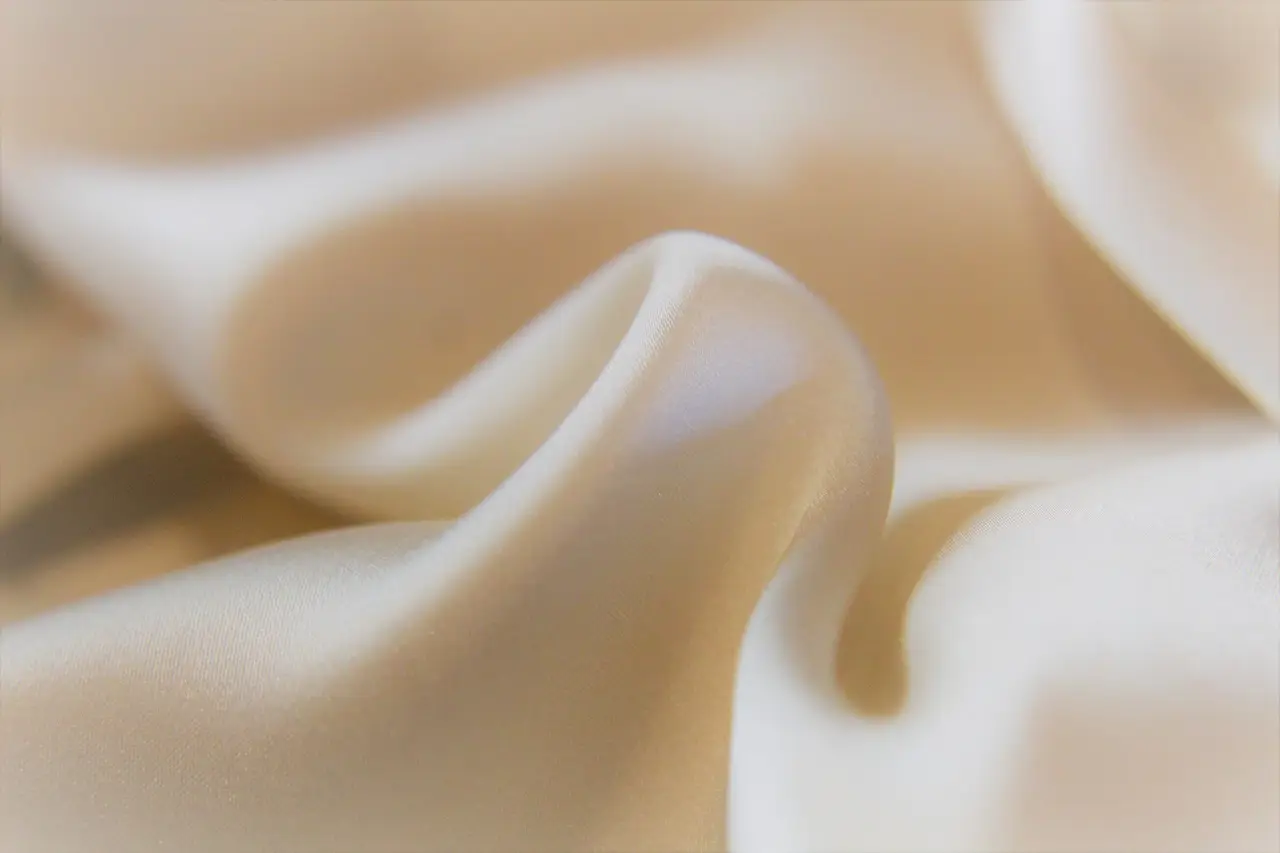
The mechanism is straightforward. The Oxman lab coated Tussah silk thread within a 3D-knitted fabric with what it calls "bacterially sensitive chemicals", which act as "a bioreactor" once mixed with a spray.
That spray contains the BL21 strain of Escherichia coli, a strain commonly used in biotechnology and synthetic biology research. Once applied, the fabric sits for 24 hours while the solution and chemicals interact, eventually producing a living bacterial culture.
This organism, described by the team as "numbering in the billions of cells", spreads across the fabric and leaves amino acids in its wake. Those amino acids colour the textile. The growth pattern depends on "where and how densely the designer directed the culture to grow" via the spray, according to the team.
The final step is a wash and dry. The washing removes the bacteria, but the pigment stays.
What does the project actually demonstrate?
To show the technique, the studio created a series of four capes. They display the variations in the muted colours and patterns that the bacteria produce.
The team frames the result as more than a colouring method. "The microorganisms respond to signals associated with the textile substrate, making biological activity an active component of the material process," said the team. "Vigils is a research-driven exploration of biological textile colouration."
The studio is presenting the process as a possible alternative to "resource-intensive" industrial dyeing. But it cautions against reading too much into that claim. "The project is intended to investigate the interaction between synthetic biology and material systems rather than to represent a fully optimised industrial dyeing process," it said.
Oxman put it more directly: "The result is not simply an alternative way of applying color: the biological process becomes part of the design itself, producing patterns and variations that could not be achieved through conventional dyeing and making each textile an expression of the process that created it."
How far along is it?
Not far. The process has not undergone extensive Life Cycle Assessment, the standard tool for measuring environmental outputs, and it remains at the prototype stage. The studio's environmental argument is, for now, a hypothesis rather than a verified claim.
Oxman opened a New York studio in Midtown Manhattan in 2024 and unveiled an AI-designed skyscraper at the time to demonstrate its computational abilities. She is known for her work in material ecology, though she also faced allegations of plagiarism in her PhD thesis completed at the Massachusetts Institute of Technology.
With Vigils, the studio has shown that a bacterial culture can serve as a design instrument, not just a pigment source. Whether it scales into a real alternative to industrial dyeing will depend on the assessment work the studio has yet to run.
Original: oxman.com
More from Elena Vasquez
Show full bio
Senior reporter covering money, funding and market shifts around construction industry, architecture, interior design at Built Current.
234 articles