Ryue Nishizawa Builds Orange Observation Peak on a Working Landfill
Ryue Nishizawa's vivid orange observation platform opens Oono Development's restricted landfill in Ehime, Japan to visitors at the inaugural Setouchi Art and Industry 2026 festival.
- Section
- Architecture
- Author
- By Amara Osei
- Filed
- Length
- 2 min read
Key takeaways
- Ryue Nishizawa's observation platform sits on a working landfill at Oono Development in Toon, Ehime Prefecture, Japan
- The landfill basin is expected to fill over approximately 15 years
- The exhibition is part of the inaugural Setouchi Art and Industry 2026, spanning seven industrial sites across Okayama and Ehime
- Kazuyo Sejima curated and supervised the exhibition, with Yuko Hasegawa, Yusuke Okura and Atsuhiro Miyake as advisors
- The visitors' red-orange workwear derives from a natural mineral produced in Ehime Prefecture
Ryue Nishizawa has planted a vivid orange observation platform on a working landfill in Ehime Prefecture, Japan — and the public is invited. The installation, part of Final Disposal Site – A Landscape Created by Nature, Industry, and People, turns a normally restricted industrial site into a place of observation. It's the kind of brief architects don't get twice.
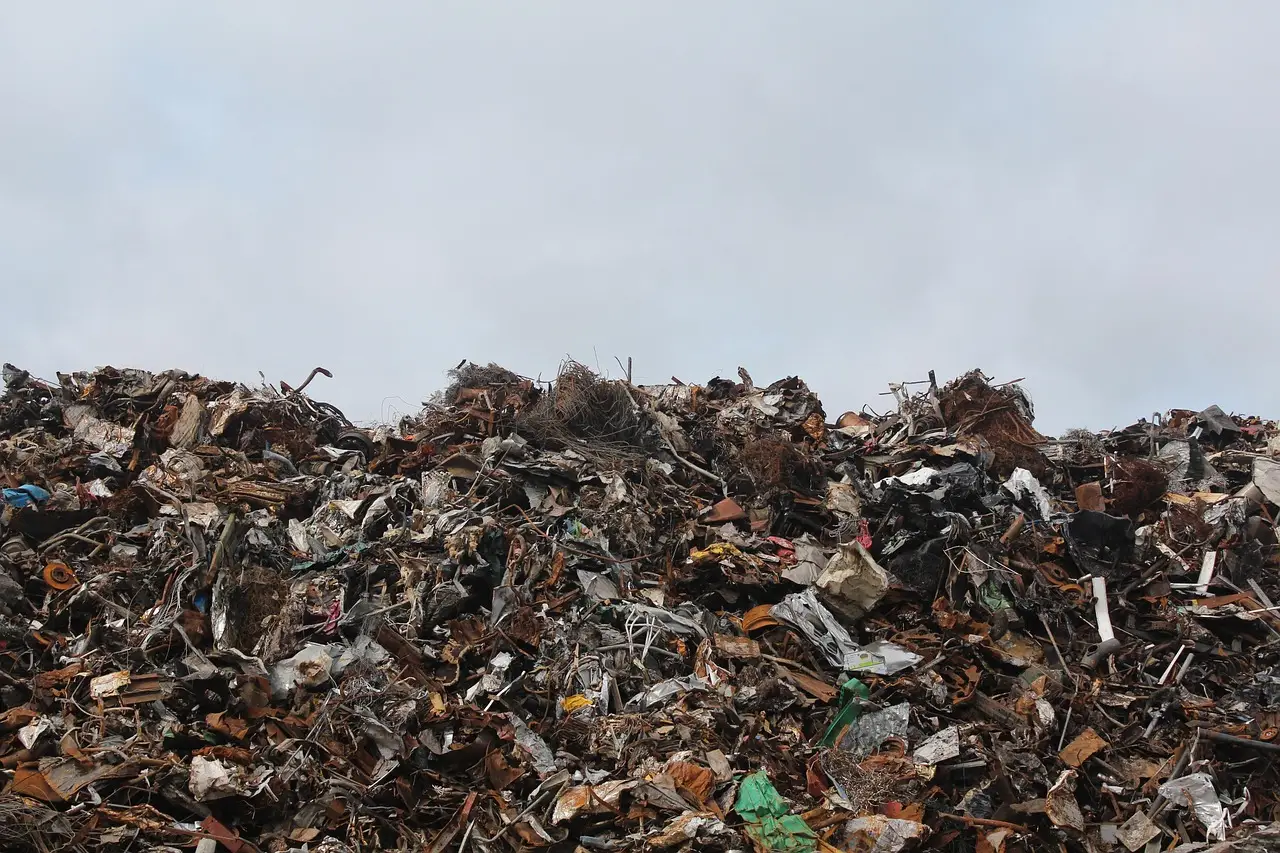
Nishizawa co-founded SANAA with Kazuyo Sejima, and here Sejima returns the favor: she curated and supervised the exhibition, which sits inside Oono Development's integrated recycling complex in Toon. The facility's engineers carved a valley into a vast basin for waste disposal, sealed off from surrounding soil and vegetation so refuse can't mix with the ground. The basin will take roughly 15 years to fill. Until then, its shifting terrain is the exhibition's set piece.
What does the visitor actually see?
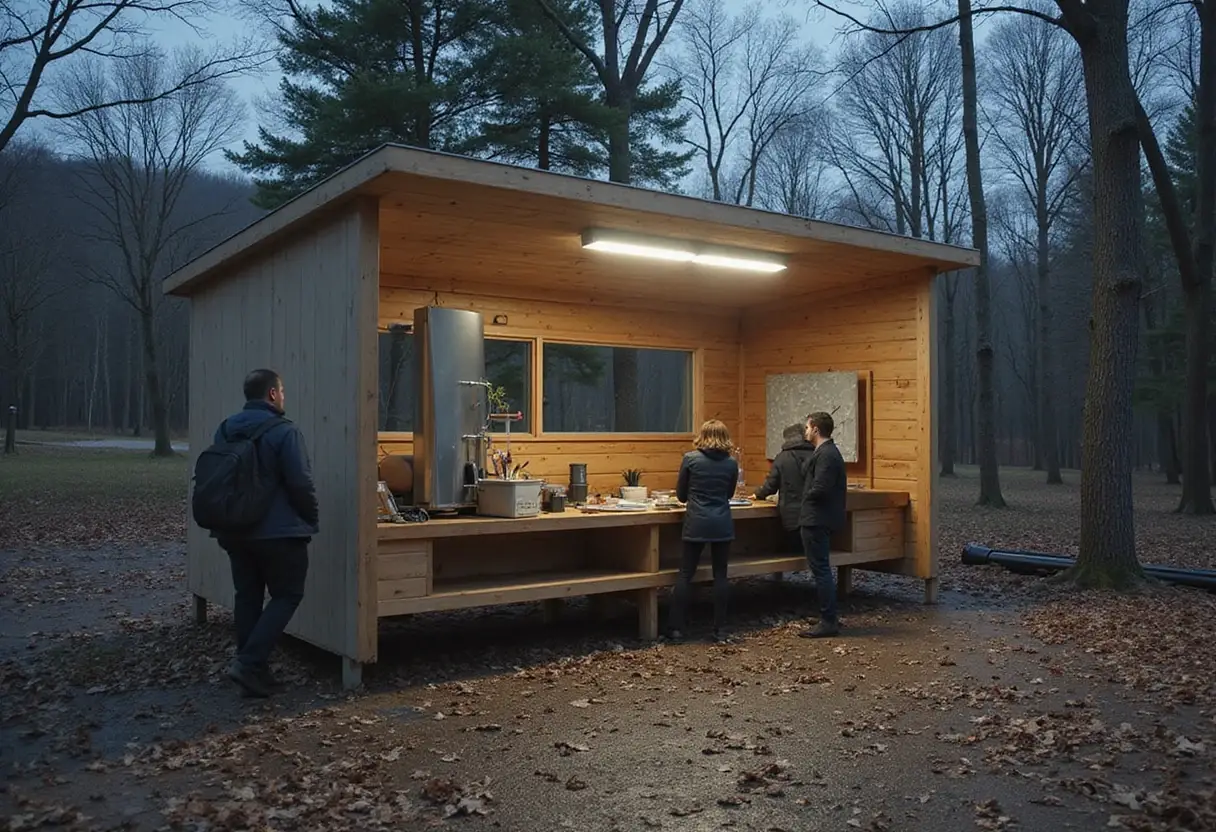
They arrive by bus, climbing toward the upper reaches of the site, dressed in workwear matched to the installation itself. The red-orange fabric derives from a natural mineral produced in Ehime Prefecture, so the crowd and the architecture read as one palette. From the valley rim and its artificial hills, visitors look out across the expanse of the landfill.
Nishizawa's platform gives them somewhere to pause and absorb the scale. The color scheme does the heavy lifting: the orange peak sits against pale ground, a turquoise landfill lining, and green mountains beyond. It's a formal composition built from waste infrastructure.
The exhibition directs attention toward material processes usually kept out of public view — the lining, the containment, the slow engineered filling of a valley. Landfill as landscape, with a viewing deck.
Who else built the visitor journey?
The project spreads well beyond one platform:
- Shingo Masuda and Katsuhisa Otsubo designed gathering spaces and the bus stop
- Suzuko Yamada developed the bus and the visitors' red-orange workwear
- Yuko Hasegawa, Yusuke Okura, and Atsuhiro Miyake served as advisors
Sejima pulled these pieces into a single route through the site, from bus stop to rim.
Where does Setouchi Art and Industry 2026 go next?
This is the inaugural edition of the festival, organized by the Japan Industrial Art Foundation. It's decentralized by design, spanning seven active industrial sites across Okayama and Ehime prefectures — facilities tied to salt production, textiles, denim, shipbuilding, battery storage, and resource recycling. The Oono Development installation is the model case: art and architecture inserted into operations that haven't stopped for the occasion.
Nishizawa's platform will watch the basin fill for the next 15 years. Few exhibitions get a deadline that patient, or that literal.
Original: google.com
More from Amara Osei
Show full bio
Market editor covering companies, deals and strategy in construction industry, architecture, interior design at Built Current.
209 articles