One Discarded Leather Armchair Becomes Nine Functional Objects
Jan-Micha Gamer salvaged a leather armchair from bulky waste and rebuilt its timber, foam, leather and springs into nine reversible, monomaterial domestic objects.
- Section
- Materials & Products
- Author
- By Marcus Bennett
- Filed
- Length
- 3 min read
Key takeaways
- Jan-Micha Gamer deconstructed one discarded leather armchair into nine functional domestic objects.
- The chair was salvaged from municipal bulky waste and separated into timber, metal, foam, textiles and leather.
- Joinery uses dry, reversible connections instead of permanent adhesives to enable future disassembly.
- Objects include a wave-spring fruit basket, a greyboard cabinet and a table made from low-grade frame timber.
- The project demonstrates decentralized fabrication methods for non-standardized waste streams without downcycling.
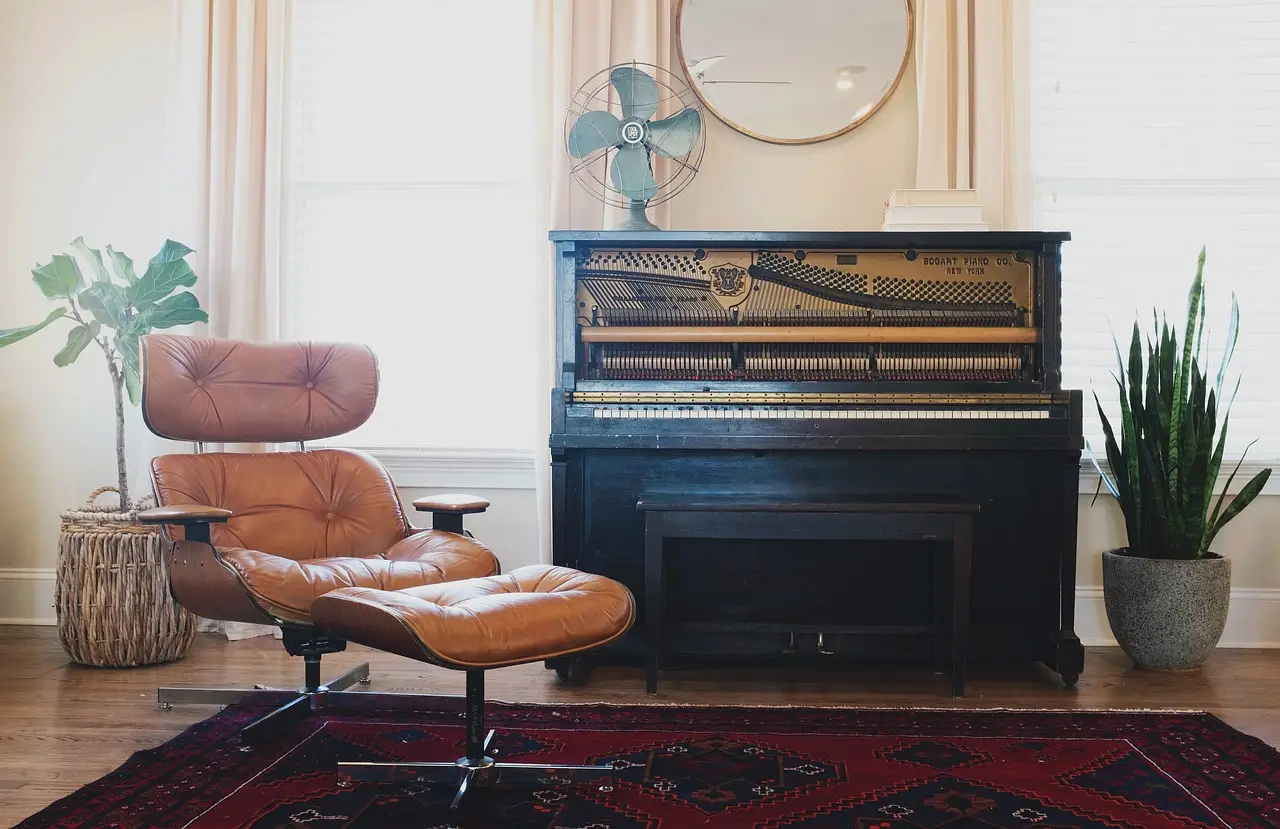
Designer Jan-Micha Gamer has dismantled a single discarded leather armchair, salvaged from municipal bulky waste, and rebuilt it into nine functional objects that together form a complete domestic ensemble. The project, titled Raw Material: Armchair, or Armchair as Resource, functions as a circular design study: it asks whether complex, heterogeneous consumer goods can be repurposed comprehensively enough to replace virgin resources without downcycling.
How did Gamer separate the chair?
Gamer began by disassembling the chair's structural core, upholstery layers, and exterior envelope, then sorted the yield into material fractions: timber, metal fasteners, foam, textile webbing, and worn leather hides. The process prioritized minimizing damage at every cut, preserving each fraction for further use.
The detailing follows three rules. Production processes adapt around the irregular dimensions and patinas of the recovered feedstock rather than concealing imperfections. Joinery favors dry, reversible connections over permanent adhesives. Finishes are selected to maintain monomaterial purity, so future disassembly cycles remain possible.
What are the nine objects?
Each object maps directly onto a material fraction of the original chair:
- Floor basket — recovered leather shaped into a basket that carries the material's creases and traces of use into a new everyday object.
- Candleholder — the geometric form of the original beechwood feet carried into a single candleholder retaining the character of the original components.
- Lamp — layered geometric forms create the lampshade, while a thin fabric covering reveals the texture of the repurposed upholstery batting beneath.
- Fruit basket — the spring geometry and tension of the armchair's wave springs translated into a sculptural bowl, joined with screwable stainless-steel connectors.
- Pouf — foam layers of different densities converge into a compact, architectural seating piece, with the geometry of the material defining its final form.
- Picture frame — wood offcuts frame a print of the original armchair; many pieces remain in their original state, preserving their individual character.
- Cabinet — made entirely from greyboard, reusing surfaces once covered with foam, with adhesive residue and staples left visible.
- Carpet — irregular leather pieces form a shape reminiscent of an animal hide, embracing traces of use as an aesthetic quality.
- Table — a translucent, hard-wearing coating highlights the unusual grain of the armchair's low-grade frame timber, turning an overlooked material into a defining feature.
What does the project change for practitioners?
The study demonstrates small-scale, decentralized fabrication methods capable of processing non-standardized waste streams into functional domestic products. For designers working with reclaimed feedstock, the operative lesson is that irregularity becomes a design input: the wave springs become a bowl precisely because their tension is the form; the low-grade frame timber becomes a table because the coating lets its unusual grain read as a feature rather than a defect.
The finishing process, documented in the project, balances surface quality, durability, and the potential for future material recovery — the criterion that separates this approach from conventional refinishing, which typically locks materials into a single use cycle.
Gamer, who published the project through designboom's DIY submissions feature, frames the armchair as a material test case rather than a product line. The implication for the field is direct: if a nine-object domestic ensemble can be extracted from one piece of bulky waste using reversible joinery and monomaterial finishes, the bottleneck in circular furniture lies less in material availability than in designing for separation at the outset.
Project information
Name: Raw Material: Armchair / Armchair as Resource. Designer: Jan-Micha Gamer (@janmichagamer).
Original: google.com
More from Marcus Bennett
Show full bio
Correspondent covering money, funding and market shifts around construction industry, architecture, interior design at Built Current.
219 articles