Latin America's October: Biennials, Housing Pilot Returns, Heritage Under Climate Pressure
October across Latin America: Santiago's nine-meter-wide social housing block, Buenos Aires' INHABIT biennial, and Santo Domingo pilots UNESCO's heritage climate toolkit.
- Section
- Architecture
- Author
- By Elena Vasquez
- Filed
- Length
- 3 min read
Key takeaways
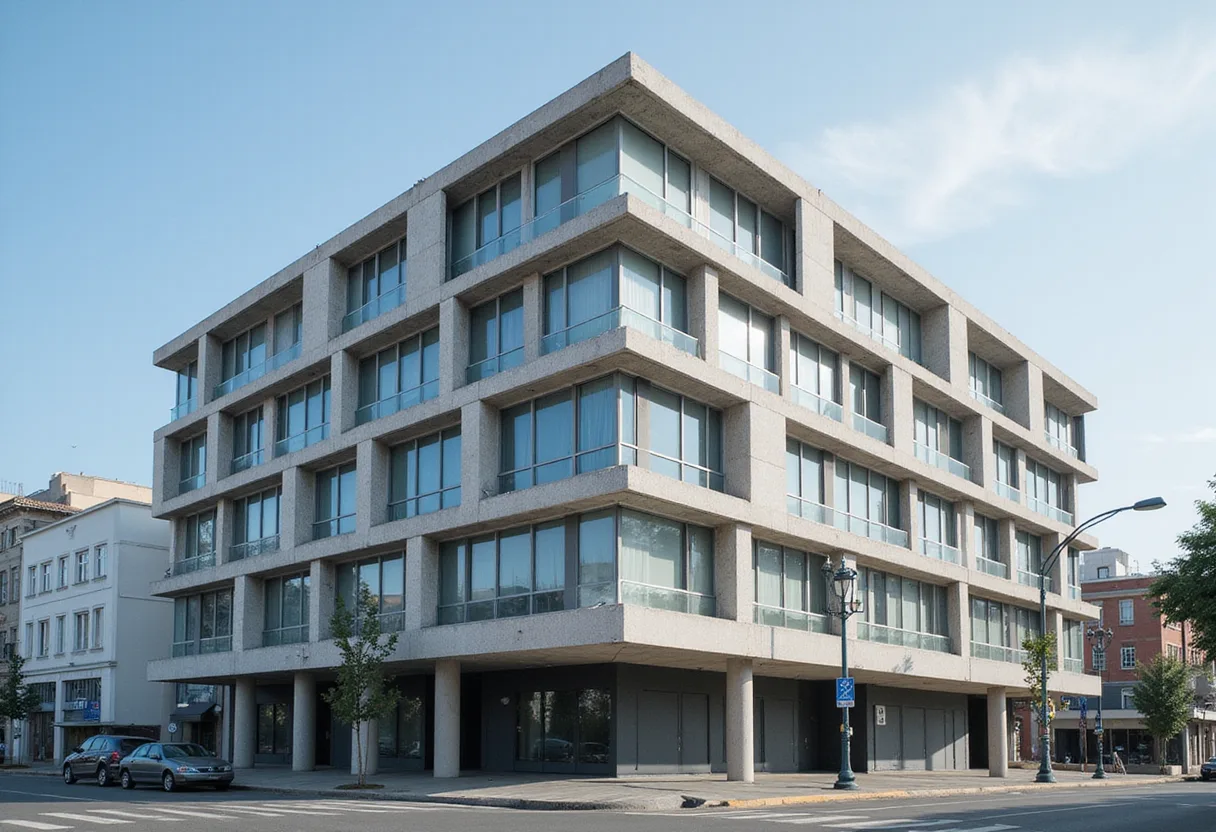
- FAR frohn&rojas' Santa Rosa Social Housing in Santiago fits 2,337 square meters on a site under nine meters wide, completed 2026 under Chile's DS-49 program.
- The 20th Buenos Aires International Architecture Biennial ran under the theme INHABIT across six main venues.
- The Colonial City of Santo Domingo became the first World Heritage property in Latin America and the Caribbean to pilot UNESCO's Climate Action Toolkit, October 5–9.
- Colombia's August 10 earthquake damaged 35 museums across 10 departments; a restoration-materials collection center opened in Bogotá on October 6.
- Mendiola Arregui completed the 994-square-meter Rancho del Abuelo equestrian complex near Guadalajara in 2026.
A seven-story concrete housing block on a site less than nine meters wide in central Santiago is one of the month's clearest signals that Latin American architecture is working tighter, harder sites. Completed in 2026 through Chile's DS-49 social housing program, FAR frohn&rojas' Santa Rosa Social Housing packs 2,337 square meters of mostly duplex apartments along Avenida Santa Rosa, accessed through shared galleries. A perforated blue metal screen shades the raw concrete, and shared verandas add outdoor communal space. The project even funds its own upkeep: advertising revenue from the north-facing façade is earmarked for long-term maintenance of shared amenities.
What happened at the biennials?
The 20th Buenos Aires International Architecture Biennial ran under the curatorial theme INHABIT, framing how social, cultural, environmental, and political conditions shape the way people live. Six main venues and partner institutions hosted international lectures, exhibitions, and public activities, with contributions from Smiljan Radić, Solano Benitez, Andrés Jaque, and Marina Otero Verzier. The program ran throughout October as part of Buenos Aires Design and Architecture Month.
In Mexico City, Design Week Mexico 2026 examined identity, craftsmanship, and contemporary design, with Chile as Guest Country of Honor. ArchDaily's Next Practices Live in Mexico, hosted at Design House during opening week and moderated by Editor-in-Chief Christele Harrouk, brought together 2026 Next Practices Awards winners MANUFACTURA, RAMA Estudio, and SOCA, plus previous Mexican winners ASPJ and Palma. Their conversation covered material research, ecological knowledge, and responses to specific social and environmental conditions.
Which projects stand out?
- Rancho del Abuelo / Mendiola Arregui — a 994-square-meter equestrian complex on the outskirts of Guadalajara, completed in 2026. Independent pavilions share one architectural system: flat concrete roofs on columns establish structure, while freestanding walls shape rooms and circulation. The gap between roofs and walls lets light and air move through pathways, courtyards, and shaded areas.
- Urban Mantle / Felipe Burgos Villablanca — a 16-square-meter contemplative seating installation on the Loncomilla River in San Javier de Loncomilla, Chile. A curved concrete surface accommodates different resting positions on a site once tied to colonial maritime trade. The design draws on Enric Miralles and Anne Holtrop, embracing the construction process and its imperfections.
Why does UNESCO's climate toolkit matter?
The Colonial City of Santo Domingo became the first cultural World Heritage property in Latin America and the Caribbean to pilot UNESCO's Climate Action Toolkit. A workshop from October 5 to 9 gathered specialists in heritage conservation, urban planning, and disaster risk management to assess how hurricanes, heavy rainfall, and flooding could hit the historic center. UNESCO developed the toolkit with ICCROM, ICOMOS, and IUCN, connecting climate projections and local knowledge to planning strategies. The pilot feeds into a climate action plan for the district — a template other heritage cities in the region will likely watch closely.
How is Colombia recovering its heritage?
Colombia's cultural institutions mobilized after the August 10 earthquake, which damaged heritage across seven departments. On October 6, the National Museum of Colombia, ICOM Colombia, and Universidad Externado de Colombia opened a collection center in Bogotá to gather restoration materials. Reports counted damage at 35 museums and museum institutions across 10 departments. The District Institute of Cultural Heritage (IDPC) kept its volunteer program running, conducting architectural surveys, photographic documentation, and preliminary damage assessments in affected municipalities.
Together, the month's developments show cultural institutions and designers taking on responsibilities — climate preparedness, post-disaster recovery, long-term building maintenance — that traditionally sat outside their briefs.
Original: issuu.com
More from Elena Vasquez
Show full bio
Senior reporter covering money, funding and market shifts around construction industry, architecture, interior design at Built Current.
249 articles