House in the Woods Settles a 4,400-Square-Foot Home Into a Slope
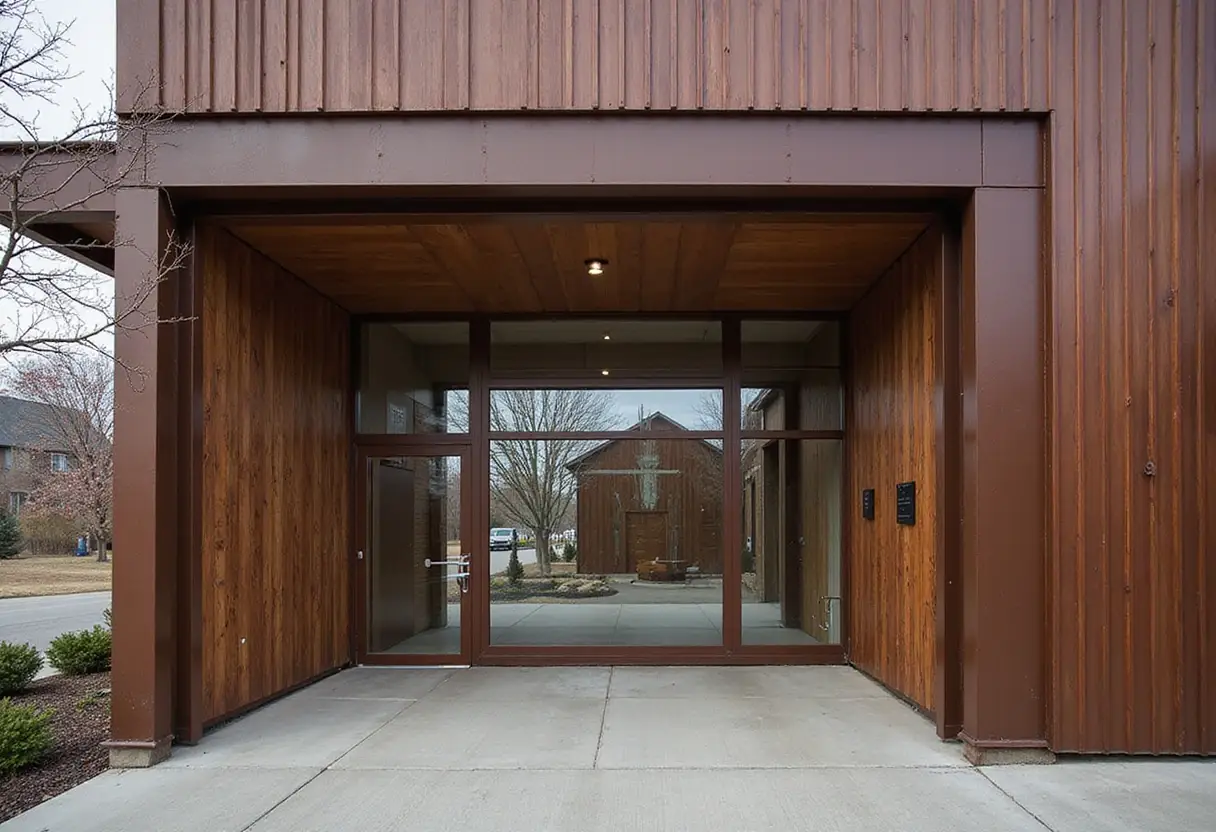
Tom Lontine Architect’s 4,400-square-foot House in the Woods pairs dark-stained cedar with a low profile, embedding a 2023 residence in a wooded slope above the Connecticut River.
- Section
- Architecture
- Author
- By Grace Kim
- Filed
- Length
- 3 min read
Key takeaways
- House in the Woods covers 4,400 square feet.
- The project is dated 2023.
- Tom Lontine Architect designed a low-slung, dark-stained cedar residence embedded into a wooded hillside overlooking the Connecticut River.
- Studio Nicholas Venezia provided the project photographs.
- The credited manufacturers are Arcadia Custom, Extira, Nemo Tile, Space Theory and WAC Lighting.
By Grace Kim
Tom Lontine Architect’s 2023 House in the Woods covers 4,400 square feet on a sloped, wooded site overlooking the Connecticut River. The architects designed the residence for a pair of hardworking professionals seeking “a quiet home to age in place.”
The house answers that brief with a low-slung form clad in dark-stained cedar. In Tom Lontine Architect’s project description, the house is “embedded into the hillside to minimize its visual impact” and heightens the sense of immersion in the surrounding forest.
That relationship between terrain and building is the project’s clearest architectural move. Its embedded position keeps the house within the slope instead of presenting it as a conspicuous object against the wooded background.
The architects describe the results as reduced visual impact and stronger immersion. For the clients, the practical effect is a home organized around seclusion rather than a prominent architectural statement.
What does the hillside approach change for the residents?
It changes the residents’ relationship with the site. The low profile reduces the building’s visual dominance, while the dark-stained exterior gives the house a subdued presence among the trees.
The site’s overlook of the Connecticut River adds a larger geographic reference beyond the immediate woodland. Together, those conditions frame the house as part of a setting rather than an object set against it.
The architects’ brief also makes longevity part of the design premise. The pair want a place to age in place, and the project’s low-slung description sets a calm physical tone for that longer-term use.
The available information does not identify accessible routes, bathroom layouts, medical provisions or other details of future care. Those omissions leave the practical meaning of “age in place” dependent on elements the architects have not yet documented.
Material choices reinforce the same strategy. Dark-stained cedar forms the house’s exterior cladding, and the low-slung profile keeps its bulk close to the slope.
The architects identify no second exterior finish or accent material in their description. That restraint supports their stated aim of minimizing visual impact and strengthening immersion in the forest.
Tom Lontine Architect credits five manufacturers on House in the Woods: Arcadia Custom, Extira, Nemo Tile, Space Theory and WAC Lighting. The project description does not assign individual products to those companies, so the credits establish the broader supplier team without showing how each contribution appears in the finished house.
Studio Nicholas Venezia provided the project photographs for the 2023 design. Its visible identity comes from a deliberately limited set of choices: low profile, dark-stained cedar and direct contact with the slope.
The stated brief is more specific than the house’s 4,400-square-foot area suggests. Two hardworking professionals wanted a quiet home, and Tom Lontine Architect answered with a cedar-clad residence held low against a wooded hillside.
As the clients grow older, the test will be whether visual restraint and immersion can also support the everyday ease implied by “age in place.” The architects have established the site and massing; the published program leaves the remaining question of practical longevity open.
Source: ArchDaily
More from Grace Kim
Show full bio
Staff writer covering money, funding and market shifts around construction industry, architecture, interior design at Built Current.
325 articles