FTI to run Quezon food hub on 30-hectare DA site for 25 years
Food Terminal will run a food hub on more than 30 hectares in Tiaong, Quezon, under a 25-year DA usufruct, with cold storage, trading and P12 million in annual support.
- Section
- Urbanism & Planning
- Author
- By Amara Osei
- Filed
- Length
- 2 min read
Key takeaways
- FTI will operate a food hub on more than 30 hectares in Tiaong, Quezon.
- The DA will grant FTI a 25-year usufruct while retaining ownership of the 30-hectare site.
- The hub forms part of a 49-hectare BPI facility used as the Quezon Agricultural Research and Experiment Station.
- FTI will provide BPI P12 million annually in cash, approved development facilities or technical support.
- FTI will absorb the hub’s development and maintenance costs.
By Amara Osei
Food Terminal, Inc. (FTI) will operate a food hub on more than 30 hectares in Tiaong, Quezon, under a 25-year usufruct from the Department of Agriculture (DA).
The DA said the hub forms part of a 49-hectare facility administered by the Bureau of Plant Industry (BPI). The wider site currently serves as the Quezon Agricultural Research and Experiment Station.
Who owns the land?
The DA said it will retain ownership of the 30 hectares. FTI will own and operate the food hub, overseeing logistics and market access for agricultural and fishery products landed there.
Agriculture Secretary Francisco P. Tiu Laurel, Jr. explained the arrangement: “The arrangement puts an underutilized government property in Tiaong, Quezon, to work for food security without transferring ownership to FTI.”
Laurel’s distinction is plain. The DA retains the land. FTI owns and operates the hub. The 25-year usufruct sets the term without moving ownership.
What will the hub handle?
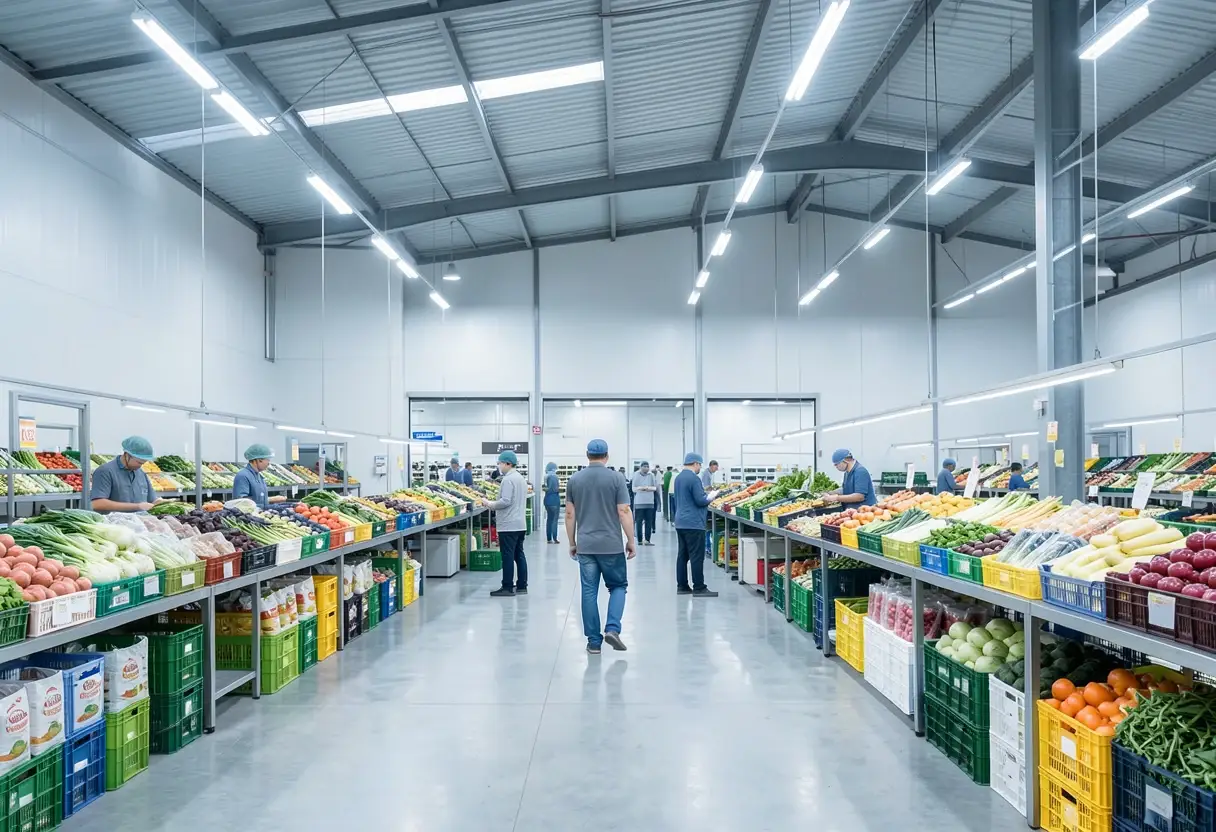
The DA said the hub will host cold storage for crop and aquatic commodities, meat, and other agri-fishery products. FTI also plans wholesale trading, processing, logistics, and distribution facilities.
Together, those uses give the site a defined commercial function. As planned, the hub functions as a cold-chain market with processing and distribution attached.
The DA also defined FTI’s public-facing mandate: to “help stabilize prices of basic commodities and ensure continuous food supply through the procurement, processing, and distribution of farm and marine products.”
Laurel’s language sets two tests for the project. FTI must turn the research-station site into an active trading and logistics operation. Its procurement and distribution work must also support the DA’s stated goals of steadier commodity prices and continuous supply.
What does FTI pay for?
FTI will provide BPI with P12 million annually as institutional support, according to the DA. The support may take the form of cash, approved development facilities or technical support.
FTI will also absorb the cost of developing and maintaining the hub, the DA said. The arithmetic has two sides: an annual P12 million commitment to BPI and the operator’s assumption of the hub’s development and upkeep costs.
Laurel said the arrangement would: “It will accelerate the development of the mega food hub as a place where farmers, fisherfolk, suppliers, traders and consumers can connect, move food more efficiently, and meet their needs.”
The DA has set the tenure, operating rights and financial commitments. The next test is practical. If procurement, cold storage, wholesale trading, processing and distribution work as planned, the 25-year hub will have met the DA’s stated test: helping stabilize basic-commodity prices and ensuring a continuous food supply.
Source: bworldonline.com
More from Amara Osei
Show full bio
Market editor covering companies, deals and strategy in construction industry, architecture, interior design at Built Current.
354 articles