Florence pauses plan for 39-tree Firenze Little Island on the Arno
Renna Studio’s 39-tree Firenze Little Island would float on modular pontoons from May to September, then leave the Arno before winter flooding; Florence has paused plans.
- Section
- Landscape & Public Space
- Author
- By Marcus Bennett
- Filed
- Length
- 3 min read
Key takeaways
- Renna Studio’s proposal places 39 mature trees around a timber deck in Florence’s Arno River.
- The seasonal platform would operate from May through September in the Pescaia area.
- A segmented planter ring would stand approximately 1 meter (3.3 feet) high.
- The concept gained municipal backing in 2024 and support from Antonella Ranaldi in early 2026.
- The 39-tree platform remains unapproved after municipal plans paused.
Renna Studio’s Firenze Little Island would carry 39 mature trees on a modular platform in Florence’s Arno River, but Florence has paused plans for the still-unapproved installation.
Architect Angelo Renna and Renna Studio designed the seasonal proposal for the Pescaia area, where a weir regulates the current and creates relatively sheltered water. According to the studio, calmer river conditions from May through September make outdoor activities feasible.
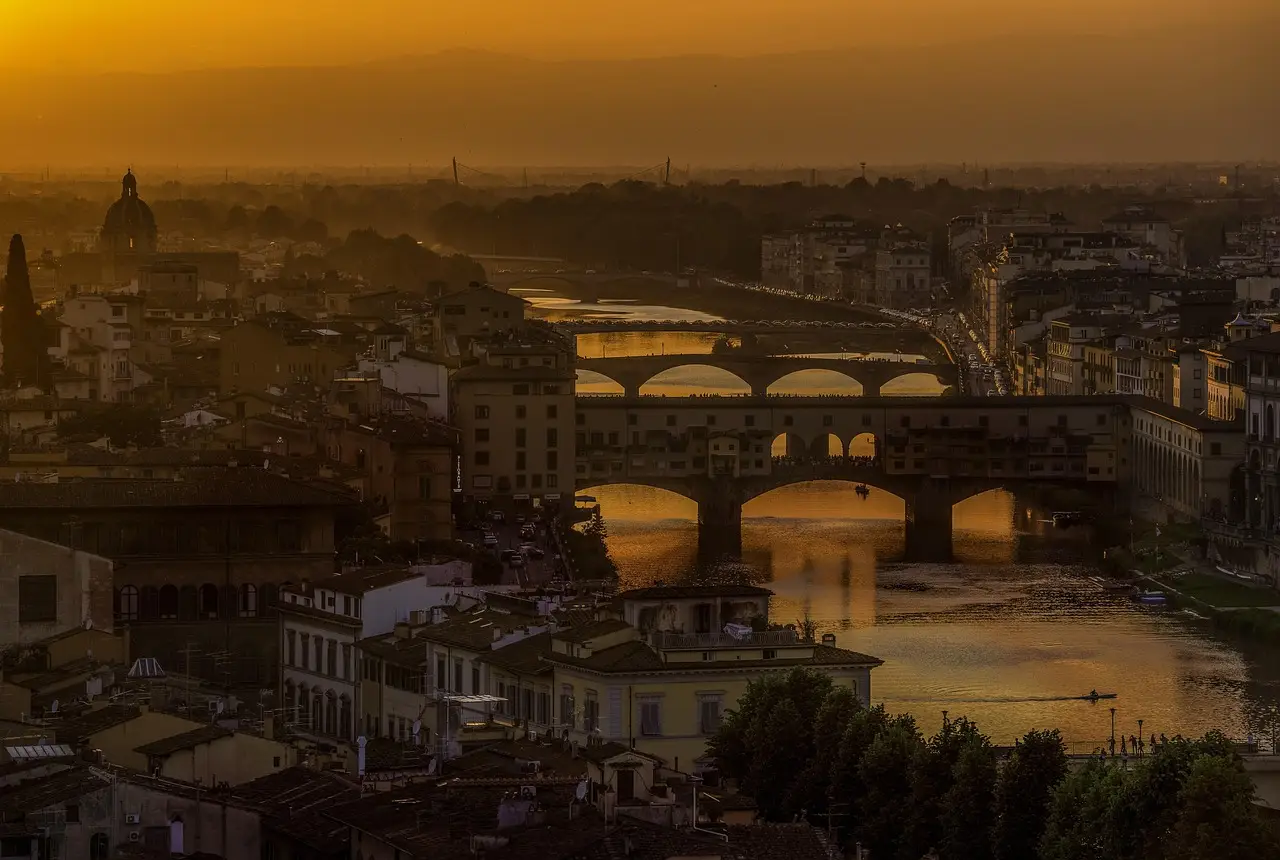
Renna Studio frames the intervention as a new public experience for a city known for Renaissance architecture, historic bridges and centuries of artistic heritage. The scheme would turn a section of the Arno into an accessible outdoor destination, giving visitors a perspective usually reserved for people crossing Florence’s bridges or walking its embankments. Orchestral performances and open-air concerts would share the site with markets, fitness events and informal gatherings.
How would the platform float?
The scheme separates buoyancy, support and anchorage. Prefabricated floating pontoons, similar to those used for jetties and floating platforms, would provide the buoyant foundation. A timber beam substructure would support the finished decking and create a stable surface for visitors and events.
Underwater cables would anchor the installation to the riverbed. They would secure its position while allowing the platform to rise and fall with fluctuations in the Arno’s water level. Renna Studio says this flexibility suits a structure occupying a natural waterway rather than a controlled artificial basin.
What would define the island?
At its center, the proposal places a spacious timber deck within a circular arrangement of trees. Rather than introducing a conventional pavilion or permanent building, Renna Studio would use vegetation to define the island’s architectural character.
A segmented planter ring, approximately 1 meter (3.3 feet) high, would surround the central platform and accommodate the 39 mature trees. Renna Studio says the ring would create a green silhouette against Florence’s historic skyline and provide separation from the water. The trees would also offer natural shade and encourage air circulation during warmer months, contributing to the proposed microclimate.
Why would it leave the Arno every winter?
The Arno is susceptible to increased water levels and flooding during autumn and winter, according to Renna Studio, which makes a permanent installation considerably more challenging. The proposed answer is a demountable design and seasonal removal.
Under the scheme, the floating pontoons, timber decking and segmented planters would be separated, transported and stored until the following season. The installation would be dismantled before unfavorable weather arrives. Its trees and root systems would be maintained in municipal nurseries, allowing the studio to preserve them and return them when the platform is reassembled.
This sequence would let the project follow the river’s seasonal rhythms. Florence would gain a programmed public space during the warmer months, then remove its components before flood season. The scheme would leave no permanent built presence in the water.
How does the drawing connect to Florence?
One illustration references Francesco Rosselli’s Pianta della Catena from 1471, described in the proposal as a celebrated historical representation of the city. Renna Studio draws on Florence’s long architectural history through the image.
By placing the floating island within a composition of Florence’s recognizable monuments and landmarks, the illustration links the contemporary intervention to the city’s historic urban identity. The circular arrangement of trees introduces a new element into the familiar scene without attempting to replicate the surrounding architecture.
Has Florence approved the project?
Initially proposed with municipal backing in 2024, the broader concept received support from Heritage Superintendent Antonella Ranaldi in early 2026. Municipal plans have since paused. Firenze Little Island remains an architectural proposal, not an approved installation.
For architects and city officials, the unresolved question is whether the reversible scheme can move from drawing to coordinated seasonal operation. Its components already have assigned routes: pontoons and timber elements would be stored after September, while trees and root systems would wait in municipal nurseries. Florence still has to align construction, maintenance and summer programming before the island can function as a public place. Until those systems work together, the Arno has gained a proposal, not a public destination.
Original: instagram.com
More from Marcus Bennett
Show full bio
Correspondent covering money, funding and market shifts around construction industry, architecture, interior design at Built Current.
425 articles