Egypt's Desert Capital Reaches 30,000 Residents as Photographer Walks Its Edge
Close to 30,000 residents now live in Egypt's New Administrative Capital. Photographer Manuel Álvarez Diestro walked its desert edge in a series he calls "The Conquest."
- Section
- Urbanism & Planning
- Author
- By Marcus Bennett
- Filed
- Length
- 3 min read
Key takeaways
- The New Administrative Capital counts close to 30,000 residents, with 60,000 expected by year's end, per official sources.
- President Abdel Fattah El-Sisi inaugurated the State Strategic Command Headquarters on July 4, 2026.
- The project was announced in 2015 as a "natural extension of the city of Cairo," 45 km east of the capital.
- Álvarez Diestro's series "The Conquest" documents the city from a pedestrian's perspective.
- ZHA's Stone Towers, Legorreta and Machado Silvetti works appear along his route.
By Marcus Bennett
Egypt's New Administrative Capital counts close to 30,000 residents, according to official sources, with 60,000 expected by the end of the year — occupancy that still lags far behind the governmental presence already installed in the desert city 45 kilometers east of Cairo. Photographer Manuel Álvarez Diestro has now walked that ground and published the result as a series titled "The Conquest." His images frame a city built from scratch as a massive taking of territory, and they arrive at a moment when the project's first phase is largely complete.
What has actually been built?
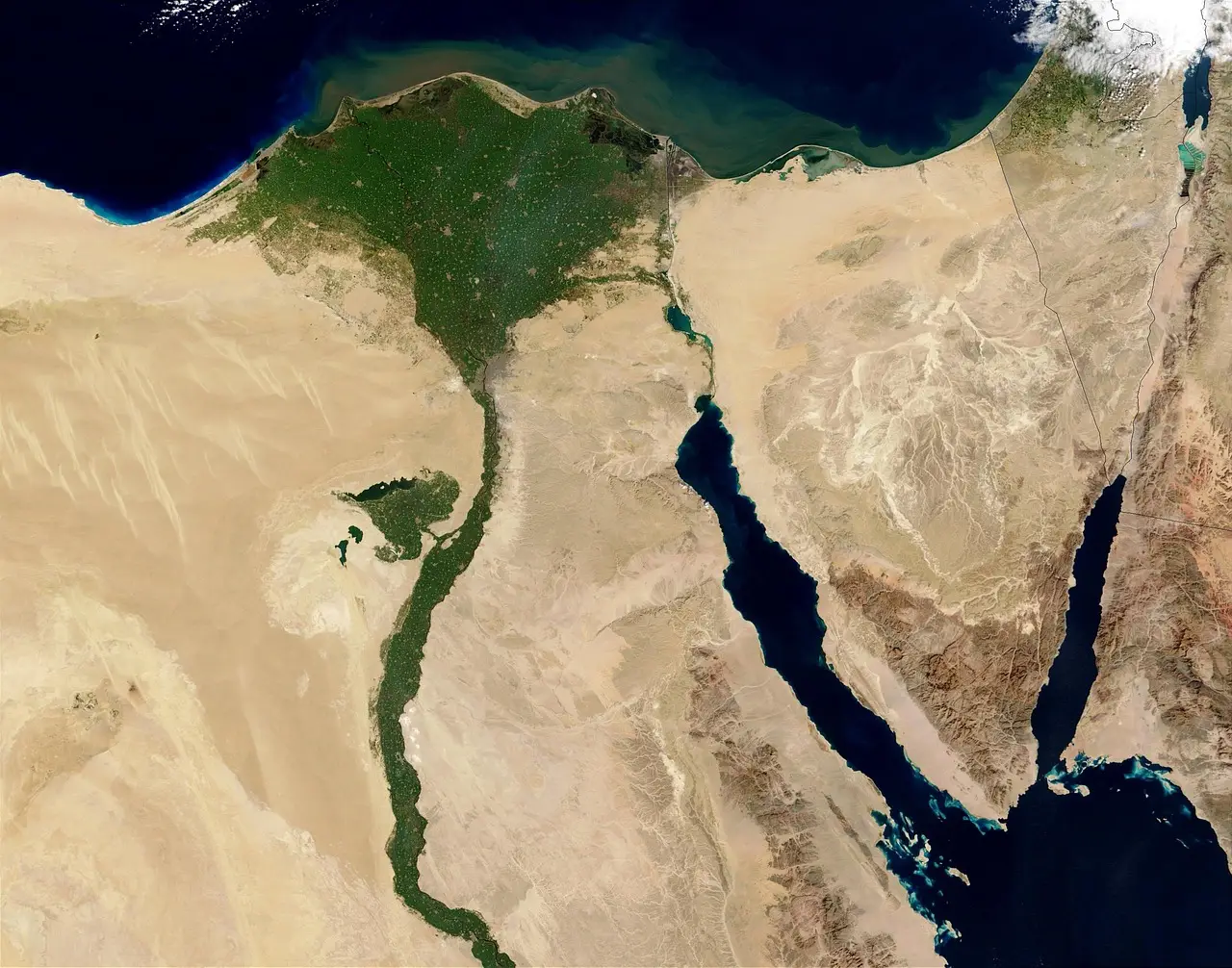
The government announced the project in 2015 as a "natural extension of the city of Cairo," aimed at relieving congestion and overpopulation over the next 40 years. The site sits roughly halfway between Cairo and Suez, and 55 to 60 kilometers from the Red Sea coast at Ain Sokhna and the Gulf of Suez. President Abdel Fattah El-Sisi formally inaugurated the State Strategic Command Headquarters there on July 4, 2026. Cairo remains the official capital, but various government functions have moved east. The NAC is one of two major urban developments near the capital, alongside New Cairo, a satellite city east of the Ring Road that dates to the 2000s.
The project recalls Brasília and joins recent purpose-built capitals in Equatorial Guinea, Indonesia and South Korea. Unlike those denser precedents, this one expands horizontally, as Álvarez Diestro's photographs make plain.
What does "The Conquest" show?
Álvarez Diestro specializes in new developments and looks for movement and expectation in the urban landscape — the relationship between a new building and its geography, and the journey of discovery itself. His route begins in eastern Cairo. He passes a giant billboard illustrating Zaha Hadid Architects' Stone Towers project, the structural frames of future villas, and rocks and discarded objects scattered across a vast lowland.
Beyond ZHA's project, he notes luxury housing and public installations by international firms including Legorreta and Machado Silvetti — work set to place this ground-up development in contemporary architectural guides.
His reading of the place is historical. Cairo, he argues, is understood through its proximity to the Nile; these new cities in the desert mark a reinvention, expanding indefinitely into the vastness around them. He presents architecture as "a force for destruction as it is for improvement."
The first gated communities he encounters mix styles he catalogs directly: "neo-classic, pharaonic, South-American hacienda, not forgetting the Mediterranean, even copying elements from Chinese temples." Once inside the city, he proceeds on foot through the horizontal extension. Drawing on comparable projects he has shot, he finds the images evoke the marinas of Dubai, a new town development in Chongqing, and a new commercial center on the Pearl River in Guangzhou.
Why a photo series matters here
Álvarez Diestro is not alone in using photography to reread architecture. Paul Clemence revisited Le Corbusier's Notre-Dame du Haut at Ronchamp, examining light, materiality and the chapel's sculptural qualities, and recently documented Heatherwick Studio's West Bund Orbit exhibition hall on Shanghai's waterfront. Ahmad Alnaji captured Pelli Clarke & Partners' City Tower One in Dubai; Stefano Candito shot the final construction days of Herzog & de Meuron's contested Tour Triangle in Paris.
For practitioners, "The Conquest" offers a pedestrian's verdict on a capital still filling in: whether the desert city reads as urban fabric or as spectacle is exactly what the next phase of residents will decide.
Original: manuelalvarezdiestro.es
More from Marcus Bennett
Show full bio
Correspondent covering money, funding and market shifts around construction industry, architecture, interior design at Built Current.
328 articles