Ethiopia's 175-Meter Mega-Dam Rewrites the Nile's Power Map
Ethiopia inaugurated the 175-meter, 1.8-kilometer GERD in September 2025, and the dispute over the Nile's 74 billion cubic meters is only beginning.
- Section
- Construction
- Author
- By Priya Raman
- Filed
- Length
- 3 min read
Key takeaways
- Ethiopia inaugurated the GERD in September 2025; the dam stands 175 meters tall and 1.8 kilometers long on the Blue Nile.
- The reservoir holds 74 billion cubic meters of water — 3.5 times the surface area of Addis Ababa — and the dam is rated at up to 6,000 MW.
- The 1959 Nile Water Agreement allocated Egypt 55.5 billion cubic meters per year and Sudan 18.5 billion.
- The Blue Nile supplies 85% of the Nile's flow; Egypt draws more than 90% of its freshwater from the river.
- The CFA entered into force in October 2024; Egypt and Sudan refused to sign.
By Priya Raman
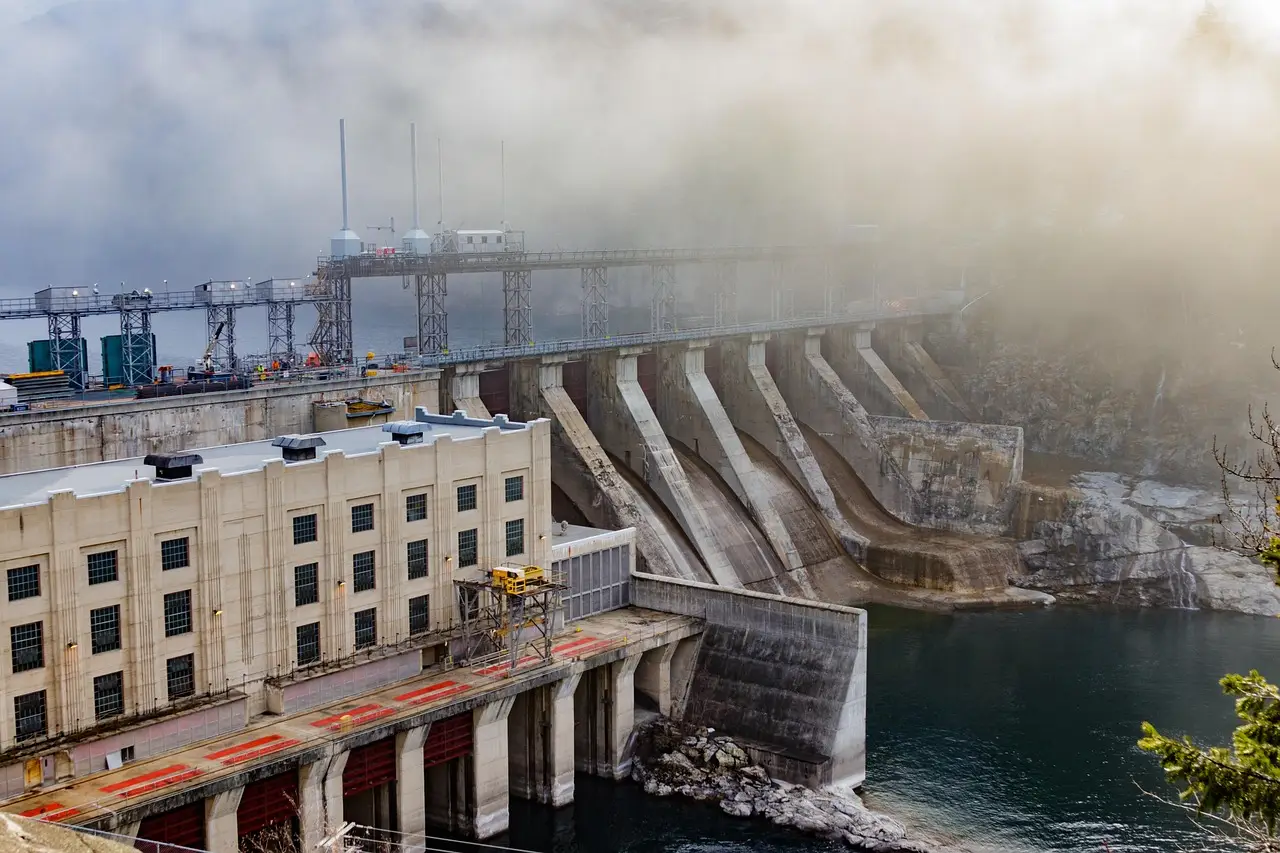
Ethiopia inaugurated the Grand Ethiopian Renaissance Dam in September 2025, and with it, the most consequential shift in Nile hydropolitics in a century. The structure rises 175 meters, runs 1.8 kilometers along the Blue Nile, and backs up 74 billion cubic meters of water in a reservoir 3.5 times the surface area of Addis Ababa.
The dam sits in the Benishangul-Gumuz region of western Ethiopia, 30 kilometers upstream of the Sudanese border. Its opening ended decades of Egyptian legal dominance over the river. It also left Ethiopia, Sudan and Egypt without a binding agreement on how to fill the reservoir or manage droughts.
What does the dam actually consist of?
Webuild, the Italian civil engineering firm formerly known as Salini Impregilo, built the GERD for Ethiopian Electric Power. The project combines three main elements:
- A roller-compacted concrete (RCC) main gravity dam — concrete compacted by rollers rather than poured conventionally — designed for 6,000 MW, documented as 5,150 MW in recent literature
- A 5-kilometer, 50-meter-high concrete-faced rockfill saddle dam for passive water retention
- Two power stations flanking the river bank, housing 13 Francis turbines that produce an average of 15,700 GWh per year
The system of spillways includes a main service-gated spillway, a free-flow crest spillway and an emergency ungated side-channel spillway. Together they discharge floodwater and keep the reservoir below its designated threshold. The reservoir, named Lake Nigat, sees an average annual outflow of roughly 50 billion cubic meters.
Webuild's internal laboratories designed a specialized RCC mix with low cement, low water content and extended setting times. An integrated network of galleries inside the main dam houses precision instruments, including vertical pendula, that track hydrostatic pressure, structural shifts, joint integrity and turbine performance in real time. That data feeds a centralized database at the right bank control center for proactive maintenance.
Why is the dam disputed?
The GERD stands on the Blue Nile, which supplies 85% of the Nile's total flow from Lake Tana in the Ethiopian Highlands. The river converges with the White Nile at Khartoum and flows through Egypt into the Mediterranean. Egypt draws more than 90% of its freshwater from the Nile, and roughly 95% of its population lives along its course.
The legal backdrop is colonial. The 1902 Anglo-Ethiopian Agreement barred Ethiopia from modifying the Blue Nile without British consent. The 1929 Anglo-Egyptian Treaty gave Egypt a veto over upstream projects. The 1959 Nile Water Agreement granted Egypt 55.5 billion cubic meters per year and Sudan 18.5 billion.
Ethiopia's multi-stage filling cycles have proceeded unilaterally, without transparent data-sharing with downstream neighbors. Egypt argues unilateral operations can cut its water flow and calls Ethiopia's approach "unilateral exploitation" of transboundary waters, citing the Omo, Jubba and Shebelle basins as further evidence of harm to Somalia and Kenya. Sudan's position has shifted repeatedly — from rejection to neutrality to support — driven by domestic politics. Uncoordinated releases also threaten downstream infrastructure such as Sudan's Roseires Dam, only 14 kilometers away.
The 2015 Declaration of Principles remains the primary trilateral framework. The three countries committed to international water law but never reached a binding deal. When the Cooperative Framework Agreement came into force in October 2024, Egypt and Sudan refused to sign.
What does this change for the region?
Eleven countries share the Nile Basin. The Nile Basin Initiative launched in 1999, followed by the CFA in 2010 — one year before the GERD's groundbreaking, which Egypt, preoccupied with the Arab Spring, could not effectively block.
Ethiopia positions the dam as a shared resource and vows to export surplus power. The Senegal River Basin Development Authority (OMVS) offers a working model of joint infrastructure ownership and collaborative benefit-sharing. Whether the GERD becomes a driver of East African economic integration or a standing source of hydrological friction now depends on a binding trilateral operating agreement that has eluded negotiators since 2011.
Original: webuildgroup.com
More from Priya Raman
Show full bio
News editor covering people, launches and day-to-day practice in construction industry, architecture, interior design at Built Current.
188 articles