Designers Declare the 'Cluttered Kitchen' Trend Long Overdue
The 'cluttered kitchen' trend replaces sleek minimalism with curated shelves, retro refrigerators and displayed ceramics. Designers explain how to get the look without the mess.
- Section
- Kitchen & Bath
- Author
- By Amara Osei
- Filed
- Length
- 4 min read
Key takeaways
- The 'cluttered kitchen' trend has been emerging over the past year, per Homes & Gardens.
- Sophie Pringle of Pringle & Pringle designed a Hammersmith kitchen island combining deep drawers with open shelving.
- Designers recommend grouping objects, mixing heights and textures, and keeping countertops minimal.
- Functional pantries with breakfast and coffee stations conceal everyday appliances and essentials.
Kitchens are finally being allowed to look lived-in, and interior designers say the shift is long overdue. The so-called 'cluttered kitchen' trend — emerging over the past year — swaps sleek minimalism for filled shelves, patinated finishes and warm hues, and it's less about mess than about personality.
'The appeal is that kitchens are finally being allowed to look and feel like the heart of the home again,' says Sophie Pringle, Founder of Pringle & Pringle. 'They are busy, hardworking spaces, and a little bit of visual abundance can make them feel much more welcoming and personal.'
Pringle's formula is simple: everyday essentials close at hand. 'I love the idea of having everyday essentials close at hand, with beautiful ceramics, cookbooks, favorite ingredients, and pieces that you use regularly becoming part of the character of the room. It is about creating a kitchen that feels lived in and enjoyed, rather than one that is always perfectly pristine.'
Why is the cluttered kitchen trending now?
The shift tracks a broader change in how we use kitchens. They've become social rooms — for hosting, dining and family time — rather than purely cooking spaces. Cool neutral colors and sleek materials are falling out of favor. Warm hues and worn finishes are replacing them.
'For many years, minimalist kitchens dominated design, but people have realized that having everything hidden makes the space feel less personal and more clinical,' says Ania Agárdy of Luxury Living. 'Kitchens have become a gathering area in the home. It is the first place a family gets together in the morning. When you create a space that is informal and intimate, it actually encourages conversation and gets us to put away our cell phones.'
Agárdy argues the trend extends to major installations, not just shelf styling: 'Clutter does not translate into mess. It simply means displaying curated items with intention. Today, we can find beautiful appliances that actually merit being exhibited instead of being hidden behind panel-ready cabinetry. I am loving the latest coffee machines – and don't even get me started on the retro refrigerators.'
Melissa Hutley, Co-Founder of Hutley & Humm, frames it as abundance rather than accumulation. 'I think there is something rather lovely about a kitchen that feels as though it has evolved over time, rather than being designed and styled all in one go,' she says. 'It is often the little things that give a room its soul – a collection of ceramics, interesting pieces picked up on travels, or something inherited from family. I would describe it less as clutter and more as a sense of abundance and personality. A kitchen should feel warm, welcoming, and used, not like a showroom where you are afraid to put anything down.'
Hutley also notes buyers now favor homes with a sense of history: 'There has been a move away from interiors that are too perfect or minimal, towards spaces that feel layered, comfortable and reflective of the people who live in them.'
How do you get the look without the mess?
The line between collected and chaotic comes down to organization and editing. Designers offer concrete tactics:
- Keep countertops to a minimum and reserve hard-working surfaces for tasks.
- Incorporate display areas such as floating shelves and glass doors, mixing textures, shapes and heights.
- Group objects rather than scattering them; mix useful pieces — plates, glassware — with ceramics, artwork and cookbooks.
- Conceal everyday clutter in functional pantries with breakfast and coffee stations.
- Display only pieces you genuinely love or use regularly.
'It boils down to organization. I always incorporate display areas such as floating shelves and glass doors. The goal is to mix varying textures, shapes, and heights, combining daily essentials with decorative anchors,' says Agárdy, who recommends using less-used areas to balance style and function.
Grazzie Wilson, Head of Creative at Ca' Pietra, puts it more bluntly: 'There is something rather sad about beautiful pottery spending its life behind a door while the kitchen gets decorated with things bought specifically to decorate a kitchen. Put the pottery on a shelf. Hang those lovely pans from a rail and enjoy them between meals. That is what appeals to me about this look: the things you use become part of what makes the room beautiful.'
In one Hutley & Humm project, open shelving kept the kitchen 'feeling light and relaxed, while introducing plenty of opportunity for personality.' Hutley's advice: 'Keep the practical necessities organized and let the more decorative pieces tell a story. You want the kitchen to feel generous and full of life, but still somewhere that is a pleasure to cook and spend time in.'
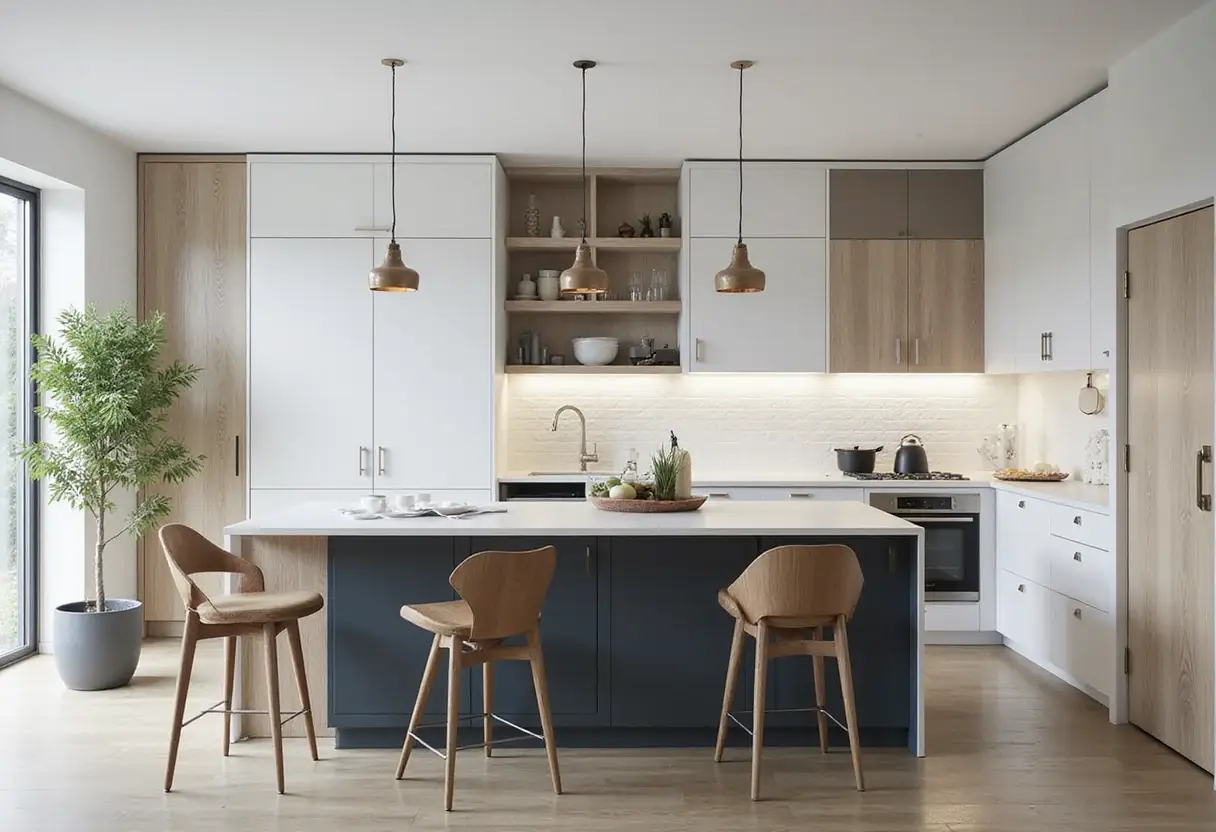
Storage design can do both jobs at once. In Pringle & Pringle's Hammersmith kitchen, the island pairs generous, deep drawers for practical storage with open shelving at the sides for cookbooks and favorite pieces. 'That way, you get the warmth and character of a lived-in kitchen without sacrificing a sense of order,' Pringle says.
The takeaway for homeowners: don't force it. The look evolves naturally as you cook, inherit, travel and collect. Start with a few pieces you love on display, and let the shelves fill themselves.
Source: homesandgardens.com
More from Amara Osei
Show full bio
Market editor covering companies, deals and strategy in construction industry, architecture, interior design at Built Current.
361 articles