Breville’s $299.95 Toaster Tracks Bread as It Browns
Breville’s $299.95 Eye Q 850 Auto 2 Slice uses optical sensors to track browning across seven levels, simplifying frozen bread and sourdough without removing its controls.
- Section
- Kitchen & Bath
- Author
- By Elena Vasquez
- Filed
- Length
- 3 min read
Key takeaways
- The Breville Eye Q 850 Auto 2 Slice costs $299.95.
- Breville says optical sensors measure color changes 10 times a second.
- The toaster offers seven browning levels and stops when it detects the selected shade.
- Sourdough mode stops slightly earlier to reduce the risk of burnt crusts.
- The two-slice appliance must not be left unattended, according to Breville.
By Elena Vasquez
At $299.95, Breville’s Eye Q 850 Auto 2 Slice uses optical sensors to measure bread color changes 10 times a second, according to the company. The toaster stops at one of seven browning levels once its sensors detect the selected shade.
The Yanko Design review starts with a familiar kitchen problem. Bread from the freezer needs more time than bread from the box, while sourdough requires extra care to prevent scorched crusts. A conventional toaster leaves the user checking, stopping and restarting pale slices.
Breville calls its underlying system Sensability technology. The publication describes the change plainly: “You decide what breakfast should look like; the appliance handles the timing.”
How does the Eye Q 850 Auto 2 Slice work?
According to Breville, the sensors track changes in the bread’s surface color rather than relying on a fixed cooking time. Once the selected shade appears, the machine ends the cycle automatically.
Its main controls use three gestures:
- Pressing Start activates standard sensor toasting.
- Holding Start selects Sourdough mode.
- Double-pressing Start switches to Timer mode.
Green, blue and red lighting identifies those modes. The layout keeps the front uncluttered, although the Yanko Design reviewer says remembering gestures may not be easier than reading separate labels.
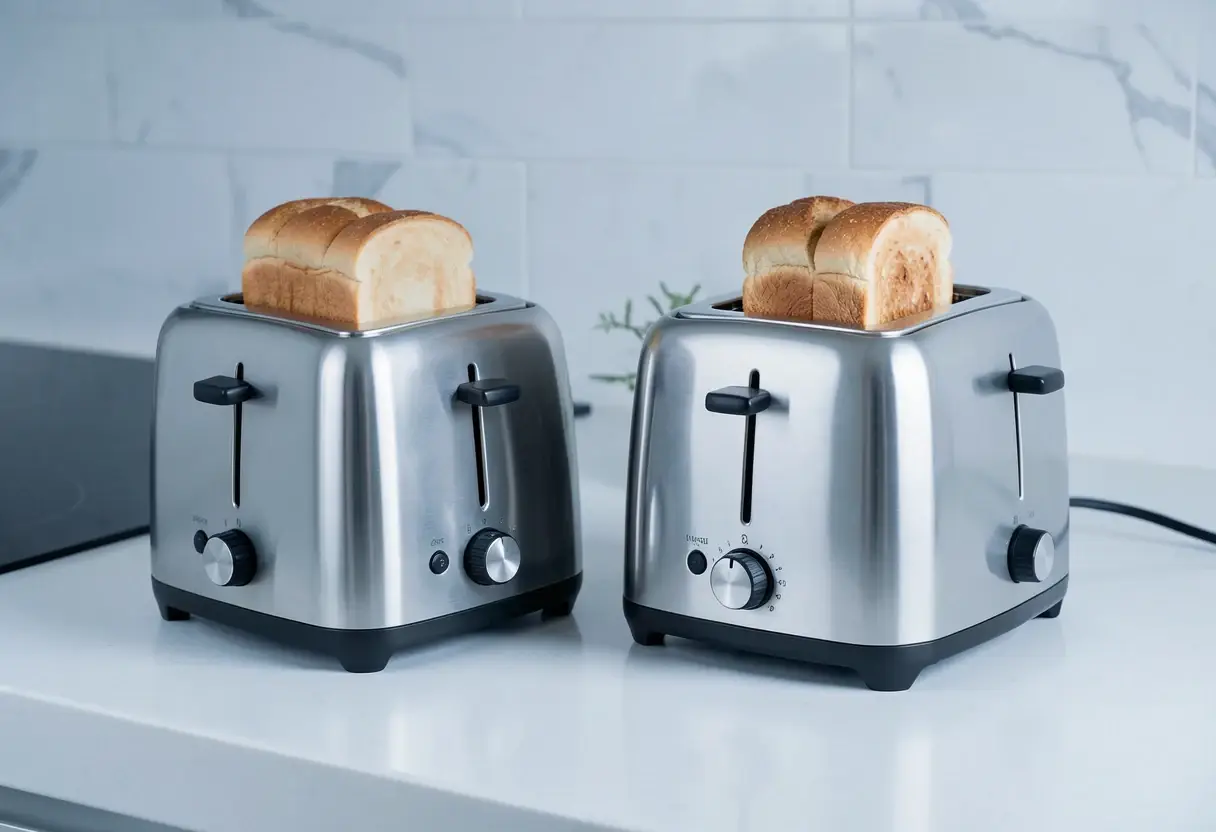
A button starts the cycle, a motorized carriage lowers the bread and the toast rises when cooking ends. Plus and minus controls adjust the selected shade, while LEDs provide feedback. The steel housing and dark ceramic-coated top give the appliance a restrained countertop profile.
The reviewer also appreciates the absence of a large display: “Toast shouldn’t require a dashboard.”
What changes for frozen bread and sourdough?
Breville says users do not need to select a separate defrost function for frozen bread. Its sensors follow color changes through the same basic process used for fresh bread, which could remove one adjustment from a regular freezer-to-toast routine.
That does not make breakfast faster, the review notes. It reduces the number of decisions involved, without establishing any measurable saving in preparation time.
Sourdough mode offers another material-specific adjustment. Breville’s manual says a modified algorithm stops toasting slightly earlier, reducing the likelihood of burnt crusts on sourdough and other artisanal breads.
The change does not guarantee identical results for every slice. Hole-filled, unevenly cut bread still varies in thickness, so the mode reduces scorching rather than eliminating it.
How does the toaster handle cleanup?
The ceramic-coated top is intended to wipe clean easily. Inside, the Clearway cavity directs crumbs toward a removable tray, giving accumulated debris a direct route out of the heating chamber.
The Yanko Design reviewer treats that access as more than a minor feature. The tray still requires regular emptying and cannot go in the dishwasher, but easier crumb removal can carry real weight when choosing between premium toasters.
What can the sensors not tell you?
Optical sensing has clear limits. One slice must occupy the designated sensing slot, while Timer mode remains necessary for waffles, pastries and other foods that need specific cooking times or do not develop a reliable color change.
Surface shade also cannot reveal internal warmth or crispness. The reviewer has not tested the Eye Q, leaving the consistency of texture and even browning across both slots unresolved.
Breville also says the toaster must not be left unattended. The product promises less adjustment, not supervision-free cooking, so the safety requirement remains unchanged.
At roughly $300 for two slices, repeatability is the standard that matters most. Reliable browning could justify the premium for someone who eats toast every day. For an occasional user, the Eye Q 850 Auto 2 Slice offers a sophisticated solution to a problem that may rarely become troublesome.
If Breville can deliver repeatable results in both slots, optical sensing will turn a useful specification into a daily advantage. Without that evidence, its $299.95 price rests on the prospect of fewer breakfast decisions.
Original: breville.com
More from Elena Vasquez
Show full bio
Senior reporter covering money, funding and market shifts around construction industry, architecture, interior design at Built Current.
363 articles