Bird Nests Turn Exclusion Hardware Into Posthuman Architecture
Birds repurpose anti-bird spikes, plastics and drone cables as nests, while Studio Gang and MIT-LUMA Lab test 2026 projects that let nonhuman builders shape architecture.
- Section
- Architecture
- Author
- By Marcus Bennett
- Filed
- Length
- 4 min read
Key takeaways
- An Antwerp magpie nest incorporated hundreds of anti-bird spikes with the points facing outward.
- Two Amsterdam canal nests contained plastic layers sourced over decades.
- Matthew Holmes’s 2026 paper: *Feathered Architects: Collecting Histories of Anthropogenic Material in Birds’ Nests*.
- Studio Gang’s *Best Nest* displays more than 70 ceramic vessels developed for the 2025 Venice Architecture Biennale.
- MIT-LUMA Lab’s 2026 *Bird+House* leaves barn swallows to complete 3D-printed scaffolds.
By Marcus Bennett
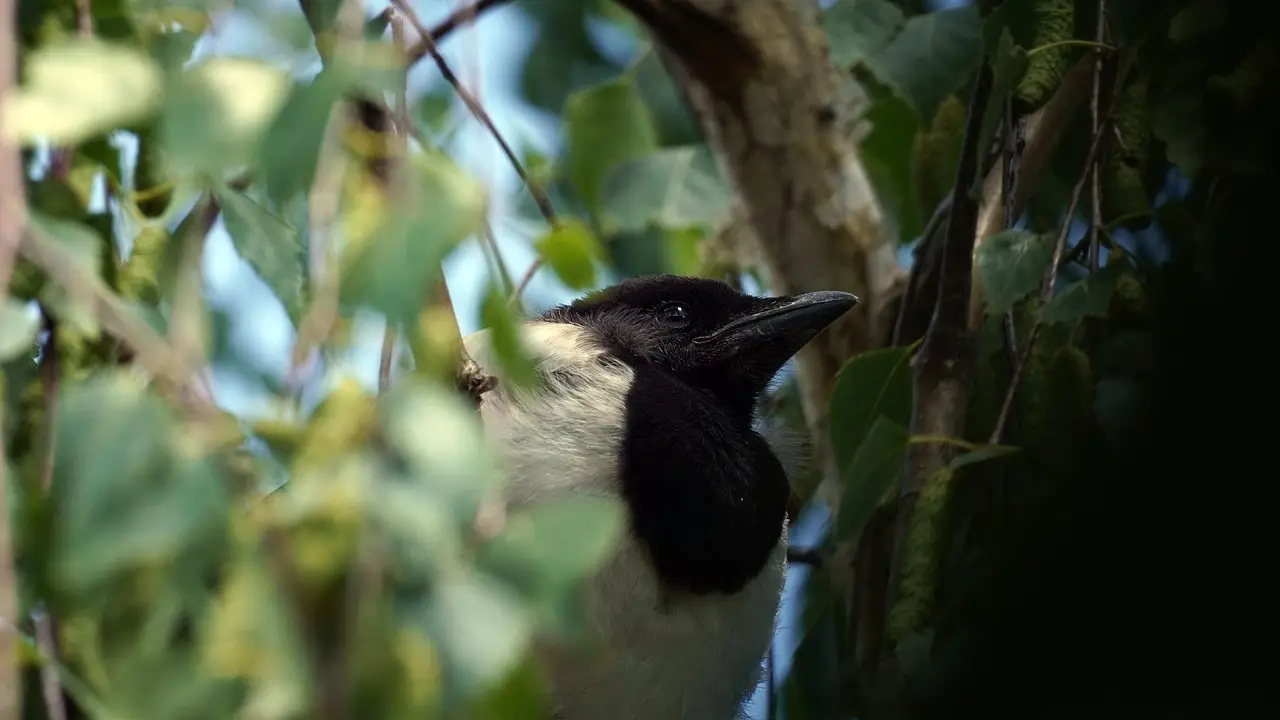
An Antwerp magpie nest incorporated hundreds of anti-bird spikes across its outer structure, with the sharp points facing outward, according to designboom. The birds turned exclusion hardware into material that may help defend eggs and chicks from other birds.
European cities have produced what designboom calls the clearest reversal. Carrion crows and Eurasian magpies began tearing anti-bird spikes from buildings and incorporating them into nests.
Researchers cited by designboom suggest the metal may serve much the same purpose as thorny branches, helping defend eggs and chicks from other birds. Human architecture designed the object to exclude birds. Birds turned it into bird architecture.
What do the nests reveal about authorship?
Designboom reports that birds have long built with wire, plastic, fabric and other discarded scraps. Recent cases include magpies and crows using metal spikes installed to deter birds, plus birds along Ukraine’s front line weaving fiber-optic cables discarded by military drones into their nests.
That exchange makes authorship literal. Humans manufacture materials and alter landscapes; birds gather, select and reorganize what they find. Designboom places the resulting nest between those two acts, a model of posthuman architecture with authorship across species.
Historian Matthew Holmes examines the relationship in his 2026 paper, Feathered Architects: Collecting Histories of Anthropogenic Material in Birds’ Nests. He wrote: “Looking at birds’ nests — and the items within them — is occasionally rewarded with a snapshot of the present state of the Anthropocene.”
Holmes traces that entanglement beyond contemporary plastic waste. During the Dust Bowl era, American crow nests made from barbed wire pointed to an agricultural landscape stripped of usable vegetation. Human consumption and waste leave technological traces inside nests that animals build.
How does plastic change the building cycle?
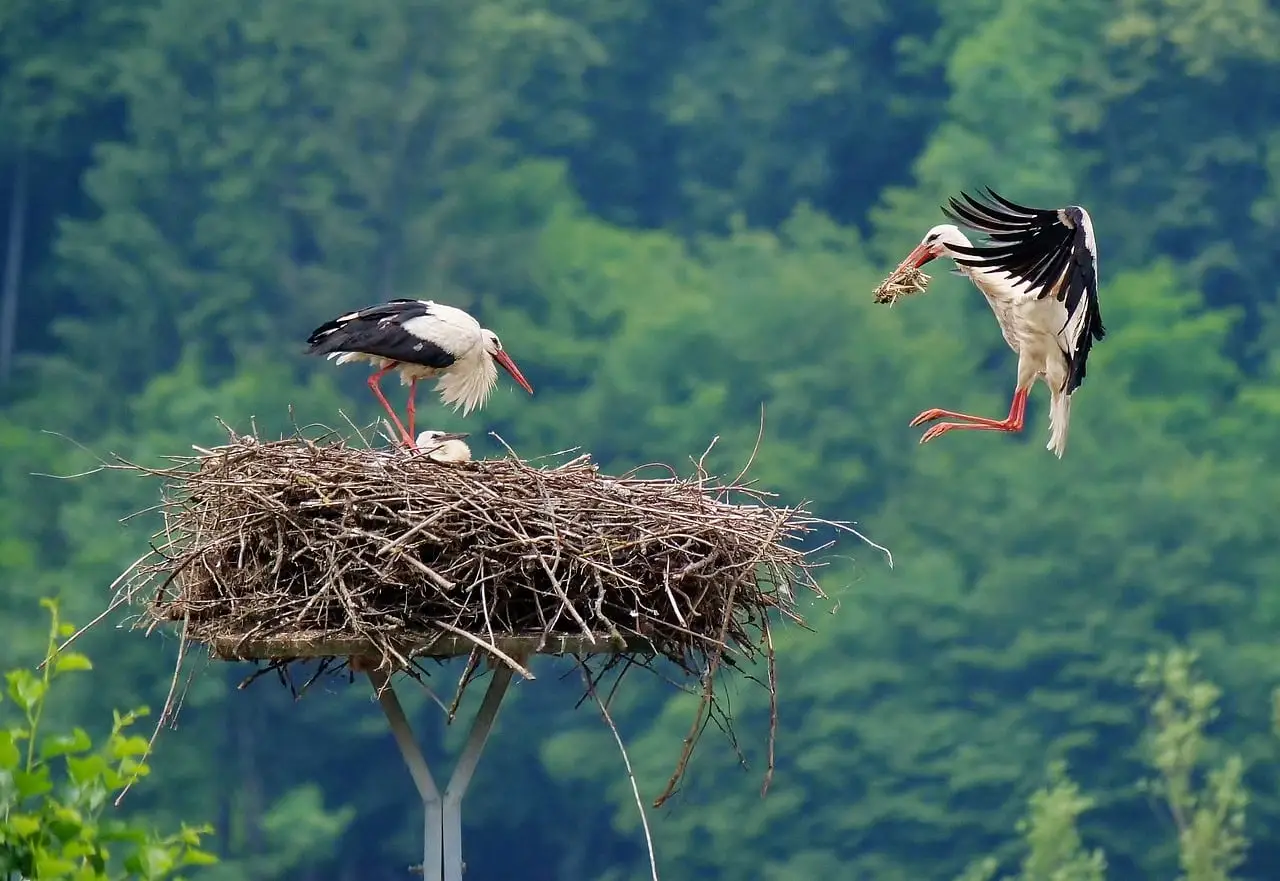
Designboom reports that Amsterdam coots have accumulated layers of plastic in nests that persist across multiple seasons. Researchers studying two Amsterdam canal nests found plastic layers sourced over decades. In these cases, designboom identifies synthetic material as the more desirable choice because plastic layers can extend a building cycle that previously depended on vegetation decomposing between uses.
How can a birdhouse remain unfinished?
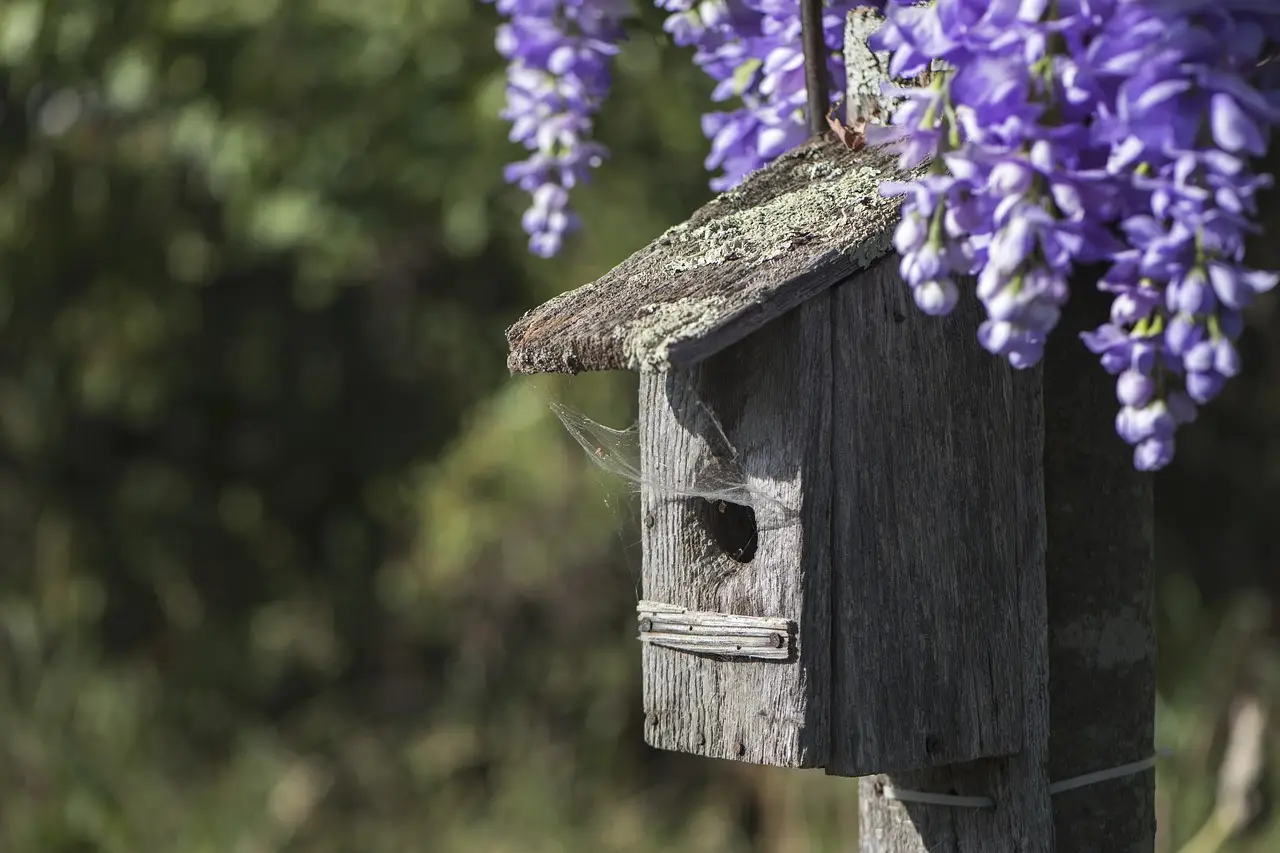
The 2026 Bird+House project at MIT-LUMA Lab tests shared authorship directly. Hiroshi Ishii, Lucy Li and Hye Jun Youn developed it with input from the Cornell Lab of Ornithology.
They created 3D-printed nesting structures for barn swallows whose traditional nesting sites are disappearing as barns and other familiar structures vanish.
The team first 3D-scans existing swallow nests and studies their dimensions. It then prints open scaffolds from locally sourced biomaterials. The structures stop halfway. The MIT-LUMA Lab team reports that barn swallows often reject artificial nests that are fully completed, so the scaffold provides a framework rather than a finished nest.
The swallow adapts that framework and adds its own material. This changes the familiar birdhouse. A human-made object usually arrives complete and waits for an occupant. Here, occupation continues construction. The architect establishes enough structure for coexistence. Then the bird completes it.
What can architects learn from birds?
Studio Gang’s ongoing Best Nest: Design for Nature and Culture at the Chicago Architecture Center examines how bird construction informs the firm’s design process. Drawings and models sit with objects and more than 70 ceramic nesting vessels originally developed for The Living Orders of Venice at the 2025 Venice Architecture Biennale.
Studio Gang treats the nest as architectural intelligence. Its exhibition connects geometry to the different bodies, environmental pressures and inhabitation of bird species. The practice then carries those observations into building-scale projects and habitat structures made specifically for birds.
The show runs alongside Flyway City, also at the Chicago Architecture Center. That exhibition examines cities shaped by migration, avian vision and the hazards created by glass architecture. Together, the two shows place birds on both sides of the architectural exchange: architects study the structures birds make while reconsidering the buildings birds must cross.
What changes for architects?
Designboom argues that posthuman architecture, understood through nests, does not mean copying organic curves or borrowing the appearance of animal structures. Its central proposition concerns authorship. Buildings stand within landscapes already occupied and continually altered by other organisms, whether or not architects acknowledge those relationships in their drawings.
The birds that reuse anti-bird spikes make that shared world difficult to ignore. Human architecture tried to dictate where they could land. The birds removed part of it and built something else with the material.
The designboom POSTHUMAN UTOPIAS chapter, presented in partnership with INDX|GLOBAL, asks what happens when humans cease to be the measure of all things. INDX|GLOBAL describes itself as a global cultural platform placing Indian architecture, design and creative intelligence in conversation with the world. The chapter groups these cases with interspecies architecture, living materials, regenerative landscapes and emerging technologies.
For architects, the practical brief changes: a drawing may need to define a scaffold, not a finished nest, and reserve the final act of construction for its nonhuman occupant.
Original: google.com
More from Marcus Bennett
Show full bio
Correspondent covering money, funding and market shifts around construction industry, architecture, interior design at Built Current.
328 articles