BIG Plans Spa and 23-Room Expansion at Sea Ranch Lodge
BIG and Lutsko Associates will add a redwood-faced spa and 23 courtyard-arranged guest rooms to Sea Ranch Lodge. Critics question whether BIG can respect the site's famed modernist ethos.
- Section
- Architecture
- Author
- By Amara Osei
- Filed
- Length
- 4 min read
Key takeaways
- BIG is designing 23 new guest rooms and a redwood-faced spa at Sea Ranch Lodge in a masterplan with landscape firm Lutsko Associates.
- Bjarke Ingels said the "ambition is evolution rather than revolution" and cited his student model of Charles Moore's Condominium 1 unit.
- Critics including Christopher Hawthorne and Owen Hatherley questioned BIG's fit with Sea Ranch's original architectural ethos.
BIG and San Francisco landscape firm Lutsko Associates will expand Sea Ranch Lodge with a new spa and 23 guest rooms, marking the biggest architectural intervention in decades at California's most famous modernist coastal settlement.
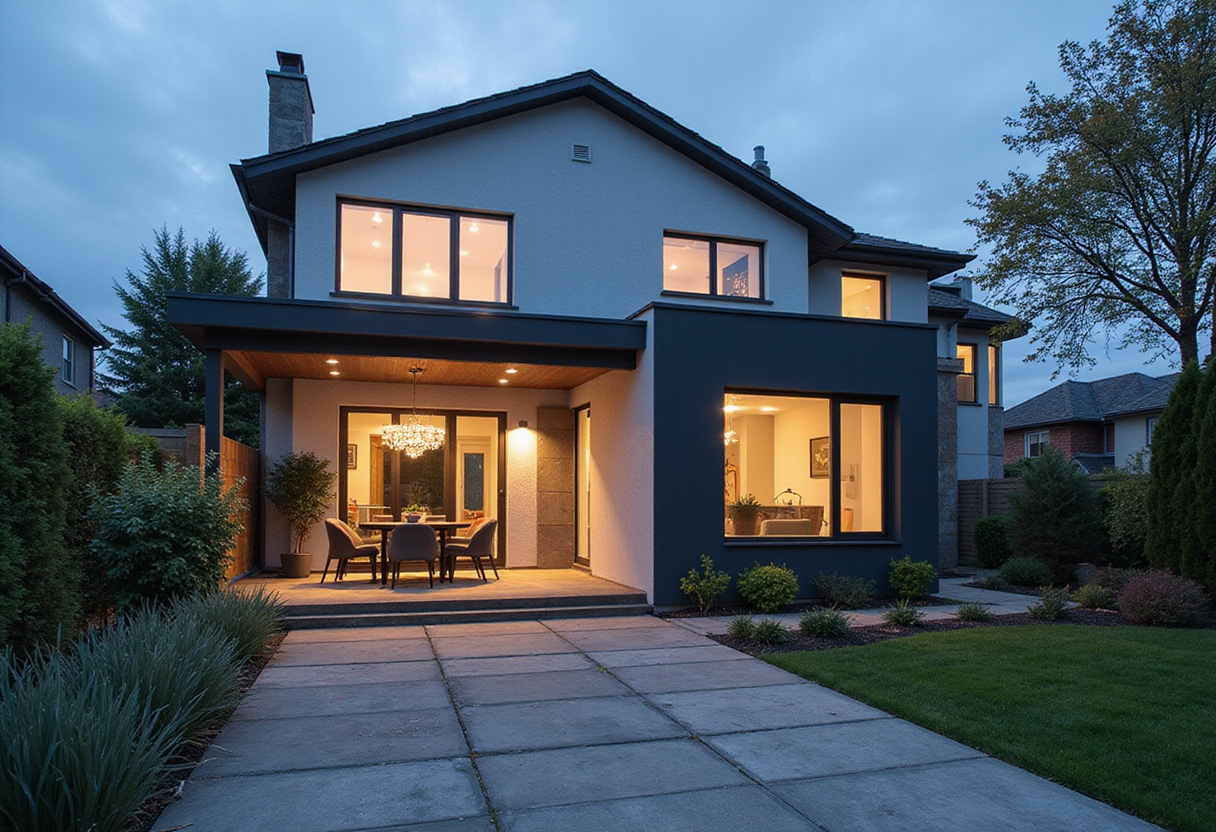
Sea Ranch Association general manager Kristina Jetton announced the commission in a newsletter last month. The 23 new guest rooms, designed by BIG, will sit in clusters arranged around sheltered courtyards. Renderings provided to AN by BIG show a spa faced in redwood bearing the distinctive Sea Ranch supergraphic logo designed by Barbara Stauffacher Solomon. New hotel rooms with bay windows will stand a short walk from the wellness center.
The project sits on loaded ground. Sea Ranch, three hours north of San Francisco, is a pilgrimage site for architects: ten miles of preserved coastline, wood-clad buildings by Joseph Esherick, Donlyn Lyndon, Charles Moore, William Turnbull and Richard Whitaker, and Halprin-derived landscape planning that has governed development since the 1960s. Any new building there answers to the Sea Ranch Design Committee.
Bjarke Ingels addressed that context directly. "The Sea Ranch pioneered a distinctly Pacific American form of critical regionalism—an architecture shaped by the terroir, the genius loci, the spirit of the place," Ingels said in a statement to AN. "Here, architecture does not displace the existing qualities of the landscape, its nature or topography; it enhances them. It grows from the land and gradually becomes part of it."
He framed the commission as continuity, not rupture. "In close conversation with The Sea Ranch Design Committee, we have sought to understand the unique DNA of The Sea Ranch and carry it forward—continuing the formation of this singular place within Pacific American architecture," Ingels said. "The ambition is evolution rather than revolution: a continuation rather than a departure."
Ingels also cited a personal connection. As a first-year student at the Royal Danish Academy in Copenhagen, he told AN, he "built a 1:20-scale model of Charles Moore's unit at Condominium 1, with its sheds, barns, and saddlebags." He added: "From the very beginning of my architectural education, The Sea Ranch revealed how architecture could become the physical manifestation of thoughtful material storytelling: how elements of local culture, climate, and nature could be solidified into a language that is at once contemporary and traditional—deeply rooted in its place, yet reaching toward a different future."
Not everyone is convinced. Architecture critic Christopher Hawthorne broke the news on Punch List and later concluded that "BIG seems incapable here of entirely squashing its well-known formalist impulses, even for the sake of securing a job at the famed Sea Ranch." In a comment appended to a post by critic Oliver Wainwright, critic Owen Hatherley wrote: "BIG might be anathema to the original Sea Ranch ethos, but it is a strangely fitting choice for a place that has become a hotspot for weekending tech bros and their second homes."
AN contributor Alexander Luckmann pointed to the settlement's long-standing paradoxes: "a sustainable, ecological way of living—as long as you drive three hours from San Francisco; a democratic, middle-income community—of second homes[, and a] a development that kept the land free from building—but wanted to privatize the beach." One reader who forwarded the Sea Ranch newsletter to AN offered a blunter verdict: "This is a terrible idea!"
The commission continues a redevelopment cycle already underway at the lodge. Investors, including founders of Stripe and Twitch, bought the property in 2018 and completed improvements in 2023. NICOLEHOLLIS led the renovation with Charles De Lisle and Mithun, and Terremoto handled the landscape. Private commissions continue around the settlement, which now counts more than 2,000 homes, including a recently completed house by San Francisco office Figure.
The original settlement was dreamt up by developer and architect Al Boeke on land previously used as a sheep farm, cattle ranch and logging site, as curator Joseph Becker wrote for AN Interior in 2022. Lawrence Halprin's landscape plan, Becker noted, "drew on his communal experiences in an Israeli kibbutz and his design schooling under Walter Gropius but was imbued with a localized sensibility that had long characterized the architecture endemic to the Bay Area."
BIG has not announced a construction timeline. The proposal now moves through the Design Committee process that has filtered every Sea Ranch building since Esherick, Moore, Lyndon, Turnbull and Whitaker set the settlement's language more than half a century ago.
Original: lutskoassociates.com
More from Amara Osei
Show full bio
Market editor covering consumer brands and retail at Built Current.
62 articles