Álvaro Urbano turns a lost garden into sculpture at Museo Jumex
Álvaro Urbano's 'Helen' at Museo Jumex rebuilds Helen Fowler O'Gorman's lost botanical watercolors as sculpture, running October 16, 2026 to February 7, 2027.
- Section
- Architecture
- Author
- By Elena Vasquez
- Filed
- Length
- 4 min read
Key takeaways
- Álvaro Urbano's exhibition 'Helen' runs at Museo Jumex, Mexico City, from October 16, 2026 to February 7, 2027
- Helen Fowler O'Gorman spent fifteen years on the book 'Mexican Flowering Trees and Plants', published in 1961
- Her original watercolors are lost; Urbano translated printed reproductions into metal and paint sculptures
- Casa Cueva was built in the mid-20th century in Pedregal de San Ángel by Juan O'Gorman
- The exhibition is curated by Rosela del Bosque and Carolina Estrada García
Álvaro Urbano's exhibition Helen opens at Museo Jumex in Mexico City on October 16, 2026, and runs through February 7, 2027. Curated by Rosela del Bosque and Carolina Estrada García, it reconstructs the botanical world of Helen Fowler O'Gorman — the artist who shared Casa Cueva with her husband, painter and architect Juan O'Gorman — through sculpted plants, geological references and architectural memories.
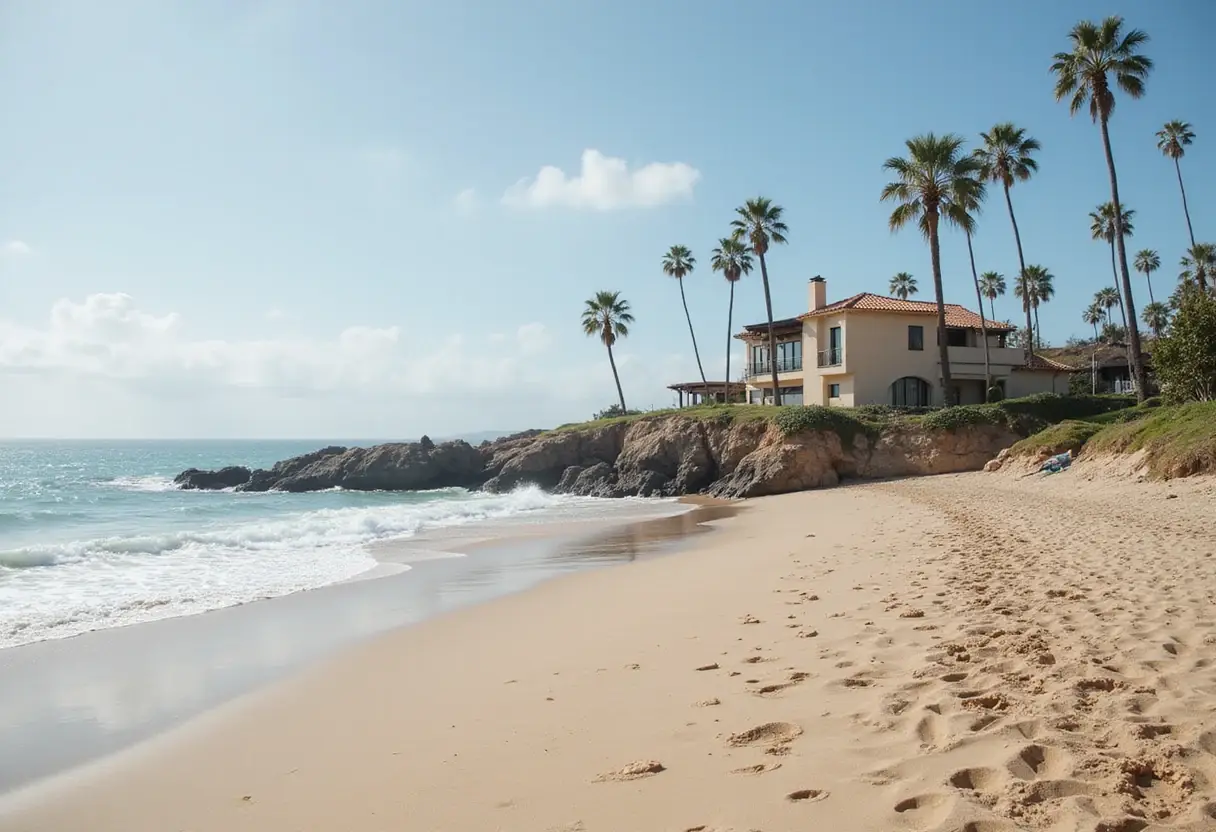
Casa Cueva was built in the mid-20th century in Pedregal de San Ángel, a district where architecture sat close to the terrain and its vegetation. Urbano first heard about Helen through Mexican friends, whose stories about the house pushed him to dig into her practice. 'In spaces built by their own inhabitants, architectural decisions are closely tied to a way of living,' he told designboom in an exclusive interview.
For Urbano, the house was itself a sculpture, inseparable from the routines of the people who lived in it. 'The house opened onto the landscape, or rather surrendered itself to it, incorporating the conditions of the terrain and the presence of plants,' he said. The garden Helen planted and tended belonged to that same idea of space. Following her through the house shifts attention to the daily acts of observation, cultivation and care that shaped the architecture's character.
What did Helen Fowler O'Gorman actually make?
Inside her Casa Cueva studio, Helen spent fifteen years producing the book published in 1961 as Mexican Flowering Trees and Plants. That's roughly a decade and a half of drawing for a single volume — and its scope reached past her own garden into the wider Mexican landscape, which she explored with Juan. While he hunted differently colored minerals for his petro-murals, she collected flowers and plants.
'There is something beautiful about that shared search for color: he found it in minerals; she found it in flowers and plants,' Urbano reflected. The parallel gives the exhibition its starting point: two practices reading the same terrain, gathering different materials, and carrying them back into a shared domestic world.
How do you sculpt lost watercolors?
Helen's original watercolors are lost. Urbano worked instead from the book's printed reproductions, translating their botanical imagery into three-dimensional forms in metal and paint. 'I conceived these sculptures as small monuments to her way of observing Mexico's flora, to her affections and the attention she devoted to it,' he explained.
That chain — watercolor to printed page to sculpture — makes the distance from the originals part of the work itself. Helen's plants enter a new material life, carrying traces of her looking alongside the decisions of the artist interpreting them. Inside the installation, they sit alongside references to the Pedregal's geology, Juan's petro-murals, and the later alterations by Mexican artist Helen Escobedo, who occupied Casa Cueva after the O'Gormans.
Why leave the house's history unresolved?
Those successive lives stay deliberately ambiguous. 'We do not know whether the petro-murals are being covered or uncovered,' Urbano said of the installation. 'Rather than fixing an original state of the house, I wanted its different times to coexist.'
Testimonies, photographs and material remains offer access to Casa Cueva, but they leave gaps and sometimes contradict each other. Urbano gives those inconsistencies room, letting the house emerge through its inhabitants' experiences rather than a single definitive account.
This interest in unfinished stories runs across Urbano's practice, which keeps returning to interrupted projects and places where something remains pending. Fiction lets him shift the coordinates — continuing an abandoned possibility, or joining moments that never coincided. 'Architecture thus becomes a character with its own voice, capable of recounting its changes, triumphs, and failures,' he explained.
How does illusion carry the story?
Theater and cinema shape how Urbano builds these encounters. Cigarette butts imply someone has just left; dry leaves suggest a gust of wind crossed the room. 'Illusion allows me to show the life of an object,' he said. 'More than replicating its appearance, I seek to imitate its life and transport it into a setting where it can tell a story.'
The works are sculpted by hand in his Berlin studio, without molds taken from the original objects, so every bend and inclination is a deliberate gesture. 'The tilt of a leaf or the orientation of a flower gives them an attitude,' he noted. 'I am interested in how the object looks at you, what relationship it establishes with you.'
Seeing the construction up close doesn't break the spell. 'As in theater, recognizing the artifice does not prevent us from entering the fiction or establishing an emotional connection with what happens,' Urbano said. Visitors to Museo Jumex have until February 7, 2027 to test that claim against a house rebuilt from memory's gaps.
Original: google.com
More from Elena Vasquez
Show full bio
Senior reporter covering money, funding and market shifts around construction industry, architecture, interior design at Built Current.
212 articles