Wright Called White Paint a Killer. The Guggenheim Ignored Him.
In 1958, Frank Lloyd Wright called white paint a "menace" and a "grave" maker in memos fighting the Guggenheim's director. The walls went white anyway — and stayed that way.
- Section
- Architecture
- Author
- By Amara Osei
- Filed
- Length
- 4 min read
Key takeaways
- Frank Lloyd Wright, then 90, wrote memos on March 17 and April 3, 1958 demanding the Guggenheim's interior not be painted white.
- Director James Johnson Sweeney prevailed; conservation head Orrin Reilly confirmed painted walls in an April 3, 1959 memo, days before Wright's death.
- The museum opened October 21, 1959, with a "Buff" exterior approved by Wright in July 1958 from the 25-color Cocoon palette.
- In 2007 the Landmarks Preservation Commission kept the pale Tnemec BF72 Platinum over restoring "Buff"; conservators found eleven layers of exterior paint.
By Amara Osei
In March 1958, a ninety-year-old Frank Lloyd Wright sat down and wrote a memo demanding that Harry Guggenheim stop the new museum director from painting the Guggenheim's interior white. Wright lost. The walls went white anyway, and the fight over roughly two shades of paint became one of the stranger quarrels in American architecture.
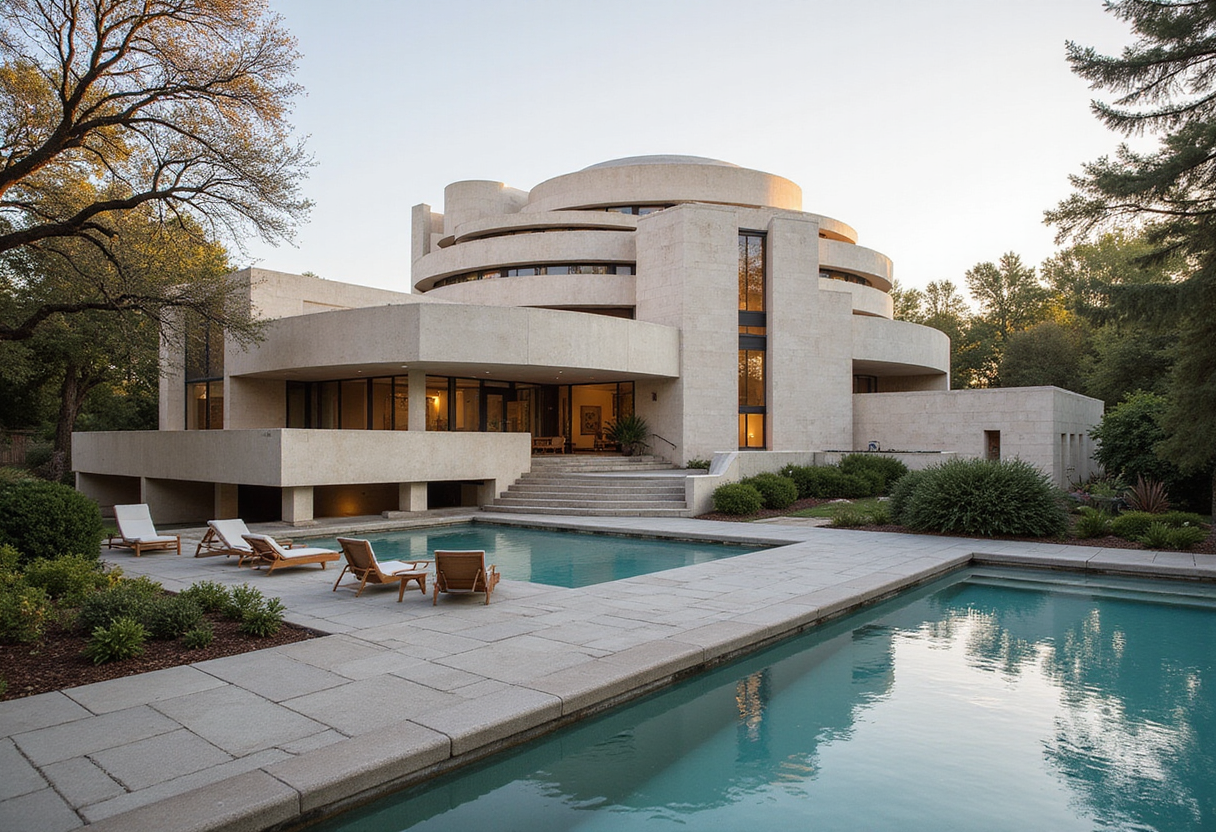
The dispute, recounted in Wendy S. Walters' forthcoming book A Dead White: An Argument Against White Paint (Scribner, 2026), pits Wright against James Johnson Sweeney, appointed director in 1952, who wanted a bright, reflective backdrop for the growing collection. Wright wanted ivory, lit partly by the Oculus he'd built into the spiral.
Wright did not mince words. In his March 17 memo, he called white paint "devastating," "makeshift," a "menace," and a "grave" maker — a paint that would wrap the building like a shroud. On April 3, he wrote again: "White is a color—the loudest color of them all. A true artist would not paint for a white background which nature seems to use most sparingly for accent only."
He closed with a jab: "Human sepulchre is white. Why?"
What did Wright actually fear?
Walters argues the rhetoric wasn't pure theater. Wright believed white paint posed a genuine risk to his "organic building," and by May 1958 he was recruiting reinforcements. He wrote to the architecture critic Aline Saarinen with an opening cry of "S.O.S!" and a request that she get into her "fighting clothes" against what he called "a picture-hanger named Sweeney." He accused Sweeney of being "authorized by the trustees—Harry Guggenheim, Chairman, to barge in on the architect of the museum and paint the interior dead-white—thus tearing the inside from the outer walls of the organic building."
The book's title carries a double weight. "Dead-white" was the period term for an unmitigated, ultra-bright white — a play on "white-lead," the toxic pigment ground into oil for opaque paint. Walters traces that history through London's Shoreditch Infirmary, where from 1883 to 1885 doctors wrote The British Medical Journal warning of lead poisoning so frequent among patients that factory workers, mostly young women, earned an extra shilling a week for the risk. Cats in those factories never survived. "It is impossible to keep a cat, they always die of lead poisoning here," went one factory saying.
Why did Sweeney insist on white?
Sweeney, more than thirty years Wright's junior, thought the architect cared more about his own design than the art inside it. The spiral's sloped, curved walls made mounting heavy gilded frames difficult, possibly disastrous, and new frames exceeded his budget. So he stripped the frames and hung works against plain white — an economy that doubled as a curatorial philosophy. Keep eyes on the paintings, not the container.
Harry Guggenheim declined to intervene. The interior, he reasoned, fell within Sweeney's purview; the exterior stayed Wright's. On April 3, 1959, conservation department founder Orrin Reilly noted in a memo that "Now the walls are painted and finished before hanging." Less than a week later, Wright died suddenly in Arizona, after surgery complications. No reconciliation.
Did anyone get the building they wanted?
Not quite. Wright had initially proposed Cherokee Red — the accent color he'd used at Fallingwater in 1938 — for the exterior, then settled on a conservative neutral. In July 1958 he approved "Buff," a topcoat from the Hollingshead Cocoon coating system's palette of twenty-five colors, applied over the gunite facade. The museum held that color for about five years.
When the Guggenheim opened on October 21, 1959, The New York Times critic John Canaday described a war between architecture and painting in which "both come out badly maimed." New Yorkers called it a "hot cross bun" and a "washing machine." Sweeney left for Houston's Museum of Fine Arts in 1961.
The paint kept arguing after the people stopped. A 1992 restoration and ten-story tower brought a whitish gray exterior. In 2007, the New York City Landmarks Preservation Commission rejected calls to restore "Buff" and kept Tnemec BF72 Platinum — by which point conservators had counted eleven layers of paint on the facade, each lighter than the last. Walters' verdict: as UV rays destroy the chromophores in pigment, the pale gray surface reads white only because it is, in her phrase, a dying gray. Wright wanted the interior and exterior to match. He got it, in the one way he'd have hated most.
Original: cna.st
More from Amara Osei
Show full bio
Market editor covering companies, deals and strategy in construction industry, architecture, interior design at Built Current.
126 articles