Twelve Gold Guardians Rise Beside the Pyramids at Giza
Artist Jiang Qiong Er plants 12,135 carved 'grains' and twelve four-metre gold guardians beside the Giza pyramids at Forever is Now's sixth edition, on view until 28 November 2026.
- Section
- Landscape & Public Space
- Author
- By Grace Kim
- Filed
- Length
- 4 min read
Key takeaways
- Jiang Qiong Er's 'It is Time to Plant Love' features 12 gold sculptures, four metres high, at Forever is Now's sixth edition, until 28 November 2026.
- The guardians blend mythologies of China, Egypt, the Indus Valley and the Maya, each embodying a human value.
- The project includes 12,135 wood 'grains' etched with a new hieroglyph for love, equal to the combined length of the Nile and Yellow rivers.
- Jiang worked with two Egyptian ateliers and made six trips to Giza to refine the works.
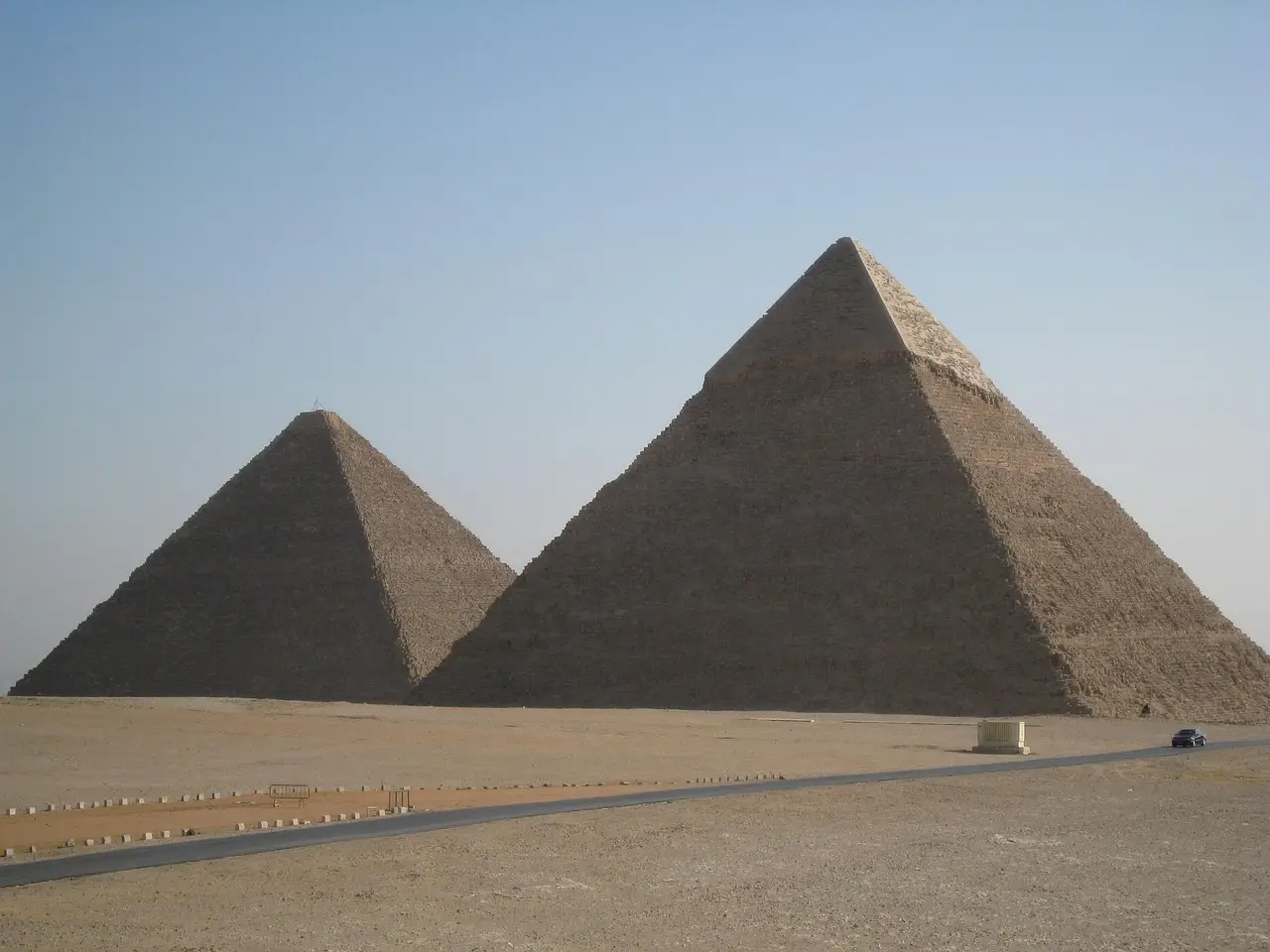
Twelve gold mythical creatures, each four metres high, now frame the Giza pyramids in the Egyptian desert. The installation, 'It is Time to Plant Love' by artist Jiang Qiong Er, forms part of the sixth edition of Forever is Now, the annual exhibition where international artists show monumental works in dialogue with the pyramids, running until 28 November 2026.
When Jiang received the invitation last year, she booked a flight to Cairo immediately. It was her first time seeing the monuments, built so pharaohs' souls could return to their bodies after death. The experience shaped the work's core idea.
'When men built the pyramids, it was their way of searching for eternal life,' Jiang said. 'I concluded there is no physical eternity. Even the emperor of a dynasty comes to an end. What's eternal is the love that unites us.'
What do the guardians represent?
The hybrid characters blend traits from mythologies and sacred creatures of four ancient civilisations: China, Egypt, the Indus Valley and the Maya. Each sculpture stands for a human value such as authenticity, bravery or wisdom. Jiang conceived them as protectors.
'In ancient civilisations, guardians were always present,' she said. 'I thought: today, humanity needs them.'
She first created the forms in 2023, smaller and in bronze or foam, for an exhibition inside and on the facade of the Musée Guimet in Paris. That show launched what she calls her 'Universal Art' project. 'Most artists look for differences. I look for our similarities, because they are what brings us together,' she said. 'In all of my projects, I ask two questions: Are we together? How do we live together? Two basic questions, yet we must answer them. Otherwise, we – humanity – is going nowhere.'
On the Giza Plateau, the guardians find a counterpart in the Great Sphinx itself — a king's face on a lion's body, carved from one block of limestone and watching over the pyramids. Jiang's creatures stand on inverted pyramidal bases, mirrored to reflect the golden sand. A low mirrored divider between them reflects the sculptures, the desert sky and the viewer. Visitors walk the sandy path toward the pyramids, then turn back.
'Symbolically, you return to history, then come back to the future,' the artist said. 'I think a journey like this permits visitors not only to see, but to feel.'
Why gold, and who made it?
Gold was divine to the ancient Egyptians, and the Great Pyramid — the only surviving Wonder of the Ancient World — was once capped in it, long since looted. Jiang worked with two local Egyptian ateliers and made six trips to Giza over the year, adjusting sizes, angles and proportions. 'An idea without the proper execution isn't worth much,' she said.
The 12 guardians carry a personal lineage. Born in Shanghai 50 years ago, Jiang picked up a paintbrush at age two. At six, she and her brother were selected to study with masters of painting and calligraphy at the Shanghai Municipal Children's Palace. Her grandfather was among the first Chinese artists to study overseas, bringing Western oil painting to China; her father, Xing Tonghe, designed the Shanghai Museum. After art and design studies in China, she trained at the Ecole Nationale Supérieure des Arts Décoratifs in Paris. In 2010 she created the Hermès-linked lifestyle brand Shang Xia, and today keeps studios in both France and China.
Her Egyptian project also includes a new hieroglyph for 'love', built from ancient Egyptian hieroglyphics, Chinese oracle bone inscriptions and early writing systems — three horizontal curved lines resembling human figures or pyramids. She etched the symbol onto smooth wood stones she calls 'grains': 12,135 of them, equal to the combined length of the Nile and Yellow rivers. In a performance, Jiang planted the grains in the sand between her guardians and the pyramids. These Seeds of Love are now for sale, with proceeds going to Art d'Égypte, the organisation behind Forever is Now.
For Jiang, the gesture answers a larger question about what art can still do. 'When every civilisation is at its peak, it's because it has found harmony, a way for people to live together,' she said. 'Today, humanity needs to rediscover this harmony.'
Original: google.com
More from Grace Kim
Show full bio
Staff writer covering money, funding and market shifts around construction industry, architecture, interior design at Built Current.
405 articles