Imaging Heaven traces the rise of theatrical church ceilings
Imaging Heaven traces frescoed church ceilings from Byzantine gold grounds to Baroque illusion, linking changes in sacred imagery to astronomical discoveries and Counter-Reformation persuasion.
- Section
- Architecture
- Author
- By Elena Vasquez
- Filed
- Length
- 3 min read
Key takeaways
- Three artists—Correggio, Pozzo and Tiepolo—mark key moments in the book’s account of Baroque theatricality.
- The chronology runs from the Proto-Renaissance to the Baroque and covers frescoed ceilings across Italy and Catholic Europe.
- Three visual threads—light, gesture and illusion—organize the book’s account.
- The book examines trompe-l’oeil, quadratura and di sotto in sù techniques.
- Its intellectual chronology links Aristotelian and Ptolemaic cosmology with Copernican and Galilean discoveries.
Three artists—Correggio, Pozzo and Tiepolo—mark key stages in Imaging Heaven’s account of church ceilings becoming theatrical spaces. The visual narrative follows frescoed church ceilings photographed across Italy and Catholic Europe.
It moves from the Proto-Renaissance to the Baroque and asks how painters made heaven visible amid shifts in cosmology, theology and science. The book frames its central problem as “how to make the unseen realm of heaven perceptible.”
What changes in the painted heavens?
The book’s photographs trace a movement from shadowless gold grounds rooted in Byzantine techniques to radiant, more sophisticated illumination. That shift changes both the setting and the figures within it.
Hieratic icons become anatomically precise, emotionally charged bodies, so the human form carries more than a fixed sacred type. The change makes the painted body part of a developing emotional language, not only an emblem of hierarchy.
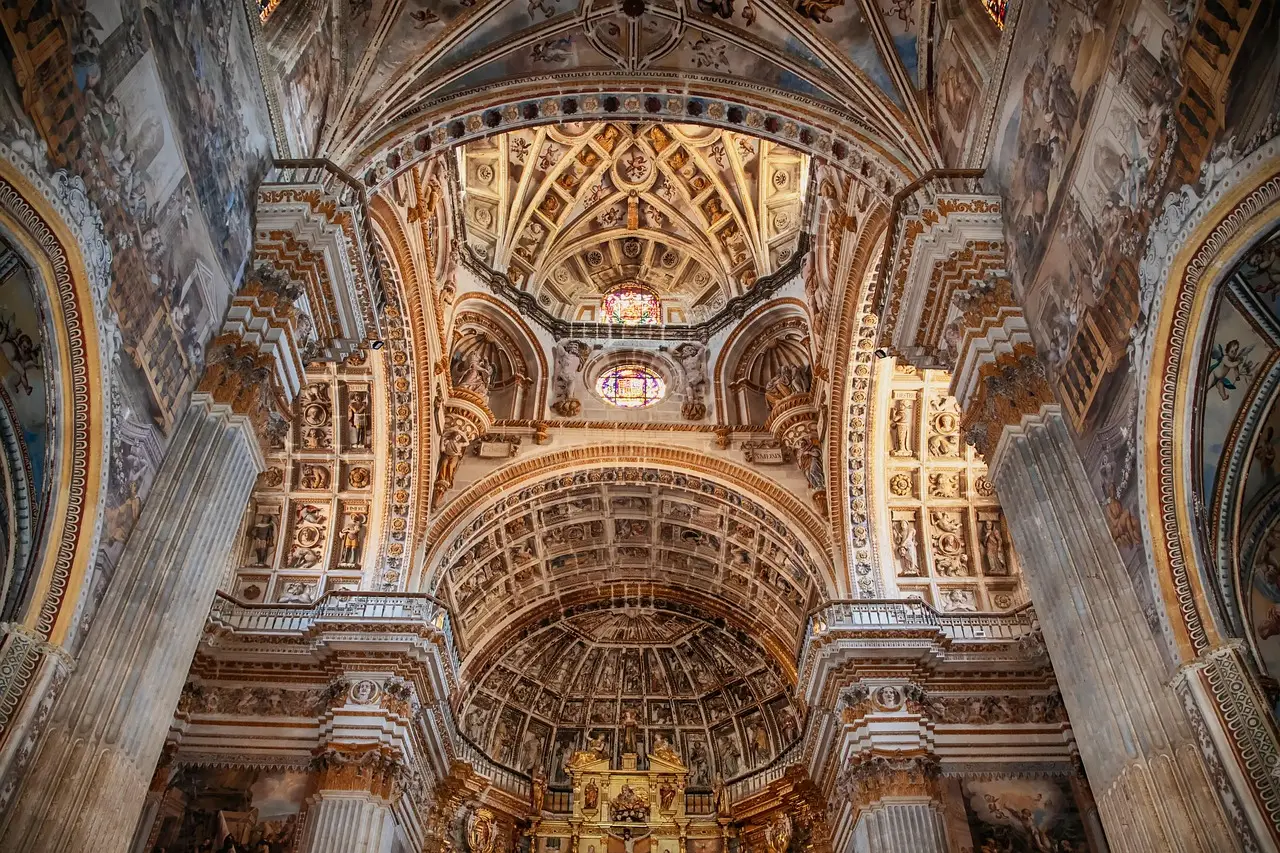
At the Baroque end, painted architecture pushes beyond the vault’s physical limits. The book’s photographic study of trompe-l’oeil, quadratura and di sotto in sù documents how artists dissolved architectural boundaries and opened ceilings onto boundless celestial space.
In visual terms, the ceiling changes from a gold-backed surface into an apparent opening in the building. Correggio, Pozzo and Tiepolo supply key moments in that ascent toward Baroque theatricality.
Why did church imagery become more immersive?
The book situates painted heavens within two wider intellectual shifts. The first runs from Aristotelian and Ptolemaic cosmology toward Copernican and Galilean discoveries; the second runs from Reformation turmoil to Counter-Reformation efforts to “move and persuade believers.”
In this expanded universe, ceiling frescoes relocate the hierarchical cosmos onto church vaults. The church becomes a “sacred theater,” where radiant light, illusionistic depth and emotionally expressive figures shape an encounter with the divine.
The effect turns an upward glance into what the book calls an experience of transcendence. It also reframes the ceiling as an active part of worship rather than a detached decorative surface.
What do the photographs reveal?
Three threads organize the visual argument. Each connects a visible device in the fresco to the larger religious or intellectual change around it.
- Light traces the move from Byzantine-derived gold grounds to radiant, sophisticated illumination.
- Gesture follows the transformation of hieratic icons into anatomically precise, emotionally charged bodies.
- Illusion explains how trompe-l’oeil, quadratura and di sotto in sù dissolve boundaries between architecture and celestial space.
Read together, these threads show how form, light and painted space operate as one mechanism. A change in religious or scientific understanding becomes visible first as a change in the room, then as a changed experience for the person looking up.
The photographs do not isolate ceiling painting from intellectual history. They place works within changing cosmology and theological conflicts, then read the painted vault as an instrument for persuasion and immersive encounter.
The book’s larger implication is that ceiling frescoes translated a reordered cosmos and contested theology into spatial experience. For architecture, the lesson is that a painted vault can organize belief as well as enclose a room.
Source: ArchDaily
More from Elena Vasquez
Show full bio
Senior reporter covering money, funding and market shifts around construction industry, architecture, interior design at Built Current.
405 articles