Studio ThusThat Turns Aluminum's Red Mud Waste Into Ceramics
Studio ThusThat has spent years turning bauxite residue into terracotta-like ceramics, with Tonkin Liu now testing the waste as architectural tiles for roofs and coastlines.
- Section
- Materials & Products
- Author
- By Grace Kim
- Filed
- Length
- 3 min read
Key takeaways
- Aluminum production generates over 150 million metric tons of red mud annually, adding to stockpiles exceeding four billion tons.
- Studio ThusThat's Red Mud project began in 2019 at the Royal College of Art and developed with materials scientists at KU Leuven.
- Only around three percent of red mud was being repurposed when the research began, per figures cited by the studio.
- The studio collaborated with Tonkin Liu on modular red mud tiles proposed for roofing and coastal regeneration.
- The 2010 breach of a Hungarian red mud reservoir sent sludge across the surrounding landscape.
Every year, aluminum refineries generate more than 150 million metric tons of red mud — the rust-colored alkaline waste left behind when alumina is extracted from bauxite ore. Amsterdam-based Studio ThusThat wants that waste on your table, and eventually on your roof.
The deposits are so vast they show up in satellite images. Global stockpiles already exceed four billion tons, and most of the material sits in enormous storage facilities despite decades of research into potential uses. One reservoir made the stakes brutally clear: in 2010, a breach at a Hungarian red mud reservoir sent sludge across the surrounding landscape.
Studio ThusThat's ongoing Red Mud project, first developed in 2019 at London's Royal College of Art, transforms the residue into finely formed ceramic vessels and experimental building materials. The finished pieces resemble traditional terracotta — deep, earthy reds in slender forms that feel far removed from the industrial landscapes where their ingredients began.
How do you turn waste into tableware?
The project grew through a collaboration with materials scientists at KU Leuven in Belgium. Designers Kevin Rouff and Paco Böckelmann discovered that the residue's mineral composition, particularly its high iron oxide content, could be adapted for ceramic production.
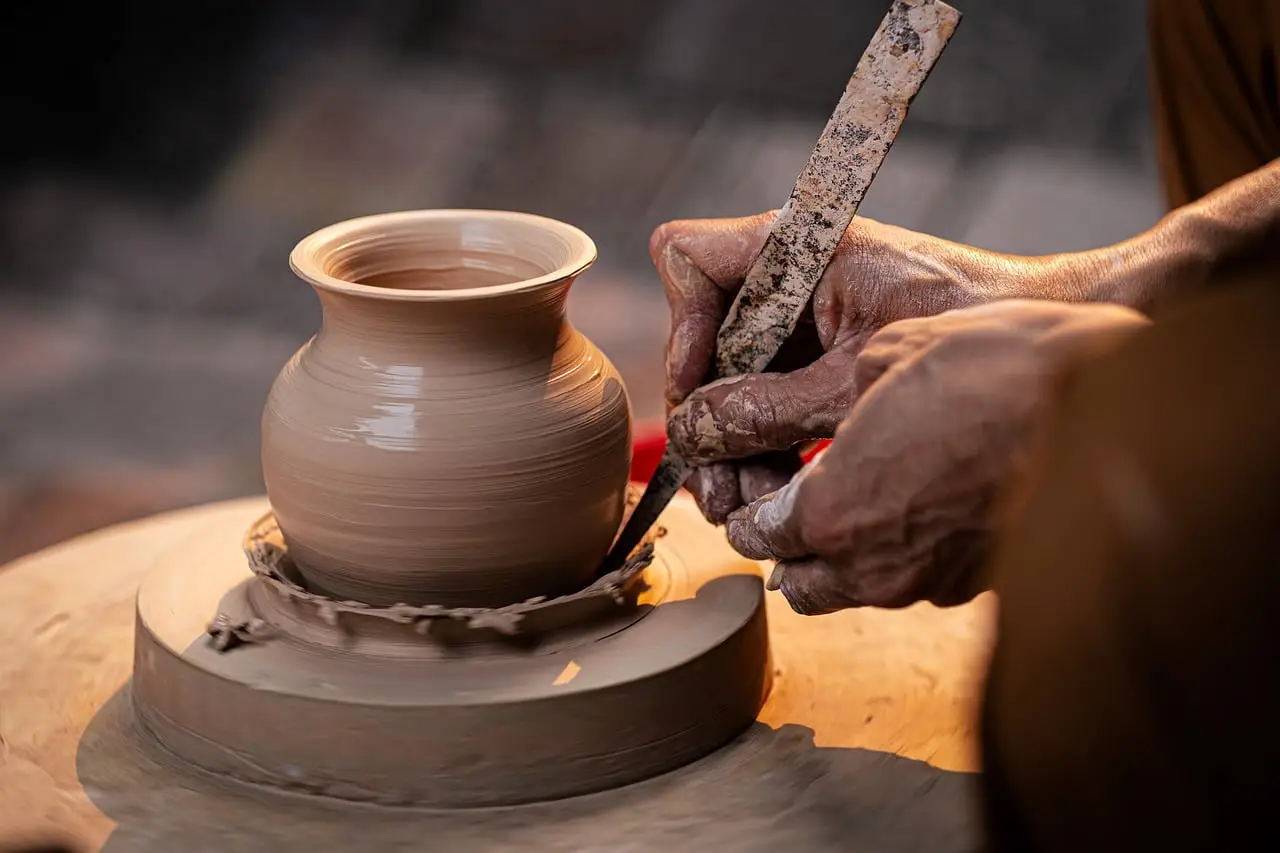
By processing the material and adjusting its composition, they developed recipes suitable for traditional forming techniques, including slip casting. The red mud appears in both the ceramic bodies and the glazes, producing a range of warm reddish tones. Rows of fired samples show how variations in composition and glazing shift the color and finish. Even the vases' slender silhouettes draw inspiration from the industrial forms of the refineries themselves.
The apparent simplicity conceals a complicated process. Raw red mud can be highly alkaline and may contain hazardous substances, so it requires treatment before safe handling. Its properties also vary depending on where the bauxite was mined and how it was refined, meaning each new source demands further testing.
For the studio, the collection is a way to make an unfamiliar material tangible — inviting people to reconsider a substance long treated as a liability.
From the tabletop to the coastline
The research has since scaled up through a collaboration with London practice Tonkin Liu. Together, the studios explored modular ceramic tiles with potential applications from roofing to coastal regeneration.
The proposed units have shaped surfaces that can collect water or accommodate planting, suggesting a role for the material in landscapes shared with other species. Their modular geometry allows the components to combine into larger assemblies. Along coastlines, the tiles could support vegetation and create small habitats within waterfront infrastructure — though long-term environmental performance would require further testing.
The proposals remain experimental. Manufacturing partners and larger-scale development are needed before the concepts can enter construction.
Can architecture absorb the waste of extraction?
What does this change for construction? Not much yet, and the obstacles are real. Processing costs remain high, and many refineries sit far from the industries that might consume their waste. Transporting such heavy material across long distances can quickly undermine its economic and environmental advantages. Regulatory requirements add further complications.
According to figures cited by Studio ThusThat, only around three percent of red mud was being repurposed when the research began — despite established methods for incorporating it into construction products.
There's a wider contradiction at play. Aluminum is increasingly important to renewable-energy infrastructure, yet its production keeps leaving behind enormous quantities of residue.
The team's ambition is to see these materials used in architecture, where the quantities involved could make a meaningful difference. Whether red mud finds a lasting place in construction will depend on what happens beyond the design studio — in the industries capable of using it at scale.
Original: google.com
More from Grace Kim
Show full bio
Staff writer covering money, funding and market shifts around construction industry, architecture, interior design at Built Current.
156 articles