Studio Ageli Reopens Brown Hart Gardens Atop a Grade II Substation
Brown Hart Gardens, a 1906 roof garden above a Grade II-listed Mayfair electricity substation, has reopened with a Studio Ageli redesign retaining 75 per cent of its pavilion.
- Section
- Landscape & Public Space
- Author
- By Amara Osei
- Filed
- Length
- 2 min read
Key takeaways
- Brown Hart Gardens first opened in 1906 atop a Grade II-listed electricity substation on Duke Street, Mayfair.
- Around 75 per cent of the existing pavilion's main structure and primary roof were retained in the redesign.
- Studio Ageli, led by founder Mohammed Ageli, designed the restoration on behalf of The Beaumont Mayfair hotel.
- The pavilion now houses Pearl Mayfair, a restaurant with interiors by EPR Architects.
- Landscaping involved the late Nigel Dunnett, Landscape Agency and delivery by Landform.
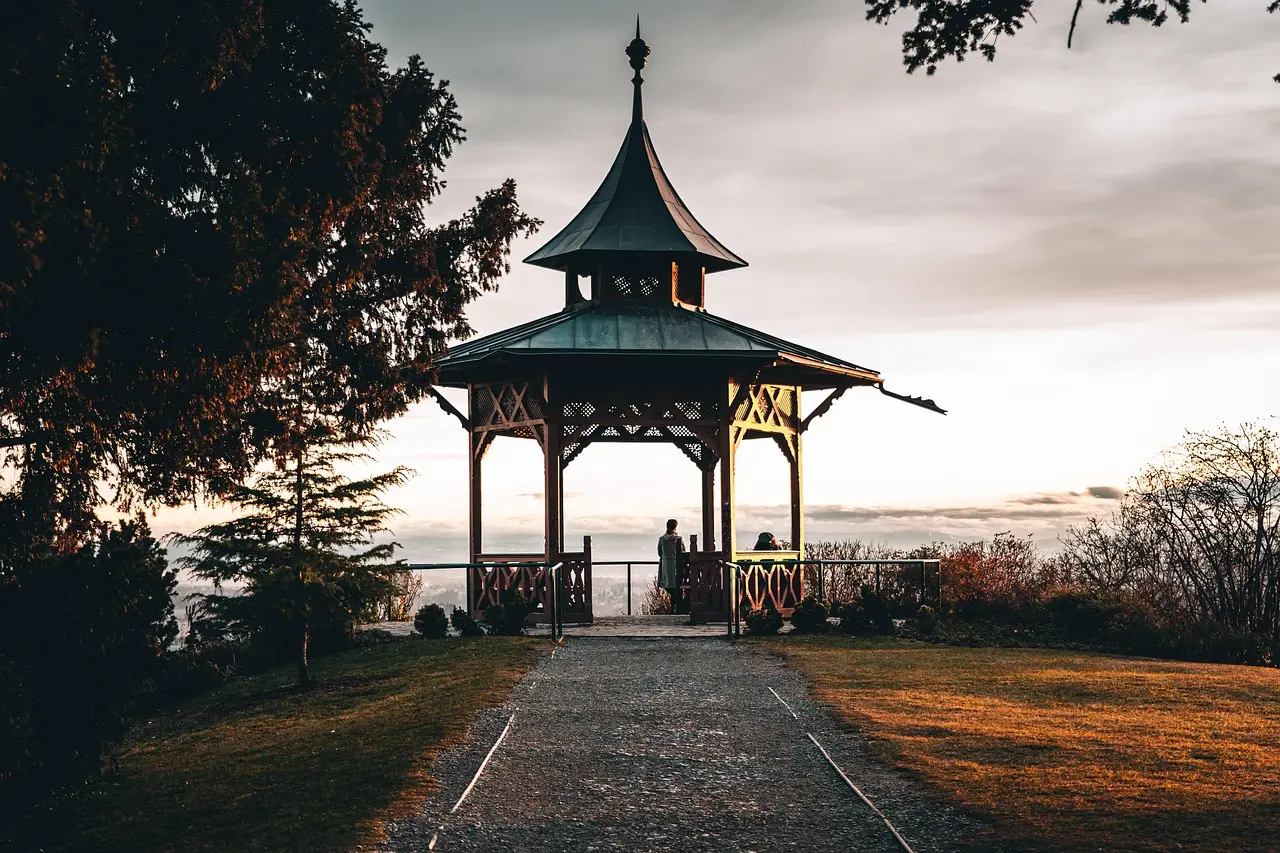
A 119-year-old public garden sitting on the roof of a Grade II-listed electricity substation has reopened in Mayfair, redesigned by Studio Ageli. Brown Hart Gardens, first opened in 1906 and closed to the public on and off for decades, now features a new pavilion restaurant, a paved terrace and landscaped planting — all a stone's throw from Oxford Street, on Duke Street.
The project was led by practice founder Mohammed Ageli and delivered on behalf of the adjacent art deco Beaumont Mayfair hotel, within The Grosvenor Estate. The brief: improve the local urban fabric and add greenery and lightness to a previously underused space above live infrastructure.
What survived the restoration?
Plenty, as it turns out. Around 75 per cent of the existing pavilion's main structure and its primary roof were retained. Auxiliary structures added over the years came out to clear the space, and the original Portland stone was highlighted and maintained.
The pavilion now houses Pearl Mayfair, a restaurant connected to The Beaumont Mayfair, with interiors by EPR Architects. It is already up and running.
Ageli set out the design philosophy in his own words:
"Our starting point was the garden, rather than the pavilion in isolation. We wanted to explore how a lighter, more open intervention could improve the relationship between the two, so that the building and garden work in harmony and become a useful asset for the wider community."
He sees the scheme as returning to the garden's founding premise: that even within one of London's densest and most valuable neighbourhoods, space can be set aside for collective life.
"The building acts as a new focal point and anchor for the space, grounding the garden and public square, providing depth and also completing the composition. It has a distinct identity, but sits within the garden rather than competes with it. The garden is the larger civic space here, and the pavilion's role is to support its use, bringing activity and a sense of occupation while retaining the openness and public character of Brown Hart Gardens."
Who delivered the landscaping?
Studio Ageli worked with the late landscape architect and horticulturalist Nigel Dunnett, alongside Landscape Agency; Landform delivered the project on site. Dunnett's involvement gives the planting scheme a pedigree familiar from his celebrated urban greening work.
Why does a pocket garden in Mayfair matter?
Few genuinely lesser-known corners remain in central London, and Brown Hart Gardens was one of them. The restoration keeps a working piece of Edwardian infrastructure — a substation still doing its job beneath the flowerbeds — while converting its roof into an active civic room with food, shade and seating rather than a fenced-off curiosity.
More than a century after its first opening, the garden now anchors a hospitality offer for The Beaumont while remaining public. Whether a pavilion restaurant can keep that public character intact is the question the next decade of Mayfair lunchtimes will answer.
Original: google.com
More from Amara Osei
Show full bio
Market editor covering companies, deals and strategy in construction industry, architecture, interior design at Built Current.
354 articles