Shenzhen: The Tech Megacity Built From Wetlands No US President Has Visited
Donald Trump becomes the first sitting US president to visit Shenzhen, the 18-million-person 'miracle city' with more billionaires than any city outside New York, as APEC spotlights China's tech hub.
- Section
- Urbanism & Planning
- Author
- By Grace Kim
- Filed
- Length
- 4 min read
Key takeaways
- Donald Trump is the first sitting US president to land in Shenzhen, arriving for an APEC summit.
- Shenzhen has more skyscrapers than New York City and roughly three times more than Chicago, per the Council on Vertical Urbanism.
- More than 2 million foreign tourists stayed overnight in Shenzhen in 2025, up 70% year on year.
- BYD, founded in Shenzhen by Wang Chuanfu, overtook Tesla last year as the world's biggest EV seller.
- A trade truce between the US and China expires in January.
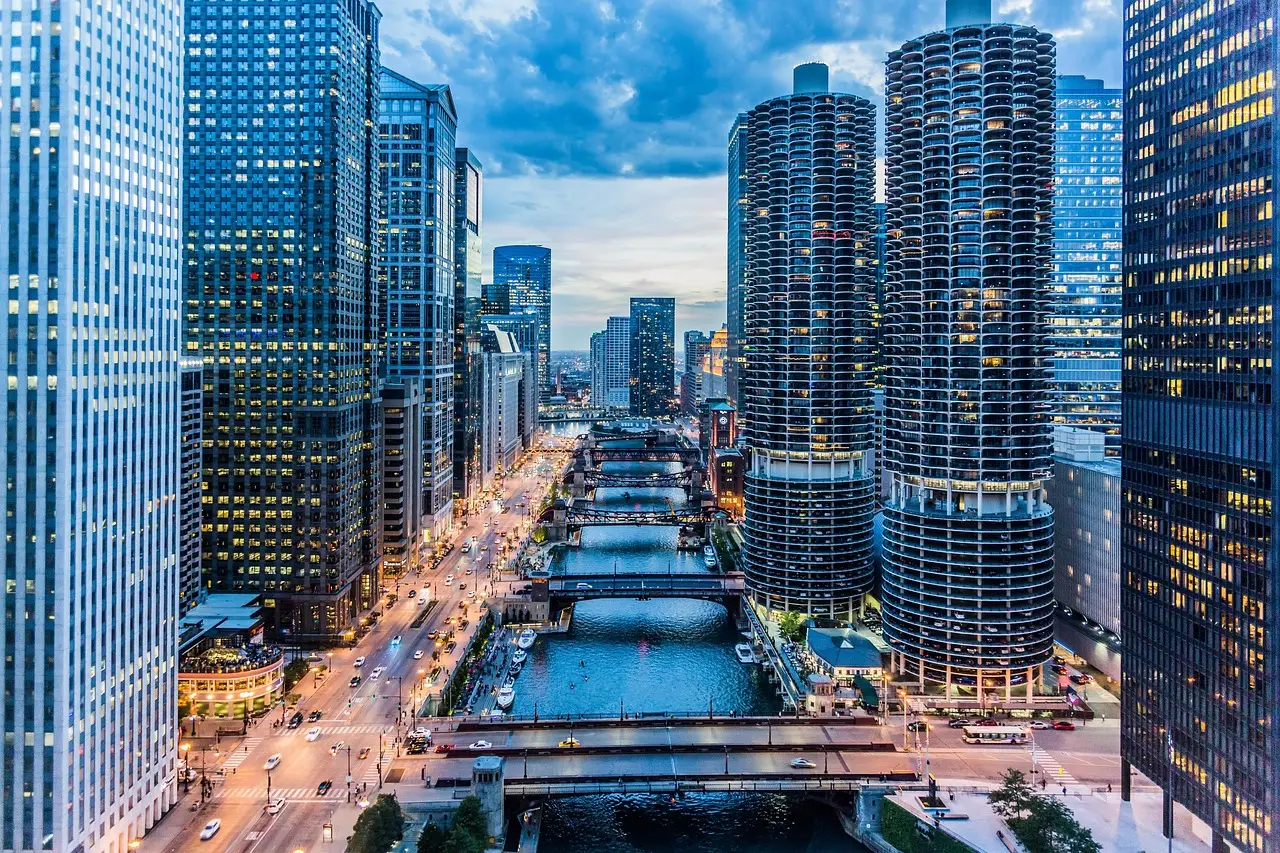
Donald Trump will become the first sitting US president to land in Shenzhen when he arrives this week for an APEC summit hosted by Chinese leader Xi Jinping. The city he'll touch down in has more billionaires than any city outside New York — and more skyscrapers than New York itself, roughly three times more than Chicago, according to the Council on Vertical Urbanism.
CNN's Sylvie Zhuang calls Shenzhen China's answer to Silicon Valley, reporting by CNN. Built out of mangrove wetlands over just four decades, the city of 18 million people will serve as Xi's showcase: an urban microcosm of high-level planning, roaring technological advancement, and rapid wealth creation.
It's also a city with stakes in the trade fight. Shenzhen launched many of the tech advances that have put Trump and Xi on a collision course over raw materials, advanced chips and markets. A fragile trade truce between the two economies expires in January.
What will Trump actually see?
A futuristic metropolis a stone's throw from Hong Kong. Self-driving electric taxis purr along the roads. Drones deliver hot meals and iced coffee. Crystal-like orbs dangle from roadside trees, collecting solar energy and lighting streets at night.
One megastructure resembles the tip of a bamboo shoot; another looks like a folded sheet of metal. The city boasts the world's fifth-tallest building, the Ping An Finance Centre. Even the street names signal ambition: Talent Park, Start-up Road, Garden of Knowledge, and many honoring famous Chinese scientists. The average resident is just 32 years old.
How did a non-existent city get here?
Fifty years ago, Shenzhen didn't exist. What stood there was an economic backwater of farmland, overshadowed by the wealthier British enclave of Hong Kong. A 2019 CCTV documentary on Shenzhen recounted that a farmer keeping more than three ducks would be condemned as "pursuing a capitalist path."
Deng Xiaoping, desperate to liberalize an impoverished economy still recovering from the Cultural Revolution, took a suggestion from Xi's father — Xi Zhongxun, then governor of Guangdong province — to stage free-market experiments in southern coastal towns. Shenzhen was picked for its proximity to Hong Kong.
The government's incentives drew talent like the grandparents of Chen Daiyao, a 33-year-old university assistant professor, who arrived in 1983 and thought Shenzhen "was pretty shabby." In 1987, former PLA engineer Ren Zhengfei founded Huawei there under a new law letting researchers start their own firms. A decade later, Wang Chuanfu left a battery maker to found BYD — which overtook Tesla last year as the world's biggest seller of electric vehicles.
"At the time, Shenzhen offered what was probably the best environment in China for innovation and entrepreneurship," Wang told CCTV in 2019.
Huawei and BYD will be on display at APEC: the "official designated vehicles" are advanced BYD models powered in part by Huawei technologies. Tencent and DJI, the world's largest drone maker, also call the city home. In 1990, Shenzhen became the first Chinese city with a McDonald's — its golden arches read as a milestone in China's opening up. Observers note that development at this pace and scale is easier in a top-down, one-party state.
What does this change for travelers?
Shenzhen has become foreign tourists' second-favorite Chinese destination, behind only Shanghai. More than 2 million foreign tourists stayed overnight in 2025, up 70% year on year, per city government data. In 2026, more than 6.6 million foreign tourists visited, mostly from Asia-Pacific countries. Another 10 million-plus visitors came in 2025 from Hong Kong and Macao — a 25% jump on 2024, drawn by a 14-minute high-speed rail link and lower prices.
UK and EU nationals get visa-free entry to China. Americans can fly into Shenzhen and stay within Guangdong province up to 10 days, but must fly out to a third destination outside mainland China, including Hong Kong or Macao. Six border-crossing points connect Shenzhen with Hong Kong; the East Rail Line runs from Admiralty Station to Lo Wu or Lok Ma Chau. Bao'an Airport now flies nonstop to Los Angeles, plus Kuala Lumpur, Melbourne and Surabaya.
Visitors like Will McCaskill, a 28-year-old London video producer who visited in May, noticed the density without the intensity. "You'll drive past this really dense, built-up area with lots of skyscrapers, but then on the street level, it's quite calm or just quite local," he said. "The city is so clean, well-built and easy to navigate."
The city is also pushing beyond cheap electronics — more than 100,000 businesses pack Huaqiangbei, the world's largest electronics market — toward culture. Fotografiska opened a Shenzhen outpost in October, and the Shenzhen International Museum of Art debuted in May with works by Titian, Tintoretto, Qi Baishi and Zhang Daqian, plus seven Chinese zodiac bronze animal heads.
As Xi presents his "miracle city" to Trump, the showcase will double as a reminder of what's at stake when the trade truce expires in January.
Source: localnews8.com
More from Grace Kim
Show full bio
Staff writer covering money, funding and market shifts around construction industry, architecture, interior design at Built Current.
345 articles