Santiago's Bahá'í Temple Marks Ten Years and Three Million Visitors
Santiago's Bahá'í Temple of South America, designed by Hariri Pontarini Architects, has drawn over three million visitors since opening in October 2016, its community marked in 2026.
- Section
- Architecture
- Author
- By Elena Vasquez
- Filed
- Length
- 2 min read
Key takeaways
- The Bahá'í Temple of South America opened in October 2016 and marked its tenth anniversary in October 2026.
- The temple has welcomed more than three million visitors in ten years.
- Hariri Pontarini Architects, led by Siamak Hariri, designed the building in Peñalolén, Santiago.
- It is the eighth and final continental Bahá'í House of Worship and the first in South America.
- The temple's nine curved wings shift in appearance from blue at dawn to gold in late afternoon to a lantern after dark.
More than three million people have visited the Bahá'í Temple of South America in the ten years since it opened in Santiago, Chile. The community that built it marked the decade in October 2026 with gatherings, talks, and tours across its grounds.
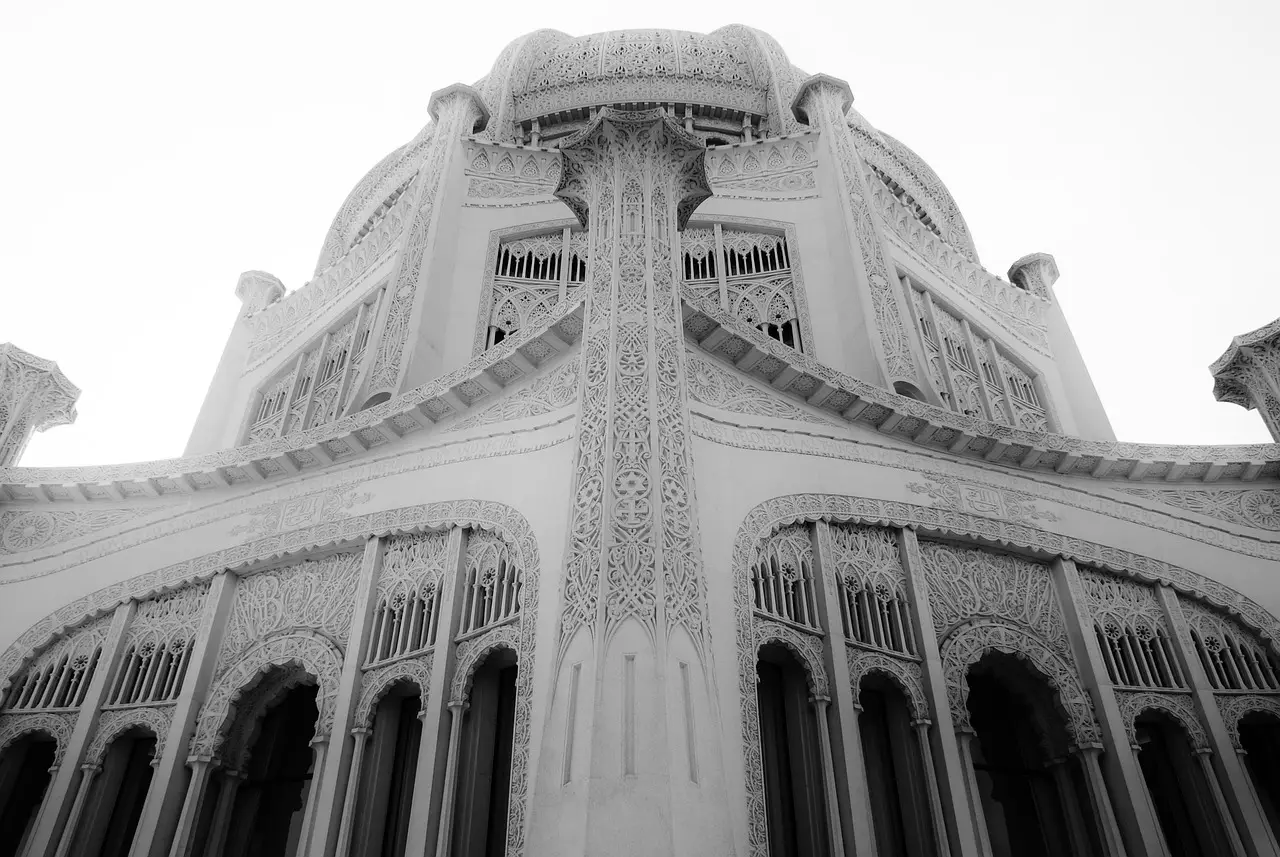
The temple sits at the eastern edge of the Chilean capital, where the streets of the Peñalolén commune give way to the foothills of the Andes. Nine curved wings lean toward one another above a carved terrace, forming a pale, petal-like structure that reads differently at every hour of the day.
How does the building behave in light?
The temple changes character with the sun, and the sequence is specific. At dawn the building takes on the cold blue of the cordillera behind it. By midday it becomes what the source describes as "a tent of white light." By late afternoon it turns gold. After dark the sequence reverses, and the temple becomes a lantern against the darkened foothills.
That daily cycle is the building's most public face. A structure that reads as a white pavilion at noon works as a glowing beacon for the city at night — roughly 365 times a year, in every season.
Who designed it, and what is it?
Canada-based Hariri Pontarini Architects designed the temple under the direction of Siamak Hariri. It opened to the public in October 2016.
The building carries institutional weight for its faith. It is the eighth and last of the Bahá'í faith's continental Houses of Worship, and the first on the South American continent. That makes Santiago the endpoint of a continental building program — no further continental Houses of Worship remain to be built under that sequence.
What does the visitor count tell us?
Three million visitors over ten years averages out to about 300,000 people per year, or roughly 820 per day. For a religious building in a commune at the city's edge — not on a central plaza — that volume points to the temple working as a destination in its own right, drawing both worshippers and tourists to the Andean foothills.
The October 2026 anniversary program, with its public gatherings, talks, and tours, signals that the community intends the building to keep functioning as a civic presence rather than a completed monument.
Ten years in, the temple's identity remains fixed to its setting: a pale form on a carved terrace above Santiago, shifting from blue to white to gold to lantern, day after day, at the base of the cordillera.
Source: ArchDaily
More from Elena Vasquez
Show full bio
Senior reporter covering money, funding and market shifts around construction industry, architecture, interior design at Built Current.
405 articles