Montréal's Darwin Bridges Use World-First Glass Powder Concrete
Provencher_Roy's Darwin bridges on Nuns' Island use world-first glass powder concrete, consuming 40,000 kg of recycled glass and extending their lifespan to 125 years.
- Section
- Green Building
- Author
- By Amara Osei
- Filed
- Length
- 3 min read
Key takeaways
- The Darwin bridges are the world's first structures built with glass powder concrete (ground glass pozzolan), replacing 10% of the ternary binder with recycled glass.
- The project used nearly 40,000 kg of recycled glass — about 70,000 wine bottles — and saved roughly 40,000 kg of concrete.
- The 37-metre bridges, completed in 2021, have a projected lifespan of 125 years versus 75 years for conventional concrete.
- The GGP innovation is patented, 100% Québec-based, and results from 17 years of research by the University of Sherbrooke and Ville de Montréal.
- The site sits near the 1967 Corot Building by Ludwig Mies van der Rohe and includes rain garden and wetland landscaping.
By Amara Osei
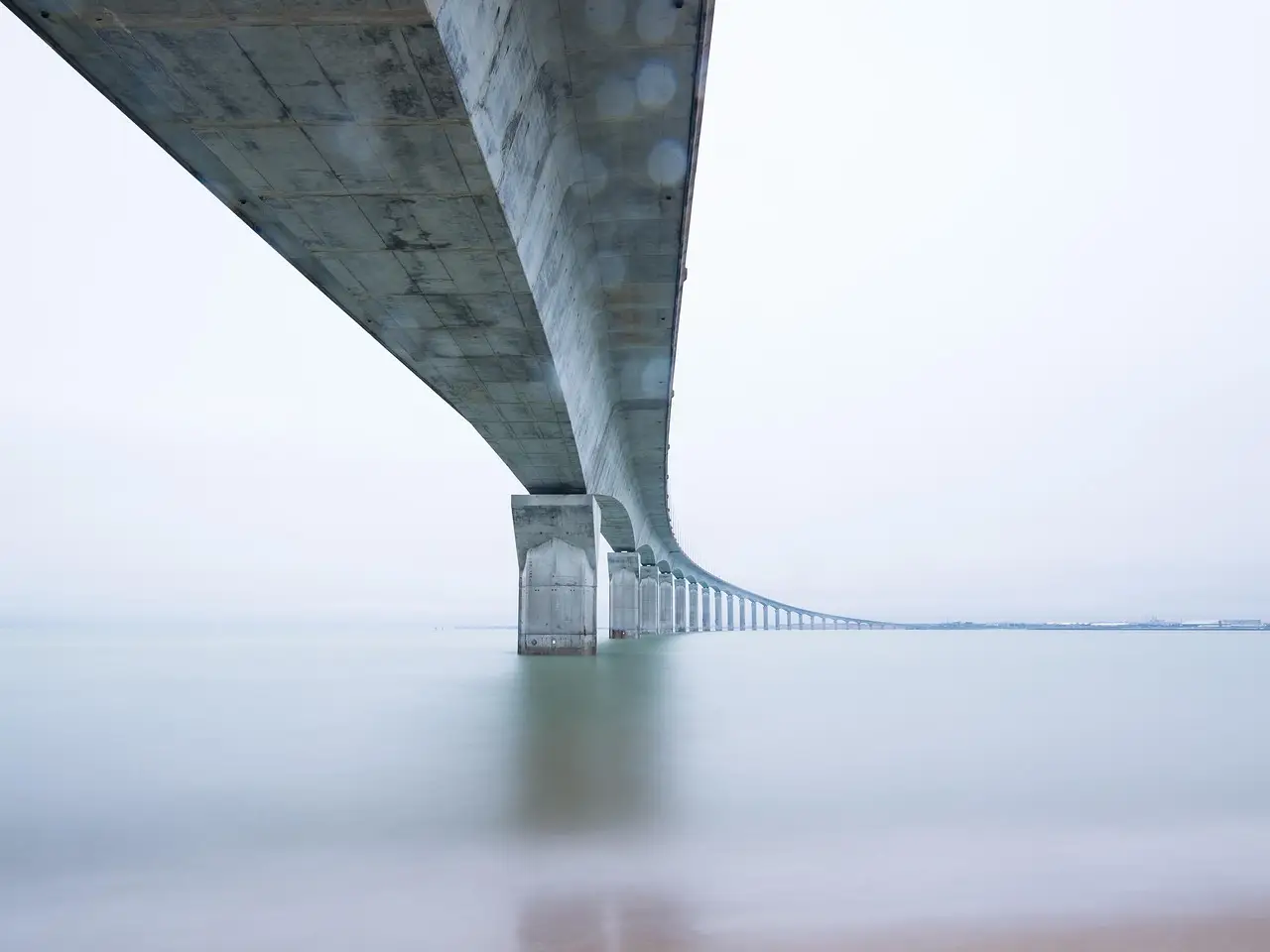
Provencher_Roy's Darwin bridges on Montréal's Nuns' Island are the first structures in the world built with glass powder concrete, a material that swaps 10% of the cement binder for finely ground recycled glass. The two 37-metre spans, completed in 2021, swallowed nearly 40,000 kg of recycled glass — roughly 70,000 wine bottles — and saved approximately 40,000 kg of concrete in the process.
That's not a typo. The arithmetic of municipal infrastructure rarely comes bottled.
The material, also known as ground glass pozzolan (GGP), is a 100% Québec-based, patented innovation developed over 17 years of research by the University of Sherbrooke and Ville de Montréal. The city positioned the project squarely within its push to accelerate its ecological transition and, in its own words, "establish itself as a North American model of sustainable mobility."
What did the bridges replace?
The new spans replace old structures that had reached the end of their lifespans. They now let pedestrians and cyclists cross the boulevard's four traffic lanes safely and enter Parc de West-Vancouver on Nuns' Island, near the Saint Lawrence River.
The site carries architectural weight of its own. The Corot Building, designed by Ludwig Mies van der Rohe in 1967, stands nearby. Faced with that lineage, Provencher_Roy kept the design restrained: "Shapes, proportions, materials, and surface treatments were chosen with the objective of designing elegant, sober, and uncluttered structures," the firm's text reads. Curved formwork and rounded architectural patterns produce what the architects call "a unique elegant movement effect" running the length of the infrastructure.
How long will the glass concrete last?
Longer than its ancestors. The GGP composition extends the bridges' lifespan to 125 years, against 75 years for a conventional concrete structure — a 50-year bonus from, essentially, discarded bottles.
The project also marks a shift in priorities. As the architects note, "For decades, almost all transportation infrastructures were built for the sole use of the automobile. However, the growing number of pedestrians and cyclists today requires that we rethink our approach." The Darwin bridges are one version of that rethink, executed at the scale of a neighbourhood crossing rather than a mega-project.
What happens between the two spans?
The geometry does quiet work. Between the two lanes, the central strip opens and deepens, drawing in two arches from the road that then slope down towards the cycling path. Complex geometric precast concrete retaining walls sit between the bridges, creating vegetation-lined levels.
The landscaping leans indigenous and functional:
- Trees, shrubs and indigenous plants line the bridge perimeters and, per the architects, promote biodiversity.
- The planting follows the structures' naturalistic approach, creating what the firm calls "a soft, inviting, and colourful atmosphere."
- The site doubles as infrastructure: it was designed as a wetland area and rain garden that harvests runoff water.
Photography of the project is by Stéphane Brügger.
A 125-year lifespan, 70,000 bottles' worth of glass and a Mies-adjacent site — the Darwin bridges read less like a footnote to sustainable mobility and more like a working prototype for what ordinary city crossings might soon be made of.
Source: ArchDaily
More from Amara Osei
Show full bio
Market editor covering companies, deals and strategy in construction industry, architecture, interior design at Built Current.
407 articles