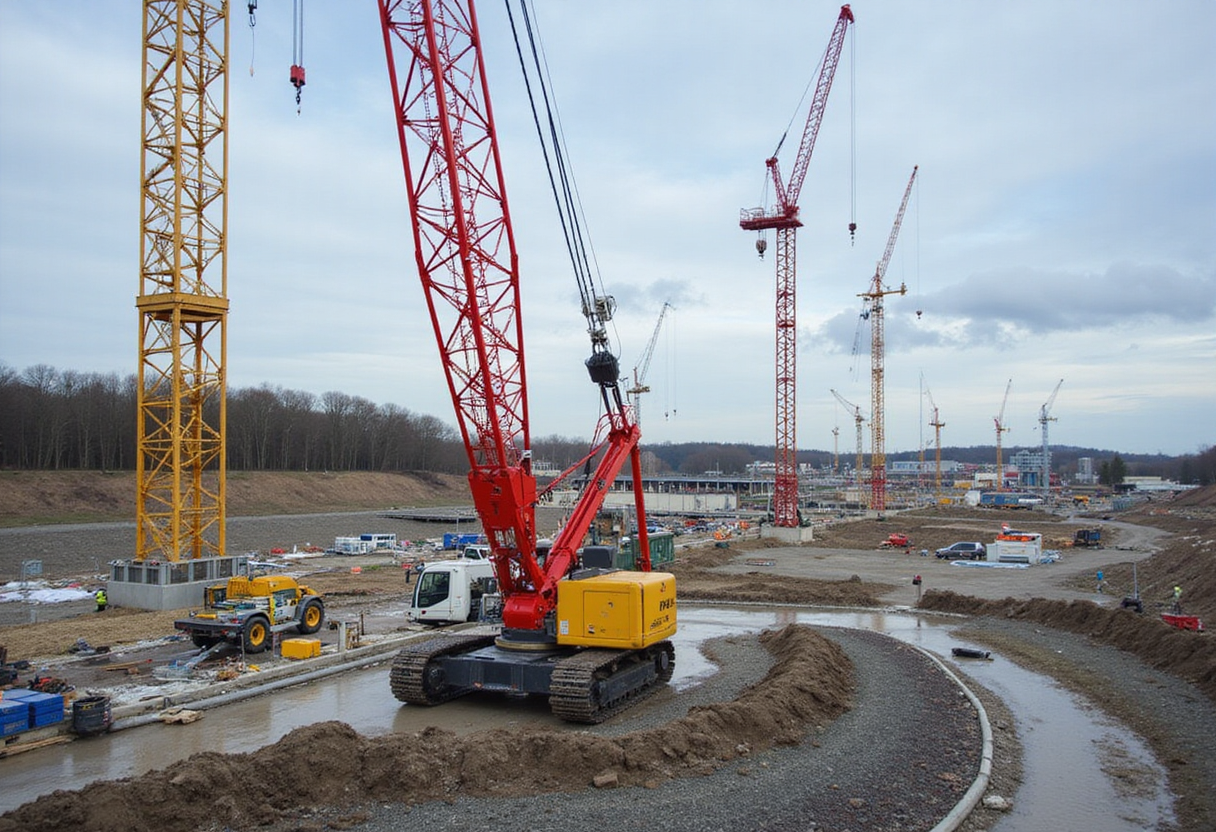
McLaren clears Gateway 2 on £229m Ebury Bridge rebuild
The Building Safety Regulator has approved four applications letting McLaren Construction start the £229m, 334-home second phase of Westminster's Ebury Bridge estate regeneration.
- Section
- Construction
- Author
- By Elena Vasquez
- Filed
- Length
- 2 min read
Key takeaways
- McLaren Construction cleared Gateway 2 for the £229m second phase of Westminster's Ebury Bridge estate regeneration
- Phase 2 covers 334 homes across five buildings — the largest of three planned phases
- The Building Safety Regulator approved four separate applications
- The wider Ebury Bridge programme will deliver 781 homes with public squares, a retail parade and community facilities
- Harvey called it the largest council development in this part of Westminster in over 60 years
By Elena Vasquez
The Building Safety Regulator has cleared McLaren Construction to start the £229m second phase of Westminster's Ebury Bridge estate regeneration.
The regulator approved four separate applications covering five buildings, the contractor confirmed this week. Phase two will deliver 334 homes — the largest of three planned on the 1930s estate.
What does Gateway 2 actually unlock?
Gateway 2 sits inside the post-Grenfell building safety regime. No main contractor can break ground on a high-rise residential project until the regulator signs off on key design and duty-holder documents.
McLaren had to file one application per building type, even though the phase counts as a single project. "This is a complex project with five buildings which required four separate building safety applications and approvals," Paul Woodhams, McLaren's managing director for regeneration, said.
The preparation work dragged on for months. Detailed submissions came from McLaren, Westminster City Council, and the wider consultant team before any approval landed. That paperwork is now in place across all five buildings.
How big is the wider programme?
The Ebury Bridge masterplan covers 781 new homes in total — enough to replace a small suburban district in one sweep. Phase one is finished and occupied. Two more phases remain, alongside interlinked public squares, a retail parade, and community facilities.
Westminster City Council is steering the project to ease its affordable housing shortage. The estate will become a mixed-tenure neighbourhood under the rebuild, blending market sale, shared ownership, and council tenures in proportions the council has not yet published in detail.
At £229m for 334 units, the second phase works out to about £685,000 per home. That figure covers construction only. Land value, professional fees, and infrastructure upgrades sit outside the headline number.
Who is saying what?
Councillor David Harvey, cabinet member for housing and regeneration, framed the approval as a turning point. "Collaboration with our main contractor McLaren has been key to achieving this milestone and it now gives the team the certainty needed to move ahead," he said.
Harvey pointed to the project's scale in a separate comment. "I'm excited that this has been achieved and we can continue the momentum in delivering the largest council development in this part of Westminster in over 60 years," he added.
What happens next?
Main construction work on phase two can now begin on site. McLaren and the consultant team spent months preparing the four applications, and the regulator's green light gives the contractor the certainty it needs to mobilise plant and labour.
Phase two completion will set the clock ticking on phase three, where McLaren has not yet been confirmed as the main contractor.
The Westminster approval adds another large council-led scheme to London's active housing pipeline. For a capital that has lost affordable units for years, every 334-home phase that clears regulator scrutiny now counts.
Source: Construction Enquirer
More from Elena Vasquez
Show full bio
Senior reporter covering money, funding and market shifts around construction industry, architecture, interior design at Built Current.
126 articles