Kitchen Islands Go Sculptural in 2027: Nine Designer Trends
Designers from 202 Design, HW Interiors and Cor Domu predict sculptural forms, single-timber builds, appliance-free waterfall counters and zoned layouts for kitchen islands in 2027.
- Section
- Kitchen & Bath
- Author
- By Grace Kim
- Filed
- Length
- 4 min read
Key takeaways
- Nine kitchen island trends are forecast for 2027, led by sculptural silhouettes and single-material builds
- Waterfall islands return without sinks or ovens for a clean, minimal silhouette, per 202 Design's Tom Wicksteed
- Cor Domi's Matthew Andrews predicts darker timbers — walnut and dark-stained oak — replacing mid-tone oak
- Large islands come back in 2027, zoned between prep and gathering ends with bespoke drawer inserts
- Furniture-style islands with turned or tapered legs will increasingly replace fitted built-ins
Nine trends will define kitchen island design in 2027, and nearly all of them push the island away from the plain rectangle with a row of barstools. Designers from 202 Design, HW Interiors and Cor Domi say the island is becoming more sculptural, more furniture-like and more zoned — while still doing the hard work.
What does the 2027 island actually look like?
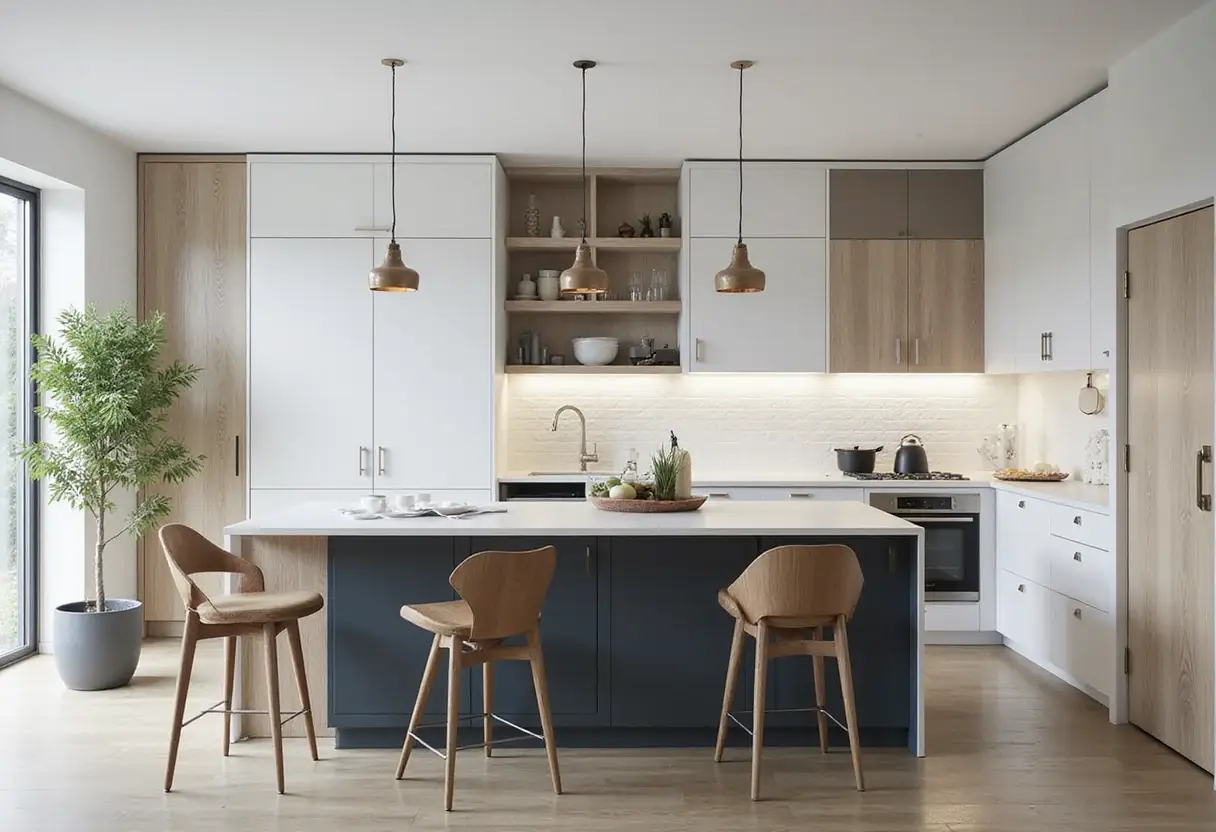
Tom Wicksteed of 202 Design sets the direction: 'In 2027, the kitchen island will become more sculptural, more considered and more precisely detailed. Generous islands with ample storage and seating continue to be popular, but the emphasis is on how they are designed, from the overall form to the finest finishing details.'
Interior designer Bethany Adams backs the shift, even in period homes: 'Even kitchens with traditional cabinetry along the perimeter look amazing with a sculptural, one-off island as the focal point.'
The nine trends, at a glance
- Sculptural silhouettes — shaped forms replace the solid rectangle.
- Wood and stone, combined unexpectedly — classic materials, less predictable applications and color pairings.
- Waterfall islands return — but stripped of sinks and ovens for a clean, minimal silhouette.
- Single-material islands — cabinetry and countertop in one material, often solid timber.
- Curves and texture — rounded ends, softer countertop profiles, oversized reeding.
- Wood with richer stains — walnut, blackened wood and earthy colors replace mid-tone oak.
- Large islands with considered zones — prep at one end, seating at the other.
- Furniture replacing built-ins — table-style islands with turned or tapered legs, even farmhouse tables.
- Open shelving — recipe books and kitchenware on display instead of closed cabinets.
Heather Weisz of HW Interiors frames the wider change: 'We're moving away from the predictable rectangular island with a row of barstools and toward something more personal, almost like a bespoke piece of furniture that happens to be the kitchen's hardest-working element.' She points to hidden technology, clever storage and 'seating that encourages people to gather and actually face one another.'
Why the waterfall island is back — minus the appliances
Wicksteed reports rising demand for waterfall counters left uninterrupted, without sinks or ovens. 'The impact comes from the details: quality hardware and carefully drawn cabinet profiles,' he says. An island used for casual seating, small food prep and gathering feels more social than one packed with appliances.
One material, one statement
Single-material islands are gaining ground. 'When made in solid timber, they make a bold visual statement with an antique quality that feels established,' Wicksteed says. He cites a project with Studio Duggan: a timber island with a softly rounded edge and a curved end, set in a Georgian home against olive green wall cabinets.
Matthew Andrews, Head of Design at Cor Domi, is blunt about the status quo: 'I think islands have been growing a bit stale for a while; everyone expects a big rectangle, a boring slab of stone, and calls it done.' His specific bet is oversized reeding: 'I think we'll see much bigger rounded staves. As they get bigger, it stops being texture and starts reading as architecture, more like a piece of furniture than a kitchen unit.'
Darker, more considered wood
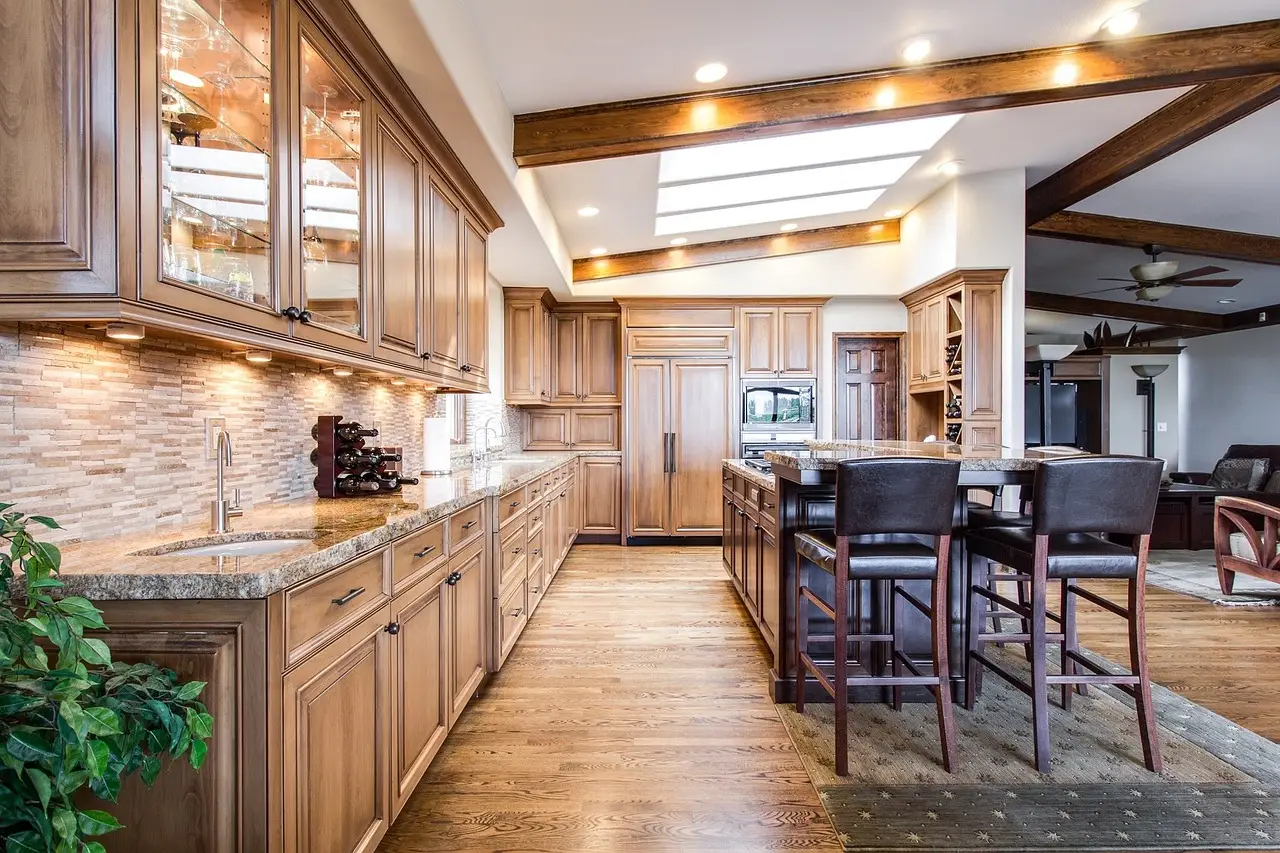
Andrews also expects clients to go deeper on timber itself — species, oil, stain and sheen levels. 'I also think things will start to go darker, using walnut or a dark-stained oak, away from this middle-of-the-road oak stain we're seeing a lot of this year.' Blackened wood and earthy stains, like green, join the palette.
Zoning makes big islands work again
After years of shrinking islands, spacious versions return with purpose. Wicksteed describes one end dedicated to prep — concealed drawers with bespoke knife and chopping-board inserts, tray dividers, integrated bins — and the other end for seating and entertaining. 'This considered approach makes a large island feel less like a single block and more like a series of spaces,' he says.
Where appliances and storage aren't needed, furniture takes over entirely. Andrews expects clients to drop fitted down stands for 'a more elevated table style design' with turned or tapered legs — 'it feels like something that's been in the house for a hundred years.' Farmhouse tables will also replace some islands outright, pushing kitchens beyond pure function toward gathering and community.
For 2027, the through-line is clear: the island stops pretending to be a utilitarian block and starts behaving like the most considered piece of furniture in the house.
Source: homesandgardens.com
More from Grace Kim
Show full bio
Staff writer covering money, funding and market shifts around construction industry, architecture, interior design at Built Current.
379 articles