Houzz Study: 58% of Renovators Are Making Their Showers Bigger
The 2026 U.S. Houzz Bathroom Trends Study finds 58% of renovators enlarging showers, curbless designs rising, and freestanding soaking tubs jumping 12 points to 57%.
- Section
- Kitchen & Bath
- Author
- By Elena Vasquez
- Filed
- Length
- 4 min read
Key takeaways
- 58% of homeowners upgrading a shower increase its size, per the 2026 U.S. Houzz Bathroom Trends Study (n=1,619, fielded August 2026).
- Frameless glass doors cover 80% of upgraded shower doors; hinged doors jumped 12 points to 51%.
- Freestanding flat-bottom tubs rose 12 points to 57% of new or replaced tubs; alcove tubs fell 18 points to 22%.
- When a tub is removed, 79% of homeowners enlarge the shower with the freed space.
- Soaking tubs reach 72% of renovated bathrooms, up 10 points, while specialty tub features fell 9 points to 46%.
By Elena Vasquez
Fifty-eight percent of homeowners who upgrade their shower during a bathroom renovation make it bigger. That's the headline finding of the 2026 U.S. Houzz Bathroom Trends Study, released by Houzz, the software platform for home construction and design. The numbers sketch a clear picture: showers are growing, bathtubs are going soft and sculptural, and the shower-tub combo is quietly disappearing.
The survey drew on 1,619 U.S. Houzz users in August 2026 who were planning, in the midst of, or had recently completed a bathroom renovation.
How much bigger are showers getting?
Most expansions are modest. Twenty-three percent of renovators grow their shower by less than a quarter. But the middle category — increases of a quarter to a half — rose 5 percentage points to 19%, and 16% of homeowners expand their shower by more than half. Fewer people are standing pat: the share keeping the shower at its original size fell 5 points to 41%. Just 2% end up with a smaller one.
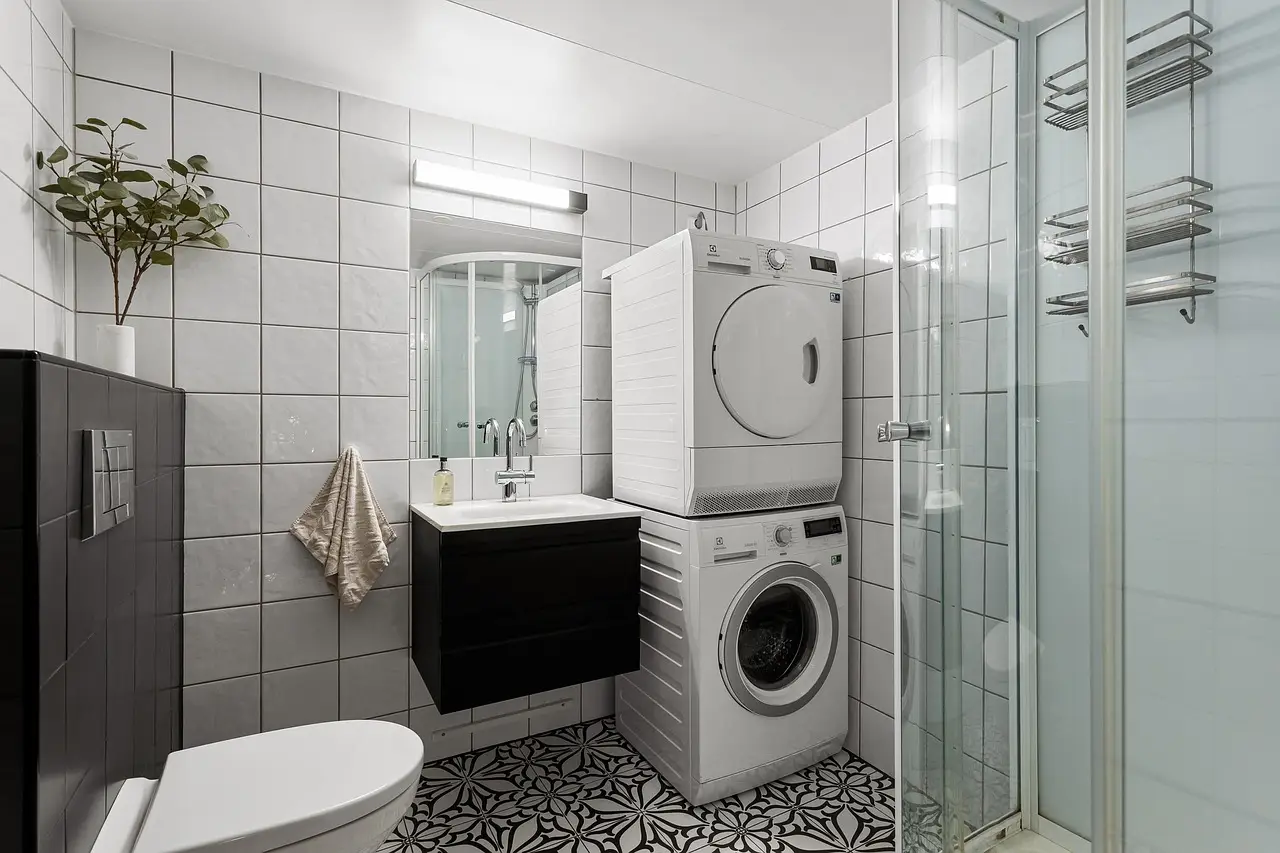
Style choices point the same direction. Low-curb designs lead at 47%, and curbless showers rose 4 points to 24%. Alcove showers hold steady at 41%, and corner showers climbed 6 points to 24%. Dual showers now account for more than one in five upgrades (21%). The shower-over-tub combination, once a bathroom default, dropped 7 points to 5% — the least common style by a wide margin.
What about doors and materials?
Doors are near-universal: 85% of renovating homeowners install them. Hinged doors dominate at 51%, a 12-point jump year over year, while sliding doors fell 6 points to 14% and curtains slipped to 8%. Fixed panels held at 7%. Among those doors, frameless glass is the runaway favorite, rising 4 points to 80% — four out of five installations. Semiframed accounts for 14% and fully framed just 6%.
Tile covers 79% of upgraded shower floors, and within that category porcelain leads at 42% with ceramic close behind at 35%. Natural pebble stone takes 15% of floors overall, slab 6%, wood less than 1%. Marble appears on 11% of shower floors; acrylic, limestone and engineered quartz stay in the low single digits. Hexagonal tile is the most common floor shape (26%), narrowly beating rectangular, which fell 4 points to 25%; square sits at 21%.
On walls, horizontal patterns win. Horizontal brick leads at 27%, vertical stack follows at 25%, then horizontal stack at 15% and vertical brick at 11%. Decorative patterns remain niche: mosaic at 3%, herringbone and chevron at 2% each, and crosshatch, arabesque and checkerboard at 1% apiece.
Are bathtubs disappearing?
Not quite, but they're being repositioned. Thirty-eight percent of renovators upgrade their tub and another 8% keep the existing one. Meanwhile, 26% of projects remove a bathtub entirely, and 27% of homeowners had no tub to begin with and didn't add one.
When a tub comes out, the shower usually wins the space: 79% of renovators use it to enlarge the shower, and 24% relocate the shower. Storage is claiming more of the freed-up footprint this year — enlarging cabinetry rose 5 points to 14%, and enlarging the vanity or sink rose 5 points to 11%. Smaller shares go to relocating a vanity (7%) or cabinetry (5%), with enlarged or relocated closets at 3% each.
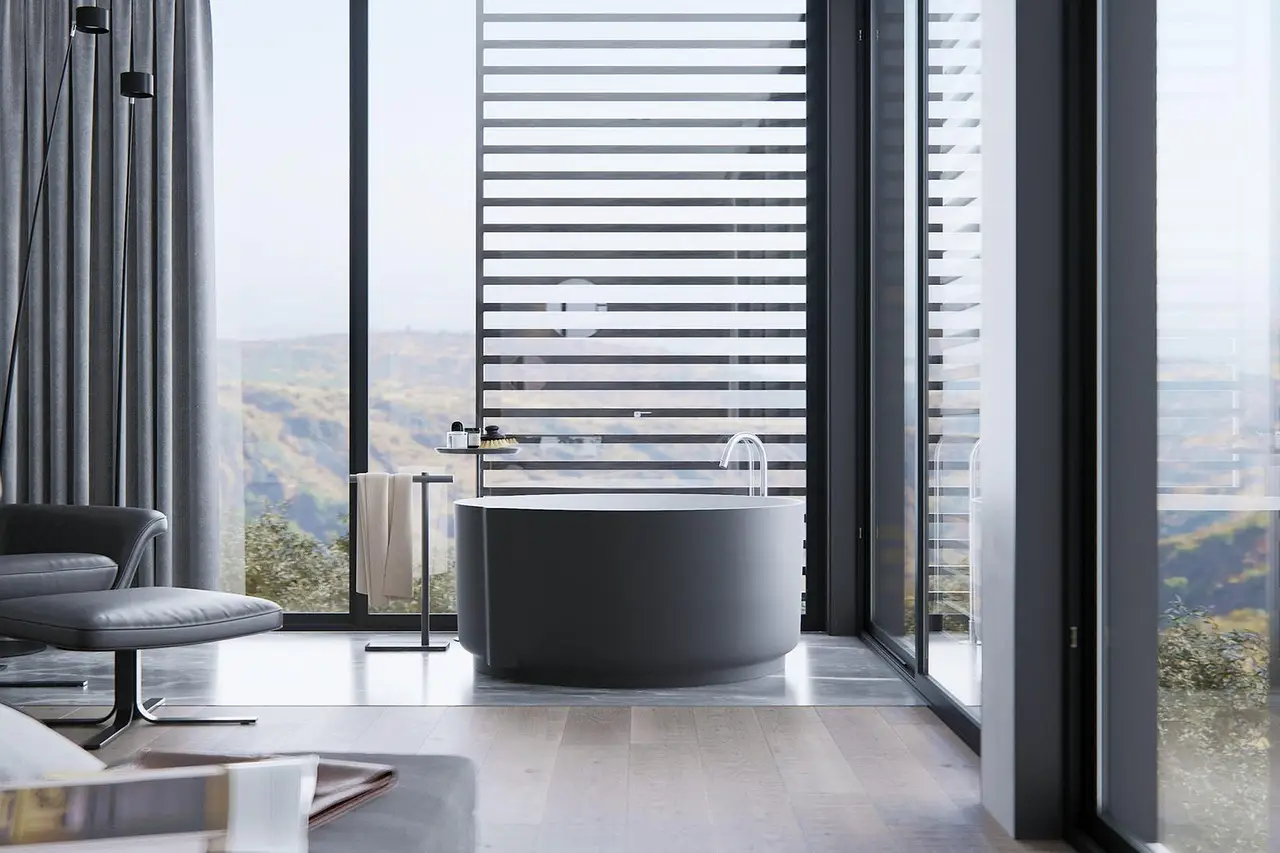
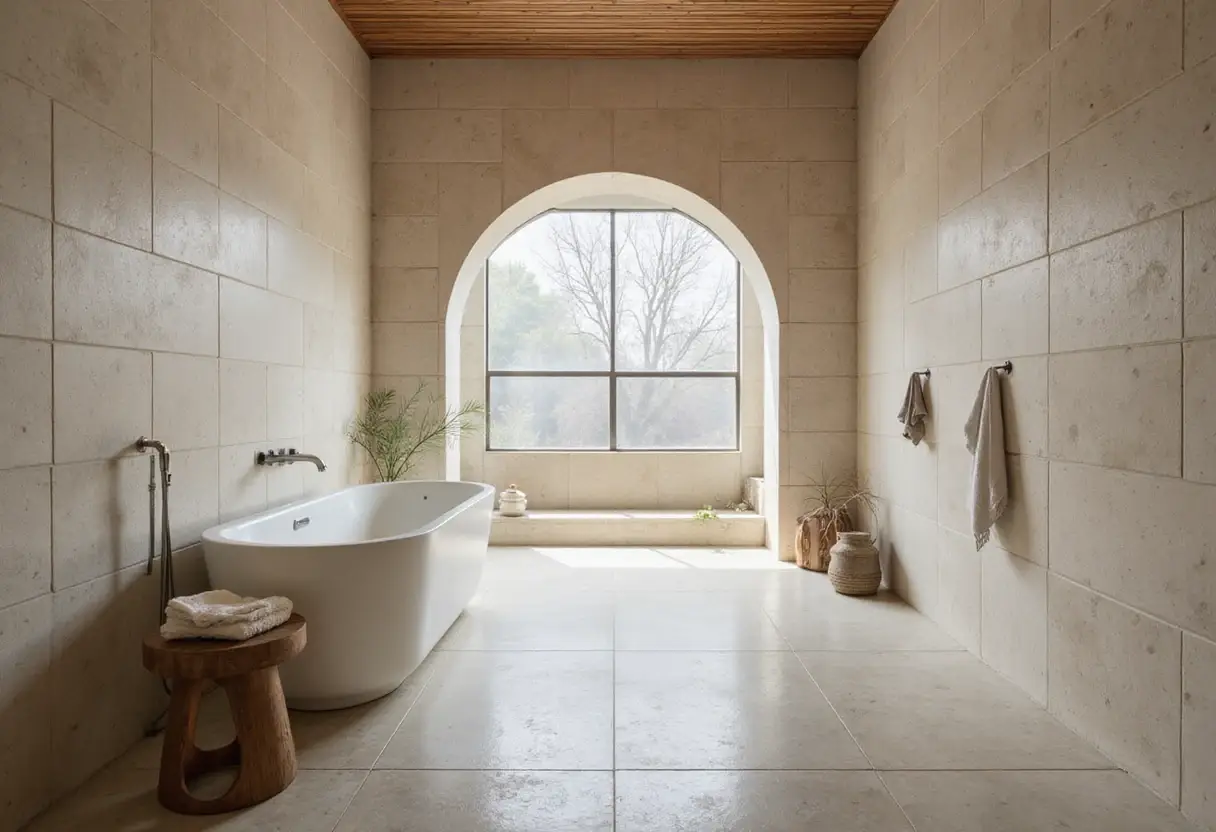
For those keeping tubs, the shift is toward freestanding, sculptural forms. Freestanding flat-bottom tubs jumped 12 points to 57% of new or replaced tubs, while alcove tubs collapsed 18 points to 22%. Deck-mounted tubs nearly doubled their share, rising 7 points to 13%. Claw-foot (5%) and corner tubs (1%) trail.
Soaking tubs now dominate the category at 72%, up 10 points year over year, while standard tubs fell 10 points to 19%. Walk-in tubs remain rare at 2%. Acrylic leads materials at 54%, with fiberglass a distant second at 12%; enameled cast iron and cast polymer tie at 9% each, ceramic at 8%.
Specialty features are pulling back overall. Fewer than half of homeowners (46%, down 9 points) add specialty features to a new or upgraded tub. Nonslip flooring leads the list at 23%, grab bars fell 8 points to 14%, space for two sits at 13%, and whirlpool or jet options at 9%. A seat, built-in lighting and a heated backrest each appear in just 5% of projects.
The through-line for designers and manufacturers: homeowners are trading tub count for shower volume, and when they do buy a tub, they want a freestanding soaker in acrylic — with safety features like grab bars declining even as curbless, more accessible showers gain ground.
Source: kbbonline.com
More from Elena Vasquez
Show full bio
Senior reporter covering money, funding and market shifts around construction industry, architecture, interior design at Built Current.
370 articles