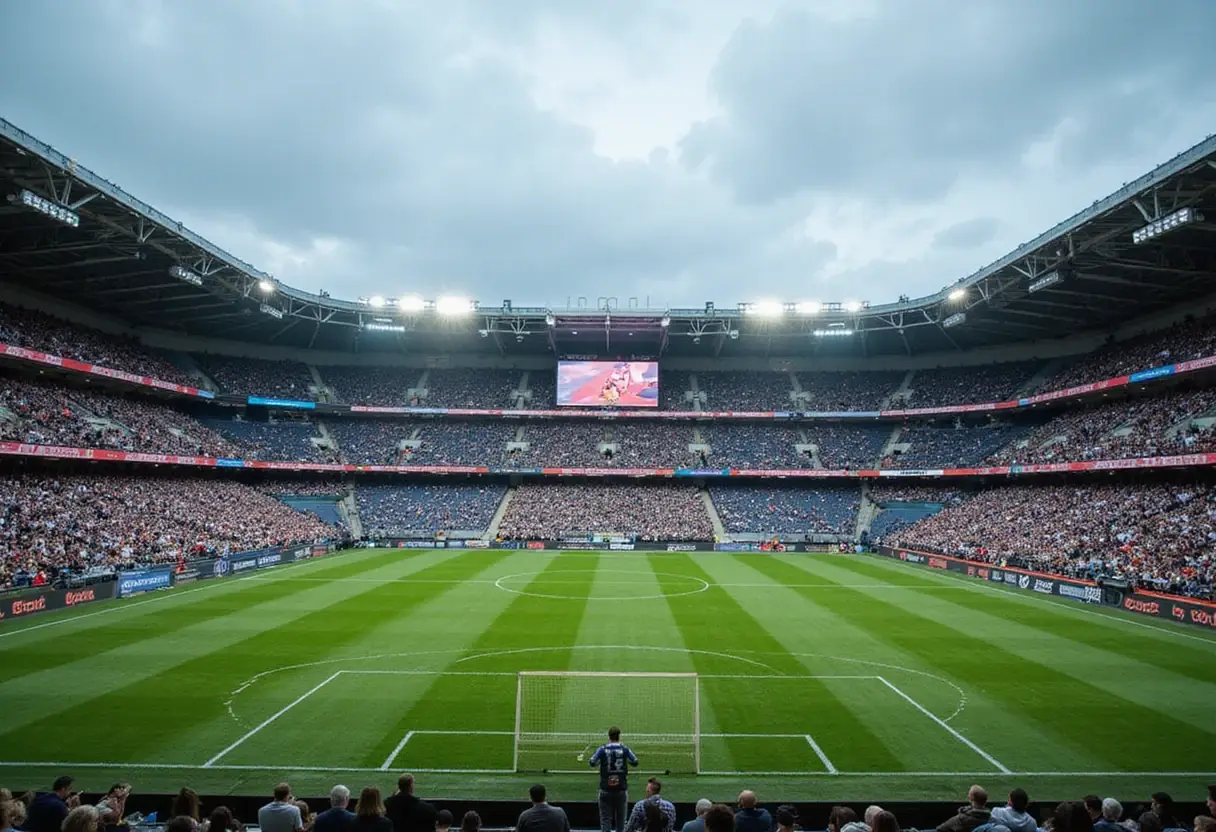
Illinois Bears stadium bill could extend tax breaks to other teams
Illinois' 70,000-resident threshold would let six cities form stadium authorities, exempting publicly owned venues from property taxes and potentially widening subsidies.
- Section
- Urbanism & Planning
- Author
- By Priya Raman
- Filed
- Length
- 3 min read
Key takeaways
- A floor vote on the Bears stadium bill is unlikely before the second veto session, the week after Thanksgiving; a December vote would fall in the first week.
- The bill would let municipalities with 70,000+ residents in counties above 3,000,000 create stadium authorities: Chicago, Elgin, Cicero, Schaumburg, Evanston and Arlington Heights.
- Publicly owned sports venues would be exempt from property taxes, with payments in lieu of taxes (PILOT) negotiable by local governments.
- Chicago Stars executives demand to “receive the same consideration” as the Bears.
- State Sen. Bill Cunningham says the model is location-neutral and franchise-neutral; negotiations would run for just six working days.
What would the Illinois stadium bill authorize?
The Illinois legislature is in the middle of its first of two three-day veto sessions, and a vote on the Chicago Bears stadium bill will almost certainly wait until the second, the week after Thanksgiving.
Any bill that reaches the floor will probably build on the measure the state Senate passed in May and the House rejected this spring.
That Senate version would authorize any Illinois municipality with 70,000 or more residents in a county with more than 3,000,000 residents to establish a stadium authority. The authority could build and own sports facilities.
Six municipalities clear that threshold:
- Chicago
- Elgin
- Cicero
- Schaumburg
- Evanston
- Arlington Heights
Field of Schemes, which analyzed the proposal, wrote that “don't think it's any coincidence that the threshold was set to include that last one,” referring to Arlington Heights.
What tax breaks would a stadium authority bring?
Any sports venue owned by a public authority would be exempt from property taxes. A local government could still negotiate payments in lieu of taxes (PILOT) as part of a deal.
Local officials, and possibly the state, would decide whether to add public money toward construction costs or infrastructure such as roads and utilities.
The measure establishes a framework, not a package. Field of Schemes reported that the size of any Bears subsidy remains unsettled, leaving tax breaks, infrastructure costs and other support for Chicago and Arlington Heights, possibly Schaumburg, to negotiate.
What does this change for the Stars, White Sox and other teams?
Rolling Meadows and Palatine, both neighbors of Arlington Heights, have already demanded seats on the board of any stadium authority created under the bill. They argue that transportation and infrastructure decisions would affect them.
Executives of the Chicago Stars, a National Women's Soccer League (NWSL) team, have demanded to “receive the same consideration” as the extraordinary efforts going to support the Bears this session and to be on an even playing field with men’s sports.
State Sen. Bill Cunningham, who has championed the bill, says the model serves any franchise and any location.
“The bill we passed out of the Senate in May, and the bill we are working on today, is a location-neutral and franchise-neutral model.
It could be used by the Bears, or the Stars, or any other professional sports team that wishes to enter into a stadium authority agreement, with any city in Cook County with 70,000 or more residents.”
Field of Schemes wrote that this neutrality could open the door to further tax-break and subsidy demands, including from the White Sox and the Schaumburg Boomers.
For residents of those six cities, the practical change is concrete: a single-team subsidy debate becomes a standing channel for tax exemptions and public money for professional sports venues.
What happens in December?
A floor vote would probably come in the first week of December, if the bill survives negotiation and stays close to the version the House would not pass in the spring. Field of Schemes called both conditions far from certain.
Negotiations would run for just six working days, mostly or entirely behind closed doors, the analysis said. It compared the process to the Chicago adage that too much sunlight makes the baby go blind.
Field of Schemes framed the stakes as a choice between a multibillion-dollar flood of sports subsidies and nothing at all.
The test in December is whether Cook County municipalities treat the new authority as a Bears-only tool or as the franchise-neutral instrument Cunningham described for every professional team in the region.
Source: fieldofschemes.com
More from Priya Raman
Show full bio
News editor covering people, launches and day-to-day practice in construction industry, architecture, interior design at Built Current.
341 articles