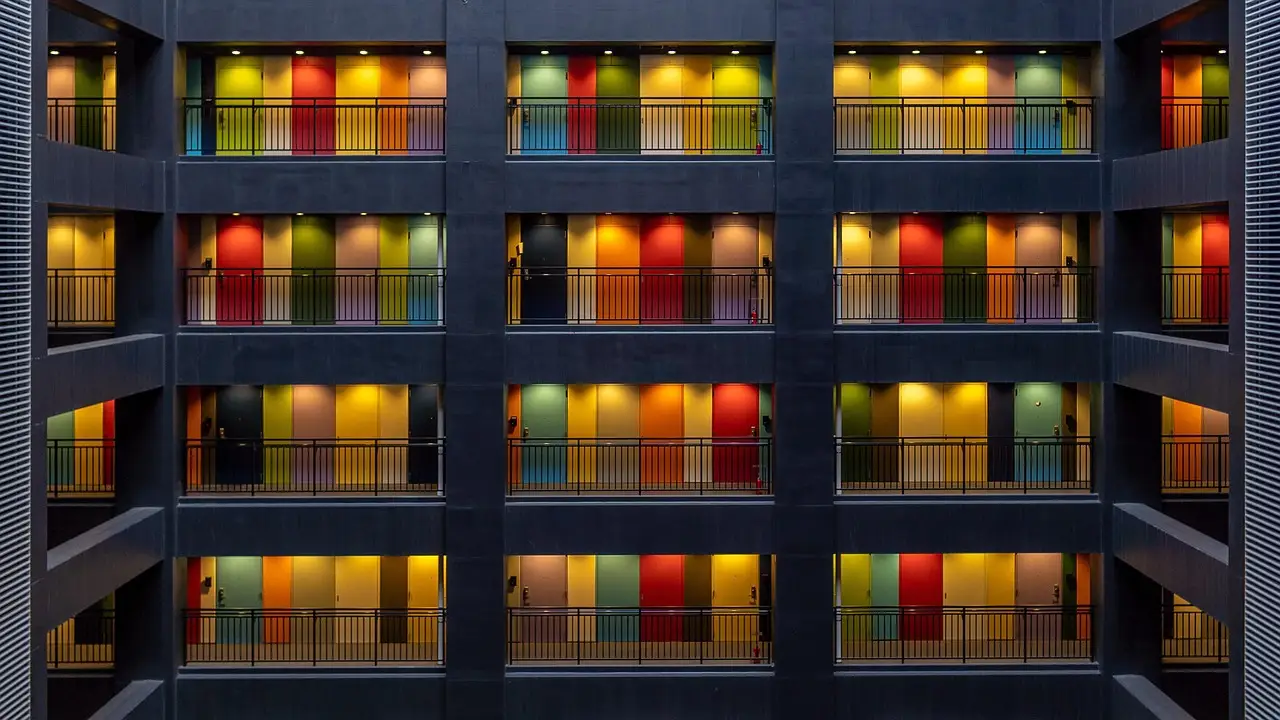
Homes Around Trees: architectureRED Pushes Back on India's Commodity Housing
ArchitectureRED's Homes Around Trees, a 13,100 m² housing project led by Biju Kuriakose, argues against India's yield-first commodity housing model and builds around vegetation instead.
- Section
- Architecture
- Author
- By Elena Vasquez
- Filed
- Length
- 3 min read
Key takeaways
- Homes Around Trees is a 13,100 m² housing project completed in 2024.
- Lead architect is Biju Kuriakose of architectureRED; photography by Edmund Sumner.
- The architects describe Indian urban housing as transformed into a commodity prioritizing maximum yield.
- The firm's statement names unit stacking, open-space erasure and homogenization as core problems.
ArchitectureRED has completed a 13,100-square-metre housing project in India that positions itself against the country's market-driven residential model. The project, called Homes Around Trees, was completed in 2024 under lead architect Biju Kuriakose, with photography by Edmund Sumner.
The firm's statement doesn't mince words about what it sees going wrong. "Urban housing in India stands at the intersection of rapid urbanization and a shifting sense of identity," the architects wrote. "The pressures of land scarcity and market-driven development have transformed housing into a commodity, often prioritizing maximum yield over the fundamental idea of home."
That's the diagnosis. To put the scale in perspective, 13,100 square metres is roughly the footprint of two full-size football pitches placed side by side — a mass of buildable area that, under a yield-first model, would typically carry as many stacked units as zoning allows.
What does the architects' statement actually argue?
The text works as a critique with three moving parts, and it's worth taking them one at a time.
- Housing as commodity. Land scarcity plus market pressure, the architects argue, has pushed developers to treat units as yield rather than as homes. Maximum buildable area wins; the "fundamental idea of home" loses.
- Erosion of essence. In the architects' words, housing exists "as a space that fosters identity, community, and rootedness" — and that essence "is increasingly eroded" in the current model.
- Homogenization. The statement identifies "the relentless stacking of units, the erasure of open space, and the homogenization of urban environments" as the mechanisms. Together, they "leave little room for meaningful engagement with nature or with each other."
Each clause names a specific mechanism rather than a vague malaise. Stacking units erases open space. Open space's erasure removes the ground where community forms. Homogenized environments remove the markers that give a place identity. The argument is that these losses compound.
Why the project's name reads as a position statement
The project's title, Homes Around Trees, tells you the design's ordering logic before you see a single plan. The name inverts the usual hierarchy: instead of trees slotted into leftover space after the building mass is fixed, the homes arrange themselves around existing vegetation.
That inversion directly answers the critique in the architects' own text. If "the erasure of open space" and the loss of "meaningful engagement with nature" are the failures of commodity housing, then building around trees is the counter-move — a way of keeping rootedness, quite literally, at the centre of the scheme.
Who is behind it?
ArchitectureRED is the design firm behind the project, with Biju Kuriakose serving as lead architect. Edmund Sumner, a frequent documenter of contemporary South Asian architecture, photographed the completed work. The project delivers 13,100 square metres of housing in a market where, as the architects themselves frame it, the default trajectory is maximum stacking and minimum engagement with landscape.
The 2024 completion makes the project a live data point in an ongoing argument about how Indian cities should house their growing urban populations — and whether developers and architects can reconcile yield with the idea of home that architectureRED insists is worth protecting.
Source: ArchDaily
More from Elena Vasquez
Show full bio
Senior reporter covering money, funding and market shifts around construction industry, architecture, interior design at Built Current.
270 articles