Disbrow Iannuzzi's Baw Beese House Splits Into Three Independent Zones
Disbrow Iannuzzi completed Baw Beese House in 2024: a 4,300-square-foot lakeside retreat in Hillsdale, Michigan, with three living zones that work independently or as one whole.
- Section
- Architecture
- Author
- By Priya Raman
- Filed
- Length
- 2 min read
Key takeaways
- Baw Beese House totals 4,300 square feet and was completed in 2024.
- Disbrow Iannuzzi designed the project with David Iannuzzi as lead architect.
- The house contains three living areas that operate independently or together.
- The retreat sits lakeside in Hillsdale, Michigan, serving multiple generations of one family.
- Manufacturers include Marvin, Kohler, Fisher & Paykel, ILVE and Nakamoto Forestry North America.
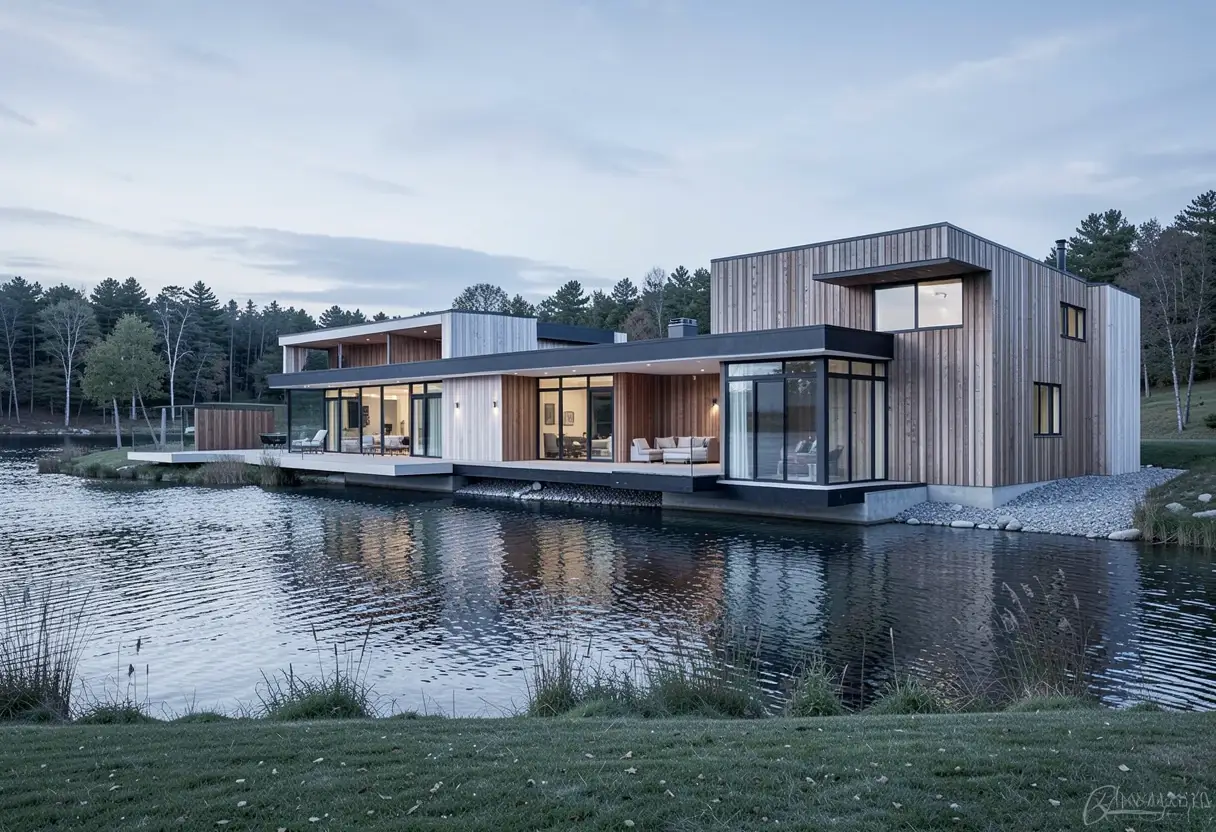
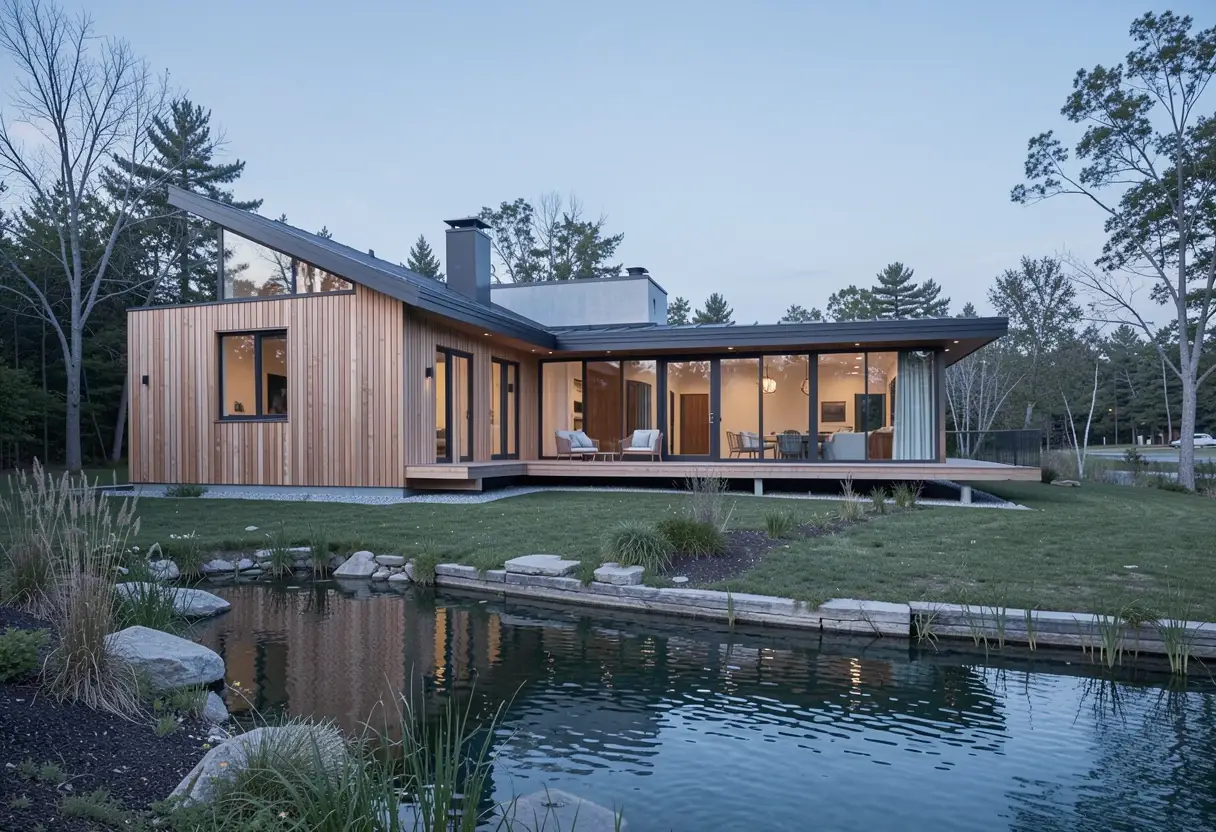
Baw Beese House, a 4,300-square-foot lakeside vacation retreat in Hillsdale, Michigan, is designed to be occupied in three parts or as one whole. Disbrow Iannuzzi, the architecture firm behind the project, completed it in 2024. David Iannuzzi served as lead architect, and Round Three Photography documented the finished building.
The house's core idea is generational flexibility. According to the architects' own description, the project is "a contextual response to social, familial, community, economic, and health conditions, allowing multiple generations of family members to safely occupy a place together or separately for years to come."
That statement carries weight because it names the conditions shaping the brief rather than the styling. Social and familial demands define who uses the house and when. Community and economic conditions situate it in Hillsdale, a small city in southern Michigan. Health conditions, the architects note, inform how safely different generations can share space under one roof.
How does a house operate in three independent parts?
The lake house comprises three distinct living areas, each capable of running on its own. The architects explain the mechanism plainly: the zones "can operate independently or together as a whole, depending on which family members are present at the time."
This is a plan-driven strategy, not a stylistic one. When only one branch of the family visits, it occupies a single self-contained zone and does not heat, maintain or inhabit the rest. When the full family gathers, the three areas connect into one continuous house. The model treats occupancy as a variable, and the floor plan as the instrument that absorbs it.
For a vacation retreat, the economics matter as much as the layout. A building that sheds unused square footage between family visits reduces the operating burden that typically comes with a 4,300-square-foot second home. The architects fold this into their framing, citing economic conditions as one of the explicit drivers of the design.
What's inside and who supplied it?
The project draws on a long list of named manufacturers, a detail that signals the specification level of the three independent kitchens and living quarters. The listed suppliers are:
- Fisher & Paykel — appliances
- ILVE — appliances
- Astria — fireplaces
- Rais — stoves
- Brizo Kitchen and Bath — fixtures
- Kohler — plumbing fixtures
- Marvin — windows and doors
- Nakamoto Forestry North America — timber products, including shou sugi ban (charred wood cladding)
The pairing of Marvin windows with Nakamoto Forestry's charred-cedar products points to an exterior where durable, low-maintenance wood cladding does the visual work around the lakefront setting.
What does this change for lake-house design?
Baw Beese House treats multi-generational living not as an add-on but as the organizing principle of the plan. Three independent living zones under one roof let a family grow, shrink and regroup across years without buying, selling or building again. That's a model other vacation-home clients in the Great Lakes region can reasonably study as household structures keep shifting.
Source: ArchDaily
More from Priya Raman
Show full bio
News editor covering people, launches and day-to-day practice in construction industry, architecture, interior design at Built Current.
318 articles