Design Museum Gent reopens with waste-brick wing by Carmody Groarke
Design Museum Gent reopens October 3, 2026 with a 2,200-square-meter wing clad in 82,000 bricks made from Ghent's municipal waste, completing its fragmented historic complex.
- Section
- Renovation & Retrofit
- Author
- By Amara Osei
- Filed
- Length
- 4 min read
Key takeaways
- Design Museum Gent reopens October 3rd, 2026 after a four-year renovation and expansion led by Carmody Groarke and ATAMA, with historic buildings restored by RE-ST.
- The 2,200-square-meter wing is clad in more than 82,000 Gent Waste Bricks — lime-cured bricks made from locally sourced municipal waste at Het Arsenaal in Ghent.
- Opening exhibitions include Collection. Models from the Past for the Future with around 500 objects from a 24,000-piece collection, and Public Matter(s): Design and Democracy.
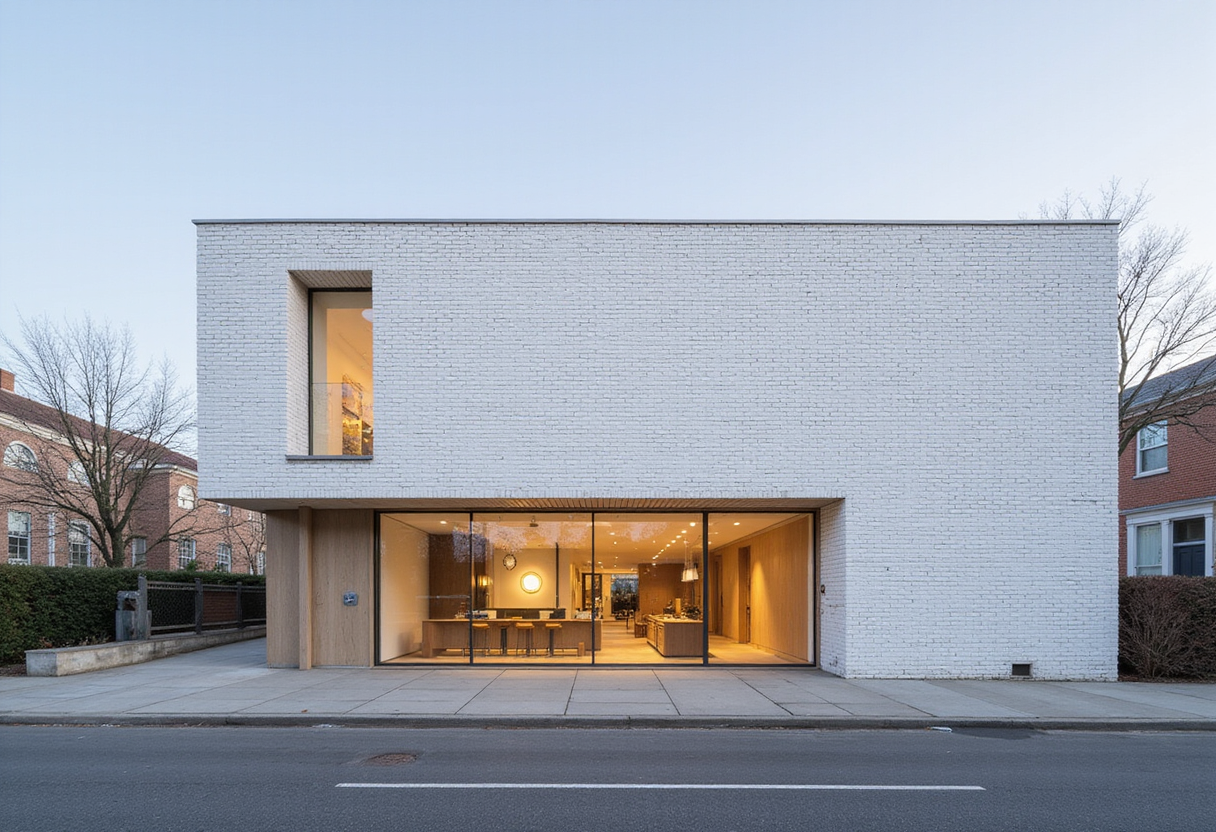
Design Museum Gent reopens on October 3rd, 2026, with a new 2,200-square-meter wing whose facade is built from more than 82,000 Gent Waste Bricks — lime-cured blocks produced from locally sourced municipal waste at Het Arsenaal in Ghent.
The four-year renovation and expansion was led by Carmody Groarke and ATAMA, with the historic buildings restored by RE-ST. Structural engineering came from Ney & Partners, building services from Boydens Engineering and acoustics from Daidalos Peutz. The 6,400-square-meter historic fabric joins the new wing to reposition the museum as an open civic space, with freely accessible rooms for exhibitions, workshops, lectures, events and community activity.
Completing a fragmented complex
The project ties together buildings dating from the 16th to the 20th century. The new wing occupies a previously underused southern passage and an unused plot at the center of the site. Its addition turns the historic courtyard of Hotel de Coninck into a garden and a central point of orientation, with views running through the building to help visitors understand the relationships between the museum's parts.
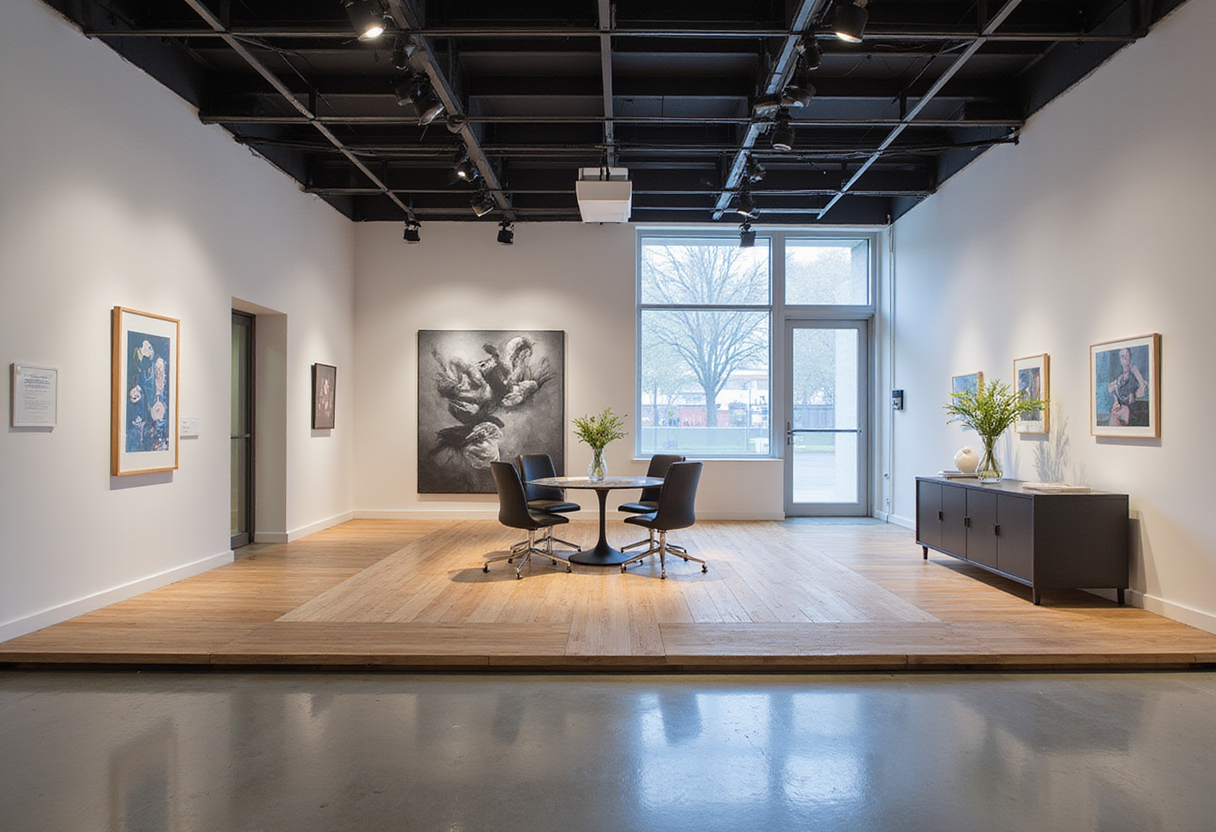
The wing is organized around six zones: a basement art-handling area, the Stadskamer reception and shop, the Forum lecture space, the Atelier workshops, the Vitrine for temporary exhibitions and the Loft, an event space on the fourth floor with views over Ghent. The Stadskamer, conceived as a freely accessible 'city room,' is intended as a place where local communities and neighborhoods can meet and present their own creations.
The extension uses timber and white brick. The white color relates to the historic houses along Drabstraat, while the facade's scale and rhythm draw from Ghent's guild and merchant houses. Deep window reveals and pronounced copings give the building a civic presence without imitating its neighbors. Historic interiors were restored, later additions adapted for space and climate, and materials reused where possible — positioning the renovation, in the museum's framing, as an exercise in working with what already exists.
The collection reconsidered
The reopening exhibition, Collection. Models from the Past for the Future, curated by Evelien Bracke, places around 500 objects from the museum's 24,000-piece collection into five contemporary themes: copy, comfort, migration, folds and connections. It returns to the institution's origins as a 'model museum.' Founded in 1903, Design Museum Gent originally collected exemplary objects intended to inform and inspire craftspeople and visitors.
The display abandons organization by individual designers or chronology. Objects once regarded as exemplary are reconsidered through contemporary concerns, while historical techniques are offered as models for the future. Contemporary designers including Kana Arioka, OpenStructures and Victor Verhelst respond to objects and themes from the collection. Scenography by Nord + Laura Muyldermans combines traditional clay-plastered walls with the Belgian circular steel construction system Skellet, placing artisanal and industrial approaches side by side.
Design and democracy
Public Matter(s): Design and Democracy, curated by Amelie Klein and Vera Sacchetti, extends the museum's remit by treating democratic systems themselves as designed structures. Ballot papers, parliamentary buildings and voting procedures are visible manifestations of that design; so are the less tangible structures that determine who participates, who is represented and who is heard.
The exhibition addresses accessibility — how people experiencing homelessness or visual impairments interact with electoral systems — alongside histories of women's suffrage, civil rights and protest. Its Democracy Fitness Trail invites visitors to practice skills such as active listening, compromise and constructive conflict, treating democratic participation as something that can be exercised.
The approach grew partly from DE40, a citizens' panel in which 40 Ghent residents discussed how the museum could make design more accessible regardless of background or prior knowledge. Their input became a framework for the transformation.
Tools for participation
Two further projects shift the institution from displaying design to testing it. Searcher, developed by Jon Stam, Valentin Vogelman and Boris Smeenk, uses AI to let visitors explore the collection through similarities in form, color and text — presenting the archive as a network navigated through association rather than fixed classification.
CO-LAB, curated by Siegrid Demyttenaere, brings Belgian and international designers, researchers and local communities together across eight historic period rooms in Hotel de Coninck, addressing subjects including sustainable energy, queer archives, designing with nature and open-source tools. A partition acoustic curtain by Chevalier-Masson forms part of the special design projects.
Together, the waste-brick wing and the program it houses position Design Museum Gent as a working test case for circular construction and civic participation — an institution using its own building and tools to ask how design operates.
Original: designmuseumgent.be
More from Amara Osei
Show full bio
Market editor covering consumer brands and retail at Built Current.
62 articles