Dams, Taps and Reclaimed Reefs: How Water Builds Political Power
The Three Gorges Dam displaced 1.3 million people; Cape Town's informal settlements used 4 percent of the water. Infrastructure, not law, decides who controls water.
- Section
- Architecture
- Author
- By Elena Vasquez
- Filed
- Length
- 6 min read
Key takeaways
- The Three Gorges Dam submerged 13 cities, 140 towns and 1,350 villages, and resettled 1.3 million people by 2010.
- A 1929 treaty (renegotiated 1959) gave Egypt 55.5 billion cubic meters of Nile water annually despite the Blue Nile supplying roughly 85 percent of the river's flow from Ethiopia.
- Cape Town's January 2018 Day Zero announcement set dam levels at 13.5 percent of capacity for 3.7 million residents.
- Between December 2013 and October 2015, China created close to 3,000 acres of new land on seven Spratly reefs.
- A 2016 arbitral tribunal found China's nine-dash line claim had no legal basis.
When the Ostrogoths besieged Rome in 537 AD, their first military act was to cut the aqueducts. Eleven gravity-fed channels supplied the city with up to a million cubic meters of water per day — enough to sustain a population of over a million, fill the public baths and scour the sewers. Without them, Rome became, as an ArchDaily essay on water and architecture puts it, "a fortified enclosure around a contaminated river."
The essay, part of ArchDaily's monthly topic "The Architecture of Water: Territories, Tensions & Transformations," builds a single argument: water is the resource nobody can fully own yet everyone depends on, and architecture has always been the instrument that decides whether it functions as a common good or a privilege. Frontinus, the administrator who ran Rome's water system in the first century AD, documented every allocation, every illegal connection and every abuse — because water management was a civic act. Upstream and downstream, the essay notes, determine "with the precision of topography" who absorbs the consequences of decisions made. Architecture has always known how to work with gravity; what it has been slower to acknowledge is that gravity is political.
What did the Three Gorges Dam cost?
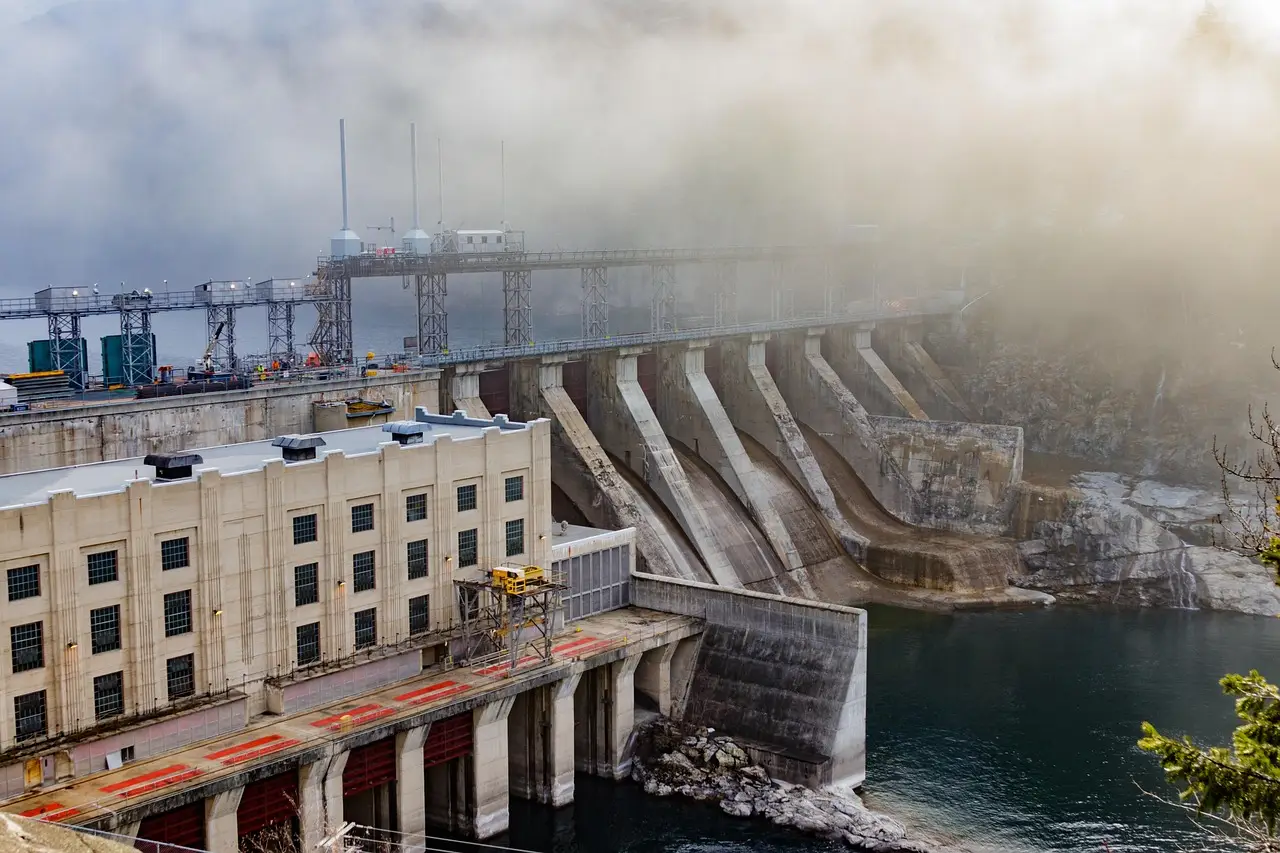
In 1997, Jiang Zemin, China's fourth paramount leader, presided over the ceremony marking the completion of the Yangtze River diversion, reportedly declaring that "man must conquer nature." The main wall was finished in 2006: 2.3 kilometers long and about 181 meters tall. When the reservoir reached its final height in 2010, it had submerged 13 cities, 140 towns, 1,350 villages and more than 1,300 known archaeological sites.
The Three Gorges Dam is the largest hydroelectric project ever built — and the largest resettlement project in history. It generates enough electricity to supply a significant portion of China's eastern seaboard. It also displaced 1.3 million people, farming communities in Chongqing and Hubei whose land disappeared underwater, whose replacement plots on steep hillsides were too eroded to cultivate, and whose promised compensation was frequently absorbed. The dam protected roughly 15 million people downstream from catastrophic flooding while displacing over a million upstream.
That trade is the essay's core mechanism: every impoundment creates "a geography of beneficiaries and a geography of renunciation." The dam doesn't distribute its consequences by need or merit, but by position in the landscape — which means by existing power. Architecture, the author argues, is not an aesthetic vessel but "an apparatus that organizes and hierarchizes bodies in space." Hydrology models sediment displacement, ecology frames habitat loss, displacement studies track resettled populations. Architecture, which claims the organization of space as its core competence, "has so far known what it erases without learning how to work with what remains."
Is dam displacement a pattern?
The Aswan High Dam, completed in Egypt in 1970, displaced an estimated 100,000 Nubians from ancestral territory along the Nile — a second displacement for a culture already moved once by the British colonial Aswan Low Dam of 1902. Egypt got its symbol of postcolonial modernity; the Nubians, in the essay's phrasing, were the cost of someone else's progress.
The Grand Ethiopian Renaissance Dam reopens that history from the other side. When Ethiopia began construction in 2011, it broke a colonial-era framework: a 1929 treaty, renegotiated in 1959, guaranteeing Egypt 55.5 billion cubic meters of Nile water annually and giving Cairo effective veto power over any upstream project. The treaty was signed without Ethiopia's participation, even though the Blue Nile — originating in the Ethiopian highlands — contributes roughly 85 percent of the Nile's total flow. Ethiopia was entitled to use less than one percent of it. The GERD, now Africa's largest dam, asserts that arrangement was a colonial artifact. Egypt counters that it is an existential threat: 98 percent of Egypt's renewable water resources come from the Nile, and without a guaranteed minimum annual flow, both agriculture and electricity generation would fail. Two irreconcilable claims, both grounded in genuine need — and unlike the Three Gorges displaced, who were at least nominally citizens eligible for compensation, Egypt has no legal mechanism to compel a sovereign upstream neighbor.
What did Cape Town's Day Zero expose?
In January 2018, Cape Town announced that dam levels were approaching 13.5 percent of capacity, and that taps would be shut off for most of the city's 3.7 million residents. By July, winter rains had pushed dam levels above 50 percent and the crisis was declared over. The headline catastrophe, though, hid a structural one.
Across the Global South, water infrastructure was designed for smaller, less dense populations, distributed by colonial planning logics that reserved formal services for some neighborhoods and withheld them from others. During apartheid, water and sanitation were split across 25 municipalities, each serving a racially designated population; townships got what remained after white areas were supplied, with pipes poorly maintained by design. When apartheid ended in 1994, the physical infrastructure stayed. By 2018, formal households consumed 66 percent of Cape Town's water supply, while the informal settlements — home to 14 percent of households — used 4 percent. In Khayelitsha and Mitchell's Plain, residents drew water from communal standpipes delivering less than 25 liters per person per day, the same ration the city proposed as Day Zero's emergency measure for the formal city. Restrictions fell equally on a household using 300 liters a day and one already using 30.
The anthropologist Nikhil Anand, studying Mumbai, calls this "hydraulic citizenship" — recognition by city agencies through legitimate water connections. Those not connected aren't simply underserved; in the municipality's administrative logic, they are not yet fully urban. The geographer Erik Swyngedouw, working in Guayaquil and other cities, argues water flows not according to need but through networks of power, technology and meaning, making scarcity a socially produced condition. In Guayaquil, 600,000 people lacked easy access to potable water while the city sat on abundant resources; poor neighborhoods relied on private tanker trucks charging prices that consumed a disproportionate share of household income. The struggle for water, in Swyngedouw's terms, is a struggle for the right to the city itself.
How do you manufacture territory?
The political theorist Stuart Elden argues we think about territory in the wrong dimension: as flat area rather than volume extending above and below the ground. Between December 2013 and October 2015, China dredged sand and coral from the seabed of the Spratly Islands and deposited it on seven submerged reefs, creating close to 3,000 acres of new land. China's Ministry of Foreign Affairs described the construction as aimed at "optimizing functions and improving living and working conditions."
Under UNCLOS, the UN Convention on the Law of the Sea, artificial islands generate no territorial sea of their own, and the 2016 arbitral tribunal ruling brought by the Philippines found China's nine-dash line claim had no legal basis and that China had violated Philippine sovereign rights. The pattern, the essay concludes, is consistent: build first, dispute later, and rely on the absence of any enforcement mechanism capable of removing what has already been constructed. Water across all these cases — directed, contained, rationed, manufactured into territory — is shaped by infrastructure whose architecture is irreversible in a way the legal argument is not. Which, the author notes, is precisely the point.
Original: britannica.com
More from Elena Vasquez
Show full bio
Senior reporter covering money, funding and market shifts around construction industry, architecture, interior design at Built Current.
204 articles