Croydon council scheme Lion Green Road wins RIBA Stirling Prize 2026
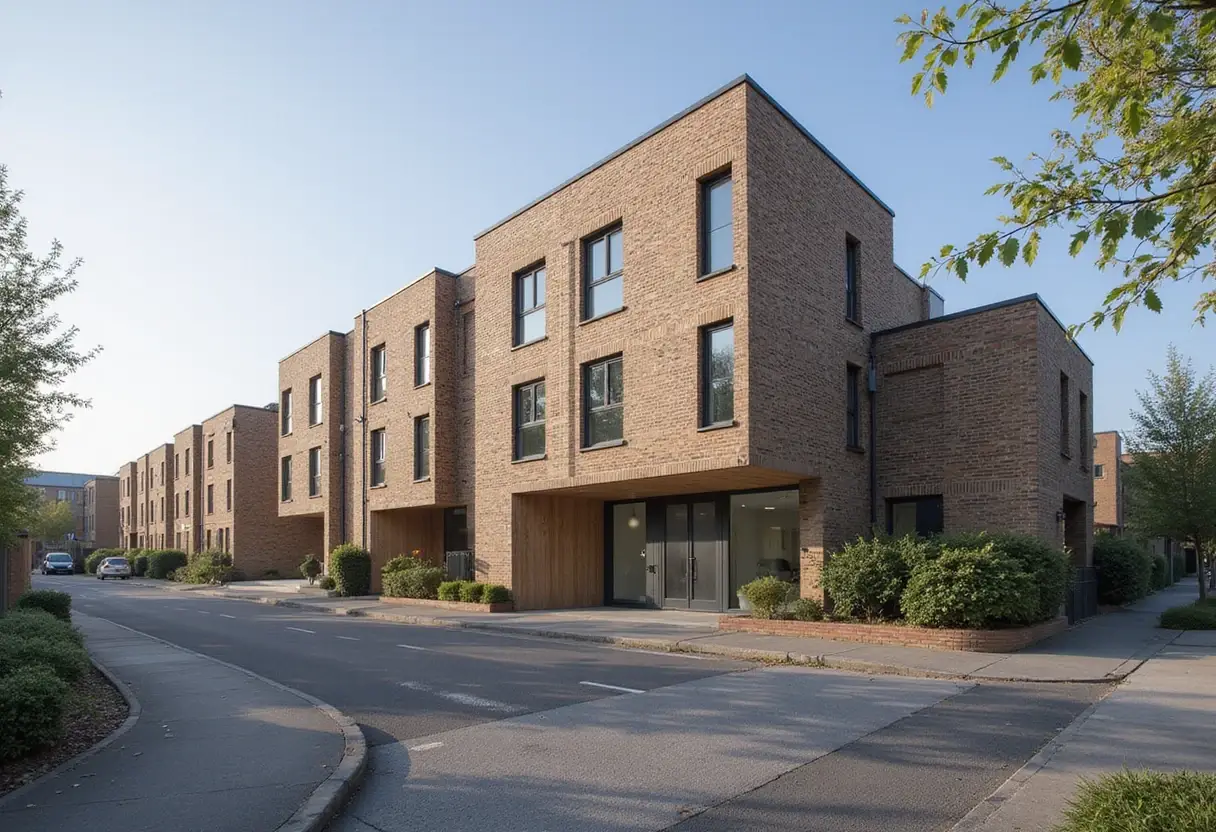
Lion Green Road, a 157-home Croydon Council scheme built by CField for £34m, has won the RIBA Stirling Prize 2026. RIBA President Chris Williamson called it a "living landscape."
- Section
- Architecture
- Author
- By Grace Kim
- Filed
- Length
- 2 min read
Key takeaways
- Lion Green Road in Coulsdon won the RIBA Stirling Prize 2026.
- The 157-home scheme across five blocks was built for Croydon Council by CField Construction under a £34m deal.
- The site slopes by eight metres and replaces a former car park.
- The scheme houses 635 residents.
- RIBA President Chris Williamson said the project shows density can be achieved without compromising quality.
A £34m council housing scheme in south London has won the RIBA Stirling Prize 2026, the UK's most prestigious architecture award.
Lion Green Road in Coulsdon was designed by Mary Duggan Architects with RUFF Architects and built for Croydon Council by main contractor CField Construction. The 157-home scheme sits across five blocks and now houses 635 residents.
The site itself was the project's hardest problem. It replaces a former car park on sloping ground that varies in height by eight metres. Rather than flatten it, the design uses those changing levels and views to build a new connection between the bustling Lion Green Road and the green parkland beyond.
RIBA describes the result as a new "living landscape."
What does the jury actually praise?
Chris Williamson, RIBA President, speaking on behalf of the Stirling Prize Jury, was direct about why it won.
"At a time when we urgently need to deliver more homes, Lion Green Road shows that density can be achieved without compromising the quality of the places we create," Williamson said.
"Through a consistent specification, with subtle variation in height and orientation, it offers housing at scale without uniformity," he added.
The jury's fuller verdict leaned on the project's balance of privacy, views and nature. "The architects have created a new kind of garden neighbourhood that balances privacy and generous views with a strong connection to nature – it's a living landscape," Williamson said.
"This is thoughtful, resourceful architecture that proves that even the most challenging of sites can be transformed into truly distinctive places for people to call home."
How did the build cut carbon?
The project didn't rely on exotic materials or expensive technology. According to the source, Lion Green Road cut carbon emissions by using:
- Efficient construction methods
- Simple finishes
- A more streamlined building process
That restraint runs through the design too. The jury highlighted a consistent specification with subtle variations in height and orientation — a way of building at scale that avoids the monotony often attached to high-density housing.
What does this change for council housing?
The award lands at a moment when the UK is under pressure to deliver more homes. The Stirling jury's framing suggests the profession's top prize is now rewarding exactly that problem solved well: a local authority scheme, on a difficult eight-metre-slope site, delivered for £34m and recognized as the country's best new building. If councils and their contractors take the cue, difficult urban sites once written off as car parks could become the next generation of garden neighbourhoods.
Source: Construction Enquirer
More from Grace Kim
Show full bio
Staff writer covering money, funding and market shifts around construction industry, architecture, interior design at Built Current.
122 articles