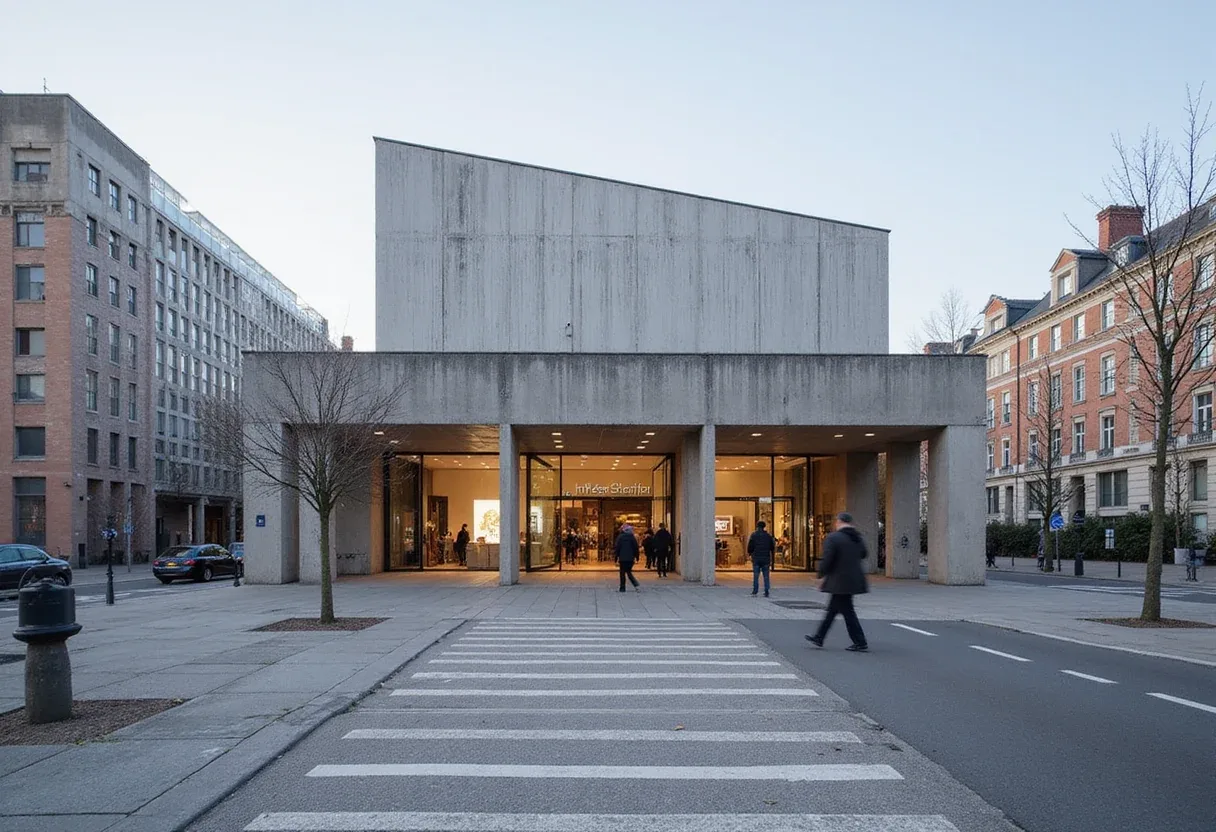
Centre Pompidou Francilien: A Vault and a Workshop in One Building
PCA-STREAM's 28,923 m² Centre Pompidou Francilien – Fabrique de l'Art pairs a sealed vault with working workshops, opening in 2026 for two major collections.
- Section
- Architecture
- Author
- By Elena Vasquez
- Filed
- Length
- 2 min read
Key takeaways
- The Centre Pompidou Francilien – Fabrique de l'Art covers 28,923 m².
- The building is scheduled for completion in 2026.
- PCA-STREAM is the lead architect; PCA / Prellwitz Chilinski Associates is the credited firm.
- The facility houses the reserve collections of two institutions.
- The vault side is a sealed monolith admitting only carefully controlled natural light.
The Centre Pompidou Francilien – Fabrique de l'Art packs 28,923 square metres of conservation and workshop space into a single building set to open in 2026. That's roughly the floor area of four football pitches, all dedicated to the reserve collections of two institutions.
PCA-STREAM led the design as lead architects, with PCA / Prellwitz Chilinski Associates credited on the project and Jean-Philippe Mesguen supplying the photographs. The architects describe the building as a structure with two faces, built around what they call the paradox at the heart of its brief.
Why does the building have two faces?
One side is a vault. The architects describe it as "a sealed monolith that admits only carefully controlled natural light into its workshops, so that two of the world's greatest modern art collections can be conserved and restored in the best conditions."
The mechanism is straightforward. Light, humidity and temperature are the enemies of stored art, so the vault side shuts them out almost entirely. Only tightly filtered daylight reaches the conservation workshops inside. The result is storage conditions that two major modern art collections — among the world's most significant — can rely on for decades.
The other face of the building answers a different demand. A reserve collection facility isn't just storage; it's a working factory for art, with restoration and handling operations that need practical, serviced space.
What does the project mean for 2026?
When it opens in 2026, the Fabrique de l'Art will consolidate reserve holdings that institutions previously kept in separate, less specialised facilities. For conservation professionals, a purpose-built monolith with controlled natural light represents a measurable upgrade over adapted warehouses.
The dual-face strategy — sealed vault on one side, working building on the other — offers a template other institutions with high-value reserve collections may watch closely.
Source: ArchDaily
More from Elena Vasquez
Show full bio
Senior reporter covering money, funding and market shifts around construction industry, architecture, interior design at Built Current.
135 articles