Bureau de Change Hides Octagonal Blue Rooms Inside Paris Jewelry Boutique
Bureau de Change's 2026 boutique for jeweler Nikos Koulis pairs limestone display plinths with cross-shaped cabinets that open into deep-blue octagonal rooms in an 18th-century Paris building.
- Section
- Interiors
- Author
- By Grace Kim
- Filed
- Length
- 2 min read
Key takeaways
- Bureau de Change completed the Nikos Koulis Paris boutique in 2026 at 26 rue Boissy d'Anglas.
- Two cross-shaped cabinets open into octagonal rooms; one contains eight triangular vitrines in deep blue.
- Limestone plinths are modular and adapted from the firm's earlier Athens flagship for Koulis.
- The building dates from the 18th century; PINKS Architecture was executive architect.
- Metalwork edges reference ornamental profiles of traditional Parisian zinc bar counters.
Two cross-shaped cabinets on the upper floor of Nikos Koulis' new Paris boutique swing open to reveal octagonal rooms — one lined with eight triangular jewelry vitrines in deep blue, which visitors can physically walk into. London studio Bureau de Change designed the boutique, completed in 2026, and it marks the firm's second collaboration with the Greek jeweler after an earlier Athens flagship.
The project occupies an 18th-century building at 26 rue Boissy d'Anglas. Bureau de Change approached the two-story interior through the building's history and the craftsmanship of traditional Parisian ateliers, pairing contemporary display furniture with original architectural details.
How does the ground floor work?
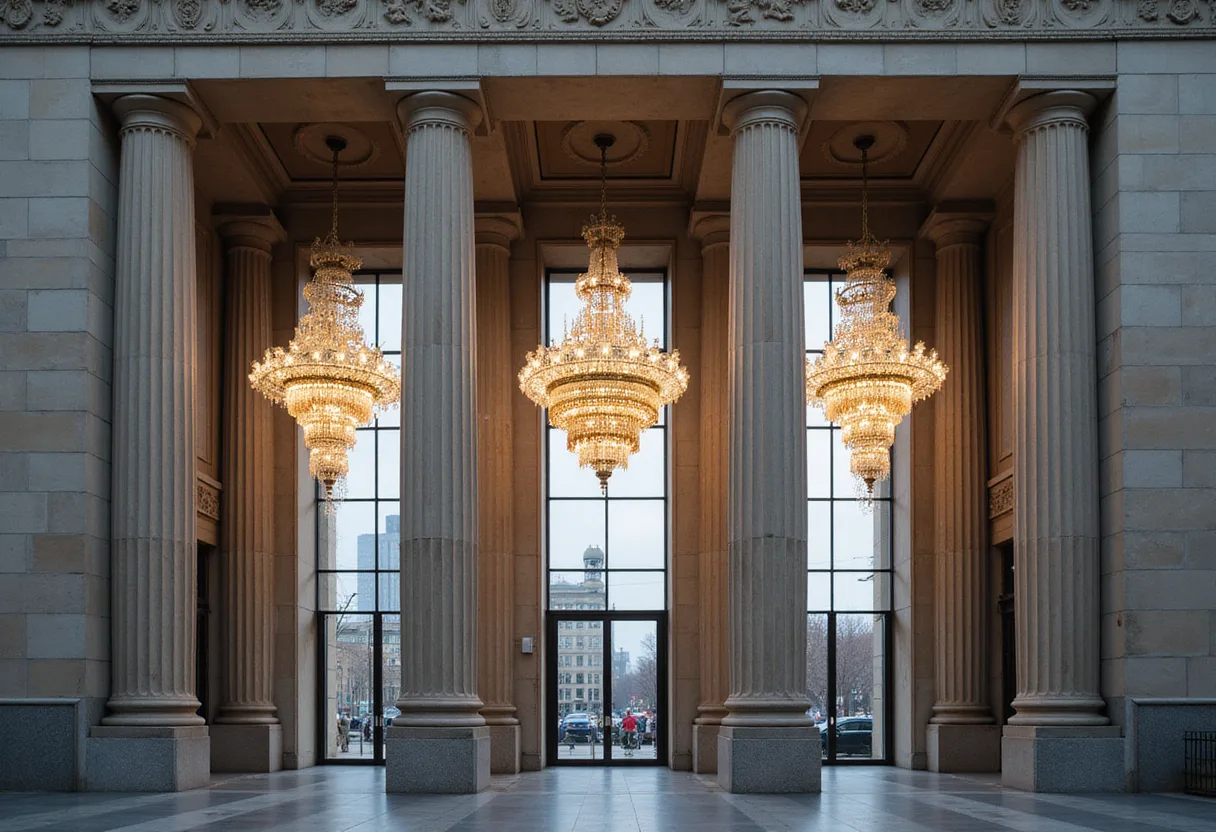
Natural light falls across herringbone timber floors and powdery plaster walls. Monolithic limestone plinths organize the jewelry displays, while slim metal frames around the windows introduce sharper geometry against the softer surfaces.
That metalwork carries a local reference. Its decorative edges borrow the ornamental profiles of traditional zinc bar counters found throughout Paris — a small gesture that ties the boutique to the city's older interiors.
Where do the limestone plinths come from?
The display blocks descend directly from the Athens flagship. For Paris, the architects superimposed the form of a metal display-case base onto a block of limestone and extracted it, leaving a negative impression in the stone. Each block keeps the evidence: rougher, textured lower sections and polished upper surfaces. Glass vitrines sit above, joined by faceted metal junctions that echo the geometric precision of the jewelry.
The plinths are modular, and they can move or combine to accommodate different collections and events. That flexibility matters for Koulis, whose output now includes limited-edition objects and furniture alongside fine jewelry.
What hides upstairs?
The upper floor shifts from open retail to a private salon with the feel of an apartment. Eclectic furniture and artworks from Koulis' personal collection fill the space, which hosts individual jewelry appointments as well as dinners and events. Pieces in vibrant red punctuate the muted palette, recalling the Athens store's use of color.
The two freestanding, full-height cabinets divide the sitting and dining areas. Closed, they read as large furniture pieces. Opened, one becomes the blue octagonal jewelry room; the second turns into a bar with triangular shelves and drawers accessible from either side.
Smaller details run through the project. Chiseled pink marble forms the entrance door handles, set against smooth stainless steel casings around the windows. The same marble returns as a custom floating handrail following the staircase upward.
From the street, the storefront frames selective interior views, continuing the restrained stone-and-plaster palette. PINKS Architecture served as executive architect, with lighting by LUUN, glass display cases by Prugent, stonework by Smili, and joinery by Frugier Sarl. Photography is by Chloé Le Reste. The boutique signals how a heritage Paris address can host both a working retail floor and, behind closed cabinet doors, an entirely different spatial experience.
Original: google.com
More from Grace Kim
Show full bio
Staff writer covering money, funding and market shifts around construction industry, architecture, interior design at Built Current.
394 articles