Alexandre de Betak Recasts Runway Lighting as Bronze Art in New York
Alexandre de Betak, who produced 'thousands' of fashion shows for Dior and Gucci, opens his first solo exhibition at Salon 94 through December 19.
- Author
- By Amara Osei
- Filed
- Length
- 3 min read
Key takeaways
- Alexandre de Betak opened his first solo exhibition at Salon 94 in New York on November 5, on view through December 19.
- De Betak founded Bureau Betak, sold in 2021, and estimates he produced 'thousands' of fashion shows for clients including Dior, Gucci, Jacquemus and Fendi.
- Bronze versions required a French foundry to recast each part by hand, sometimes using more than 20 molds per sculpture.
- The show includes aluminum Truss Light Sculptures with LED bulbs and bronze versions in Salon 94's Stone Room.
- The light sequences respond to ambient noise, 'whether a whisper,' de Betak says, 'or extremely loud music.'
Alexandre de Betak, who estimates he produced "thousands" of fashion shows for Dior, Gucci, Jacquemus and Fendi, has opened his first solo exhibition of artworks at Salon 94 in New York. The show, which opened November 5 and runs through December 19, presents two series of his electronically programmed Truss Light Sculptures at the gallery's Upper East Side town house.
De Betak founded Bureau Betak, the set design agency that transformed the runway with megawatt spectacles, and sold the company in 2021. Now the spotlight lands on his own practice. Saint Laurent's spring-summer 2020 ready-to-wear show, for which he bathed the Eiffel Tower in golden light, sits at the flashier end of his portfolio. His installations for Rodarte, built from fluorescent and neon tubes, hinted at where he's headed now.
Light has fascinated him since childhood. At 10, he rewired his Paris bedroom so visitors had to be buzzed in, greeted by shifting colored lights. That's a detail most biographies would kill for. He clearly knows it.
Why build sculptures from old stage equipment?
The Truss Light Sculptures draw on the scaffolding and fixtures of his early runway shows — and in some cases are literally made from them. "That equipment is old-fashioned now, but I wanted to honor it," de Betak says. "And I liked the irony that I spent so much energy over the years trying to hide it."
That irony carries the show. A career spent making structures vanish into someone else's spectacle now produces structures that are, in Salon 94 founder Jeanne Greenberg Rohatyn's words, "the whole point." "Alex has spent his career building structures that disappear into someone else's spectacle," she says. "Here, the structure is the whole point."
What's on view at Salon 94?
The exhibition splits across two spaces:
- The gallery's contemporary space holds the first series: freestanding and wall-mounted aluminum structures fitted with LED bulbs.
- The upstairs Stone Room, a historic space with Caen stone plaster walls and arched windows, hosts a second series in bronze.
The bronze versions demanded real obstinacy. De Betak had a French foundry recast each part down to the smallest screw by hand, a process that sometimes required more than 20 molds per piece. Runway logistics, it turns out, were the easy part.
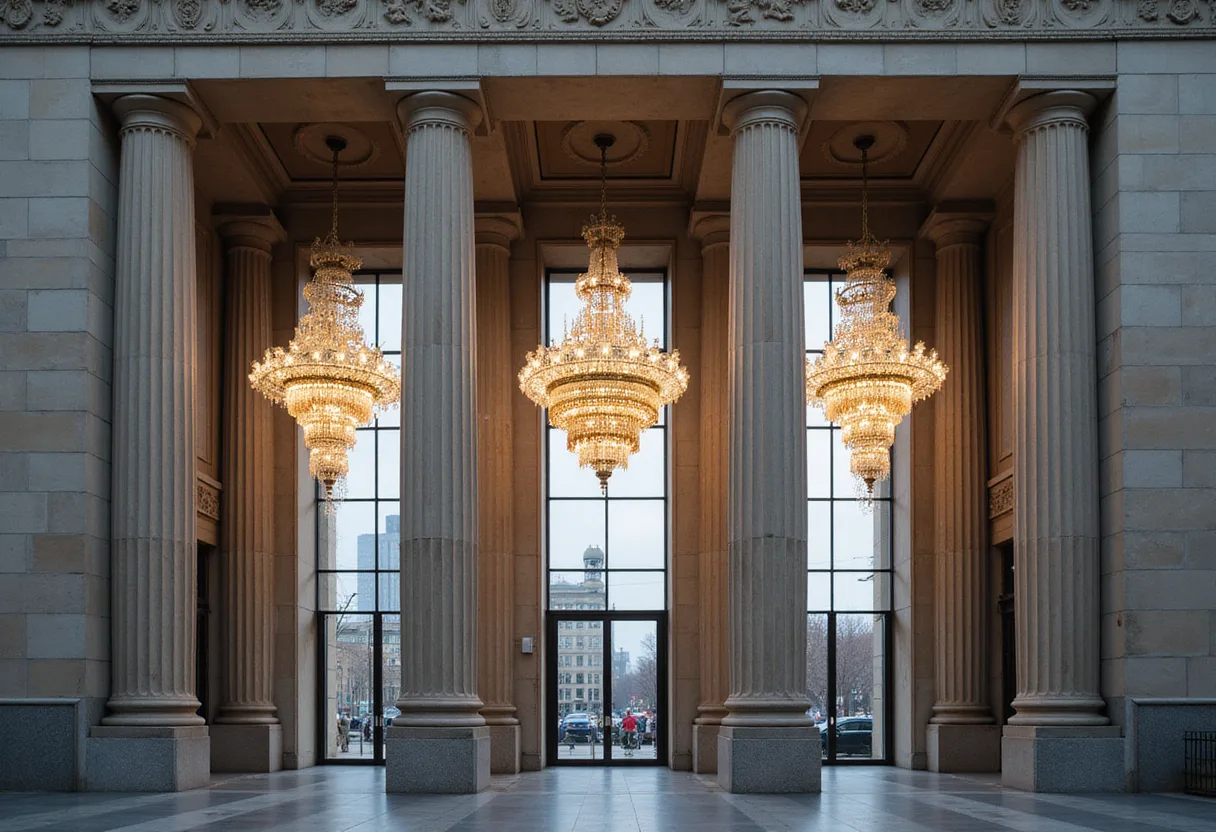
The sculptures themselves range from sconce-like creations to hulking constructions out of a sci-fi movie. Greenberg Rohatyn observes that they are equally powerful switched on or off. Unlit, they remind her of David Smith artworks or Russian constructivism. Lit, and synced with sound, they evoke the theatricality of stage performers.
How do the sculptures behave?
A remote-control-operated system activates light sequences that glow, sparkle, thrum, or react to ambient noise — "whether a whisper," de Betak says, "or extremely loud music." For these effects, he drew on his stage work, where he was renowned for cueing, or choreographing, light and sound.
The results have a sly sense of humor and a human quality, particularly when they come alive. That shouldn't surprise anyone who watched his runway shows. It's the same craft, stripped of the clothes.
De Betak frames the work as a bet on live experience. "I'm interested in the ephemeral nature of what this equipment was made to show — whether a fashion show or a ballet," he says. "At a moment when everything is virtual, I think it's more important than ever to create things that produce a live emotion."
The argument is straightforward: equipment built for moments that vanish, recast in bronze — the most permanent material he could pick. The show closes December 19, and for a designer who has spent decades manufacturing ephemera, a fixation on what lasts may be the most telling pivot yet.
Source: Architectural Digest
More from Amara Osei
Show full bio
Market editor covering companies, deals and strategy in construction industry, architecture, interior design at Built Current.
250 articles