Bucharest's Palace of the Parliament: Who Built the World's Heaviest Building?
Nearly 20,000 workers built Bucharest's Palace of Parliament in three shifts from 1984. It was 60% complete when Ceaușescu fell. Anca Petrescu's authorship remains contested.
- Section
- Architecture
- Author
- By Priya Raman
- Filed
- Length
- 2 min read
Key takeaways
- Construction began on June 25, 1984, with nearly 20,000 workers on site in three shifts under chief architect Anca Petrescu.
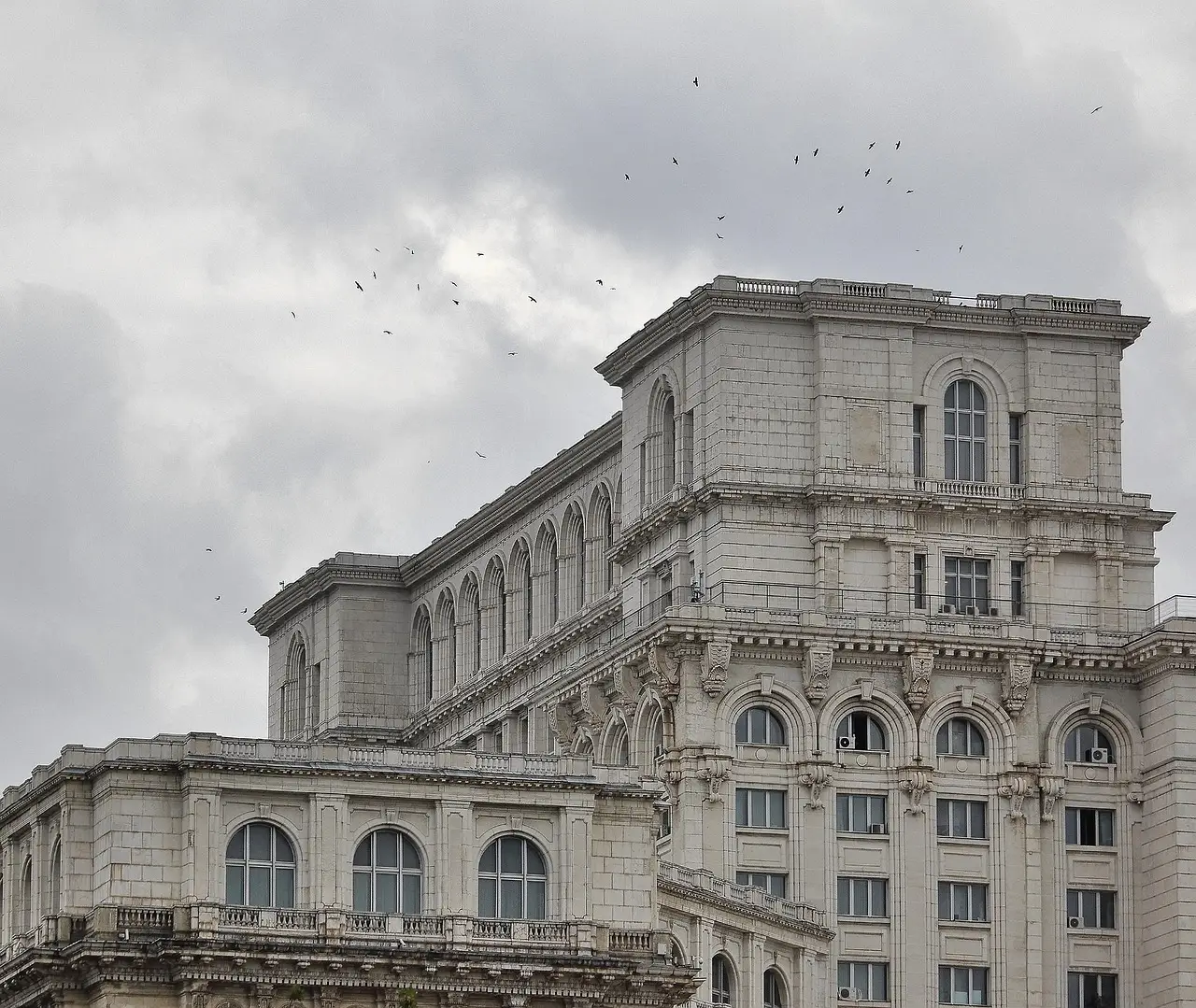
- The main façade rises 84 metres in stepped tiers of stone at the end of the roughly 3-kilometer Bulevardul Unirii.
- The building was about 60% complete when the Ceaușescu regime fell in December 1989.
- Several square kilometers of Bucharest were cleared for the Victory of Socialism civic center after the 1977 earthquake.
- The National Museum of Contemporary Art has occupied the palace since 2004, alongside Parliament, the Constitutional Court and the Legislative Council.
The world's heaviest building stands about 1.5 kilometers west of Bucharest's Old Town, and roughly 20,000 workers built it in three shifts under a chief architect whose authorship remains contested. That architect was Anca Petrescu. The building is the Palace of Parliament, seat of Romania's legislature, and its story is inseparable from the regime that commissioned it.
What stands on Dealul Arsenalului?
The palace occupies Dealul Arsenalului, a hill at the western end of Bulevardul Unirii. That straight avenue runs roughly three kilometers east to west through the city center, crossing Piața Unirii, and terminates at the palace's main façade. The façade rises 84 metres in stepped tiers of stone. The avenue and the building belong to a single urban project, not two separate works.
How did the project start?
The palace began as the House of the Republic, the centerpiece of a civic center that Nicolae Ceaușescu set in motion after the 1977 earthquake under the name Victory of Socialism. Several square kilometers of the existing city were cleared for it, including the quarter that stood on the hill itself.
Construction started on June 25, 1984. These were years of food rationing and power cuts in Romania. Nearly 20,000 workers labored on site around the clock in three shifts. Petrescu served as chief architect, and the attribution of the building's design to her is precisely what remains contested in accounts of the project — hence the debate over the authorship of the world's heaviest building.
What happened after 1989?
The building was about 60% complete when the regime fell in December 1989. Construction had consumed the final years of food rationing and power cuts, and the revolution stopped the work with the colossus more than half-finished. Parliament moved in during the following decade.
The palace now houses more than the legislature:
- the Constitutional Court
- the Legislative Council
- the National Museum of Contemporary Art, in the building since 2004
What does the contested authorship change?
The record that survives is physical rather than archival: a building 84 metres tall at its façade, set at the end of a three-kilometer axis bulldozed through several square kilometers of the pre-existing city, with Petrescu named as chief architect. Whatever the resolution of the authorship debate, the structure itself — the heaviest in the world — has outlived the regime that named it the House of the Republic and has been repurposed, floor by floor, into the working seat of Romanian democracy, complete with a contemporary art museum that opened there in 2004.
Original: guinnessworldrecords.es
More from Priya Raman
Show full bio
News editor covering people, launches and day-to-day practice in construction industry, architecture, interior design at Built Current.
391 articles