Beauty and Fitness Tenants Now Sign 1 in 4 US Retail Leases
More than 1 in 4 US retail leases signed this year went to beauty, cosmetics or fitness tenants — a record share that is physically rewriting downtown America.
- Section
- Urbanism & Planning
- Author
- By Elena Vasquez
- Filed
- Length
- 3 min read
Key takeaways
- More than 1 in 4 US retail leases signed in 2026 came from beauty, cosmetics or fitness companies — the highest share on record (CoStar).
- QQ Nails has grown from 20 New York locations in 2020 to 38 today, with four in one six-block Manhattan radius.
- 40% of Brixmor's 340+ shopping centers now have a boutique fitness tenant, up from 29% in 2021.
- Service-oriented tenants outpaced goods-based tenants in retail leasing for the first time ever this year.
- Gen Z cosmetics-store spending ran nearly twice the overall average this year.
More than one in four retail leases signed in the United States this year came from cosmetics, beauty service or fitness companies, according to CoStar — the highest annual share on record if the pace holds. The number explains what's happening on American streets: nail salons, med spas, pilates clubs and cryotherapy studios are filling storefronts that once sold shoes, furniture and TVs.
CNN's Nathaniel Meyersohn calls it the "vanity economy." The pattern is visible block by block.
What does the growth look like on the ground?
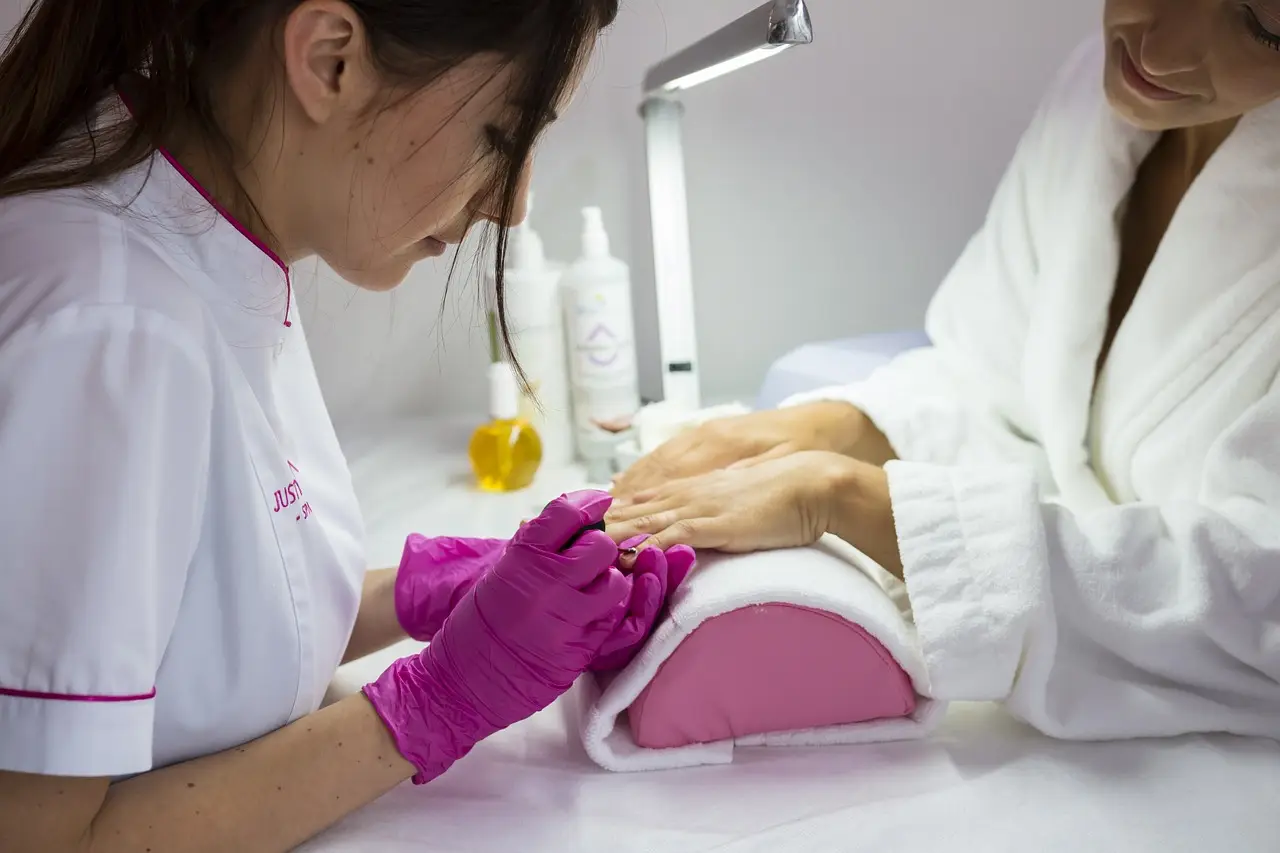
QQ Nails opened its first New York City salon twenty years ago and reached roughly 20 locations by 2020. It has nearly doubled since the pandemic — 38 salons now operate across the city, with plans for dozens more. Four of them sit within one six-block radius in Manhattan.
"People are more willing to spend on self-care, self-expressiveness and these types of larger services," CEO Tian Jiang said.
The service mix has expanded too. When QQ opened in 2006, manicures were seen as a "pampering moment," Jiang said — "All you did was a polish and a clean up." Today, pricier gel manicures have replaced air-dried polish, customers request extensions and custom designs they see on TikTok, and more men get manicures. "It's become more ingrained in everybody's routines," she said.
Why are screens driving storefront change?
Vanity businesses serve both in-person and digital lives: customers want to look good on the street and on Instagram, Hinge and TikTok.
"There is definitely 'aesthetic creep' that has intensified in recent years," said Natalia Mehlman Petrzela, a historian of American politics and culture at The New School. Women and gay men have long faced pressure to present themselves, but "straight men are now encompassed by the beauty-industrial complex in new ways," she said in an email.
Economics matter as much as aesthetics. Younger consumers increasingly live alone, stay single, and treat gym memberships and manicures as non-negotiables in an economy where homeownership, marriage and kids feel out of reach. Health & Fitness Association data shows gym memberships for people under 35 growing faster than older groups, with higher monthly spending. Gen Z spending at cosmetics stores ran nearly twice as strong as the overall average this year, according to Bank of America Institute data.
How did vanity tenants become 'Amazon-proof'?
Amazon can ship a television or sneakers to your door. It can't give you a manicure, Botox or six-pack abs. As e-commerce absorbed goods retail, storefronts moved into services that can't be duplicated online — and service-oriented tenants outpaced goods-based tenants in retail leasing for the first time ever this year, according to The Wall Street Journal.
That forced a turn from developers and planners who once shunned gyms and salons in prime corridors. Cities have loosened zoning laws to let gyms, studios and spas expand into more commercial areas. Shopping centers dropped strict lease provisions that had blocked fitness tenants from locating near traditional retailers.
The numbers at Brixmor Property Group, which owns more than 340 shopping centers, show the result. Forty percent of its centers now have a boutique fitness tenant, up from 29% in 2021. Beauty, boutique fitness and wellness tenants such as Face Foundrie and Hydration Room have grown 11% at its properties over five years, said David Gerstenhaber, the company's head of leasing.
Lake Pointe Village in Sugar Land, Texas — a Whole Foods-anchored center — now holds 13 vanity businesses, from Solidcore to VIO Med Spa to European Wax Center. "It all comes down to look good, feel good," Gerstenhaber said. With the lease share still climbing toward a record, the storefront shift looks less like a cycle than a permanent redefinition of what downtown retail is for.
Source: localnews8.com
More from Elena Vasquez
Show full bio
Senior reporter covering money, funding and market shifts around construction industry, architecture, interior design at Built Current.
354 articles