Aedas Wraps Hangzhou Museum in Glass Rings Borrowed From Jade
Aedas completed the 57,650-square-foot Yohoo Museum in Hangzhou in 2024: two interlocking rings of translucent "emerald glass" referencing 5,000-year-old Liangzhu jade.
- Section
- Architecture
- Author
- By Marcus Bennett
- Filed
- Length
- 3 min read
Key takeaways
- Aedas completed the 57,650-square-foot Yohoo Museum in Hangzhou in 2024.
- Ken Wai led the design; the project won Architectural Design of the Year at the International Design Awards.
- The interlocking rings reference Liangzhu jade bi discs from a Neolithic culture roughly 5,000 years old.
- The site links two UNESCO listings: the Grand Canal (2014) and the Liangzhu ruins (2019).
- David Chipperfield's travertine Liangzhu Museum opened nearby in 2008; Tadao Ando added a cultural center in 2016.
Aedas completed a 57,650-square-foot (5,356-square-meter) museum in Hangzhou in 2024 by twisting translucent glass into two interlocking rings, a form lifted from the ritual jade objects of the 5,000-year-old Liangzhu culture. The project, led by Ken Wai, Global Design Principal at Aedas, won Architectural Design of the Year and a Gold in the Cultural category at the International Design Awards, a juried global competition for built work.
The Yohoo Museum sits on an island in an artificial lake inside Liangzhu Yohoo Park. Its envelope is a translucent multilayer laminate the firm calls "emerald glass," which filters daylight into a soft, even wash across the galleries — an inversion of the sealed-box logic most museums follow to protect art from sunlight. A close comparison is Steven Holl's Bloch Building at the Nelson-Atkins Museum in Kansas City, where translucent channel-glass volumes glow like lanterns; Aedas stretches that strategy across a twisting, double-curved envelope.
What does the form reference?
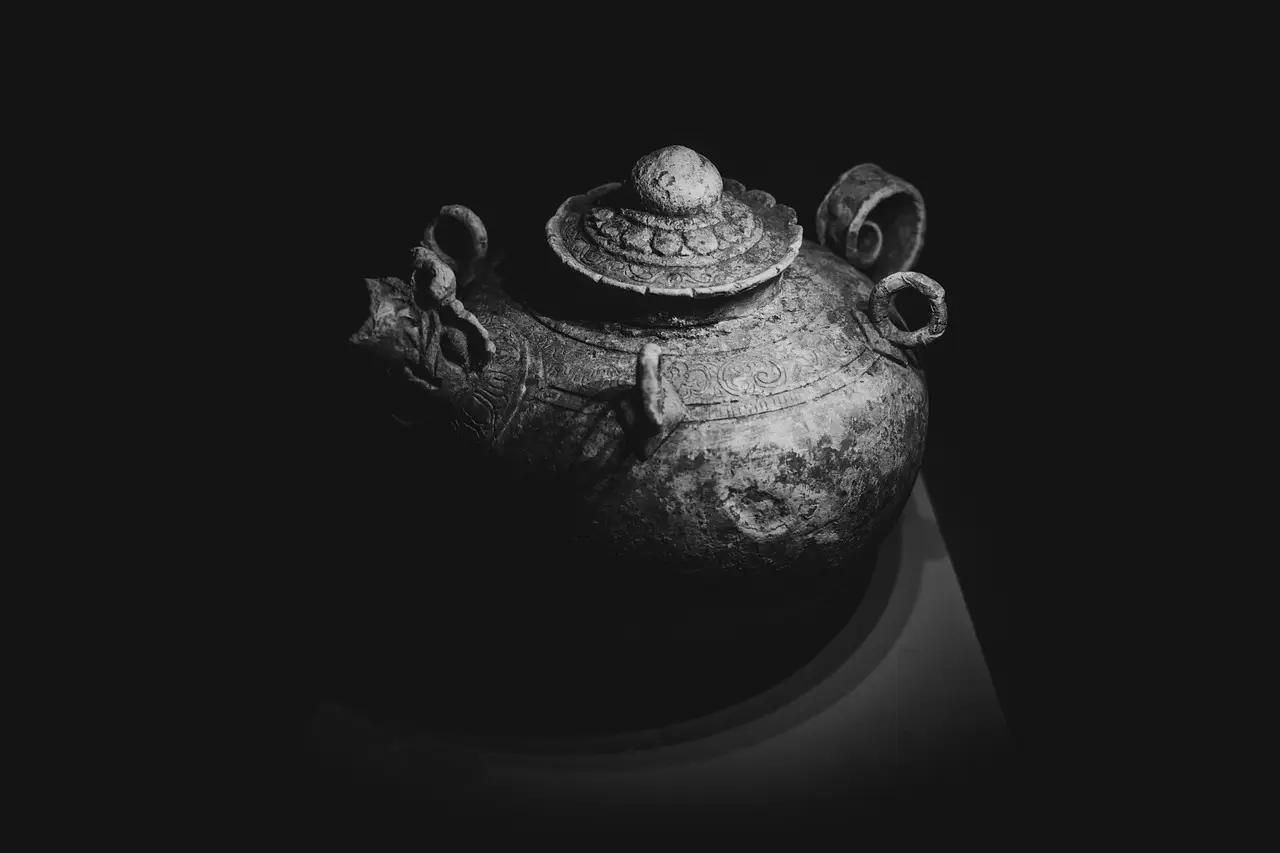
Liangzhu jade comes in two signature shapes: the bi, a flat disc with a central hole, and the cong, a chunky tube that is square outside and round inside. Later Chinese tradition read the bi as heaven and the cong as earth, and archaeologists say both objects starred in royal ceremonies honoring the sky. Each museum ring wraps an open void, so from above the openings read like the drilled centers of two bi discs, while the squared-off island below echoes the cong.
Aedas says the two interlocking rings stand for two heritages: Liangzhu culture and the Grand Canal. The lake connects to that roughly 1,100-mile (1,776-kilometer) waterway, whose oldest sections date back more than 2,500 years; Hangzhou sits at its southern end. UNESCO listed the canal in 2014 and the Liangzhu ruins in 2019.
How does the structure work?
A single steel frame carries the building and lets both ends of the rings lift off the ground with no visible support, like the corner of a sticker peeling away. The lifted edges overhang the entrances and shelter two public plazas. The underside wears smooth white panels, and beneath it a diamond grid of glass slopes down to meet the pavement. Inside, the galleries sit under a dense white steel diagrid with translucent glass filling every gap, producing a bright, nearly shadowless hall. The entrance volume uses greener, more jade-toned glass in horizontal bands, so the building's color shifts by facade. Aedas says parametric modeling kept the double-curved geometry efficient to build.
The landscape repeats the motif at walking scale. A white boardwalk zigzags across the lake, swelling into circular viewing pods, while a broader bridge links the island to the main park, where curving paths and a petal-shaped flower garden continue the theme. Aerial shots show apartment towers and older industrial blocks crowding the shoreline — a backdrop that makes the glowing glass knot read even louder.
How does it compare with its neighbors?
Yuhang already has a famous lake-bound jade museum: David Chipperfield's Liangzhu Museum, which opened in 2008 as four travertine bars set on a lake and linked to the park by bridges, with an exhibition island to the south. Tadao Ando added a concrete cultural center nearby in 2016. Both architects treated Liangzhu's heritage as something heavy and permanent, which suits artifacts that spent 5,000 years underground. Aedas kept the same lake, island and bridge recipe and swapped the stone for light — a fitting inversion, since the original jade carvers' craft was coaxing a soft glow out of solid stone. For practitioners, the project demonstrates that parametric steel framing can push translucent glass beyond flat channel walls into doubly curved, symbolically loaded envelopes.
Source: Yanko Design
More from Marcus Bennett
Show full bio
Correspondent covering money, funding and market shifts around construction industry, architecture, interior design at Built Current.
159 articles