Vincent Darré Converts 19th-Century Paris Theater into Hôtel Le Magnifique
Vincent Darré has turned a former 19th-century theater on Rue de la Gaîté into Hôtel Le Magnifique, with five themed floors, a theater-synchronized bar and a mosaic-lined pool.
- Section
- Interiors
- Author
- By Marcus Bennett
- Filed
- Length
- 4 min read
Key takeaways
- Vincent Darré designed Hôtel Le Magnifique on Rue de la Gaîté in Paris' 14th arrondissement, in a building that once housed the early 19th-century theater Les Mille Colonnes.
- Hotelier Jacques Blanc initiated the project in 2024; he also owns Bellechasse, the Paris hotel designed by Christian Lacroix.
- The hotel contains five themed floors connected by a glass elevator decorated with mermaids, seahorses and starfish.
- Le Picabia bar displays showtimes of neighboring venues and rings a bell at the start of performances and the end of intermissions.
- The swimming pool, visible from reception, is surrounded by columns and mosaics evoking a Greek palace.
Vincent Darré has transformed a former early 19th-century Paris theater into Hôtel Le Magnifique, a five-floor property on Rue de la Gaîté in the 14th arrondissement where every level stages a different imaginary universe. The building once housed Les Mille Colonnes, a renowned theater, and sits in a district long tied to cabarets, performance venues and the artistic life of Montparnasse. Hotelier Jacques Blanc initiated the project in 2024, seeking a property that would depart from conventional hospitality design.
Blanc already owned Bellechasse, the Paris hotel designed by Christian Lacroix, and reached Darré through an introduction by mutual friends. Their collaboration grew around a shared ambition to build something deliberately unconventional. Darré's initial proposals eventually expanded the scope to include a swimming pool. For the designer, who was born in the 14th arrondissement and has spent his life on the Left Bank, the commission also became an opportunity to revisit the artistic landmarks and personal memories of his childhood.
What greets guests at the entrance?
The theatrical narrative starts in the entrance hall, where Darré reworks architectural references from the surrounding neighborhood. The columns of the former theater have been redesigned in homage to those of La Coupole, the celebrated Montparnasse restaurant, and the former Saint-Germain-des-Prés drugstore, whose columns were once crowned with oversized sculptural hands.
A large hand-painted fresco created by artisans extends across the walls, introducing colorful figures and swirling motifs drawn from art and the circus. White plaster birds emerge from the composition, adding a sculptural layer to the illustrated surfaces.
Other details continue this dialogue between architecture and storytelling:
- The reception desk carries antique keys collected over time, recalling historic hotel front desks while nodding to paradise and Saint Peter.
- Staircase railings evoke musical scores, tying movement through the building to the district's performing arts heritage.
These interventions turn functional architectural elements into parts of a larger decorative composition, pulling visitors into an imagined version of Paris built from Darré's personal references.
How does Le Picabia bar serve the theater district?
At the heart of the hotel, Le Picabia, a bar named after French painter Francis Picabia, borrows the atmosphere of historic Parisian theaters. Clad in wood and lit by rows of glowing bulbs, the space pairs a curved counter with richly colored surfaces and decorative details recalling theatrical interiors.
The bar operates in rhythm with neighboring performance venues: it displays showtimes and rings a bell at the start of performances and the end of intermissions. A grand piano opens the possibility of spontaneous musical encounters. The setting welcomes theatergoers, neighborhood residents, artists and hotel guests alike — a programming model that positions the bar as district infrastructure rather than an amenity.
Why is there a Greek palace in the building?
The hotel's swimming pool, conceived as a mythological retreat, is visible from the reception area. Columns surround the blue-tiled basin, and mosaics depicting classical figures evoke a Greek palace. The pool opens onto a patio, connecting water, architecture and garden. The references to antiquity push the hotel's narrative beyond the history of Montparnasse and extend Darré's practice of transporting visitors into imaginary settings.
What do the five floors and guest rooms contain?
A glass elevator decorated with mermaids, seahorses and starfish connects five floors, each built around a different theme:
- the Garden of Eden
- classical mythology
- the deep sea
- Art Nouveau
- the Milky Way
- legendary artists from Paris' past
Rather than a uniform decorative scheme, the hotel shifts between periods and visual references, so each level opens a new chapter.
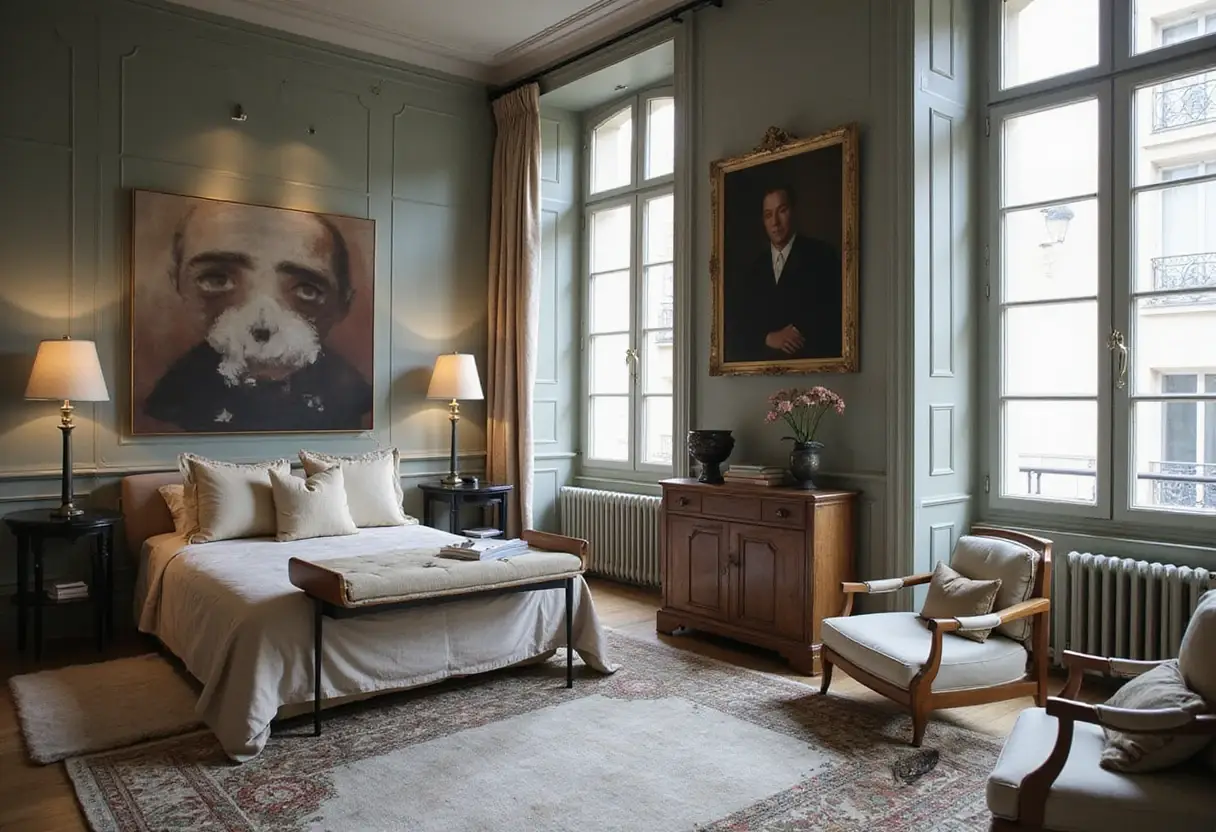
The guest rooms follow the same principle. Darré conceived each room as an individual composition featuring original pieces, with bespoke furniture, lighting, ceramics, carpets and stretched wall textiles combining French decorative traditions with his own visual vocabulary.
The name itself carries the story. Le Magnifique pays tribute to the artists of Montparnasse, whose shared initial, the letter M, inspired the title, while also referencing the spirit of the French Nouvelle Vague. The project reconnects the building with the creative history of the Left Bank, turning a hotel stay into a passage through one designer's theatrical imagination — a template for how hospitality operators might convert performance-district heritage into revenue rather than demolish it.
Project info: Hôtel Le Magnifique, Paris, France. Designer: Vincent Darré. Images by Christophe Bielsa.
Original: google.com
More from Marcus Bennett
Show full bio
Correspondent covering money, funding and market shifts around construction industry, architecture, interior design at Built Current.
153 articles